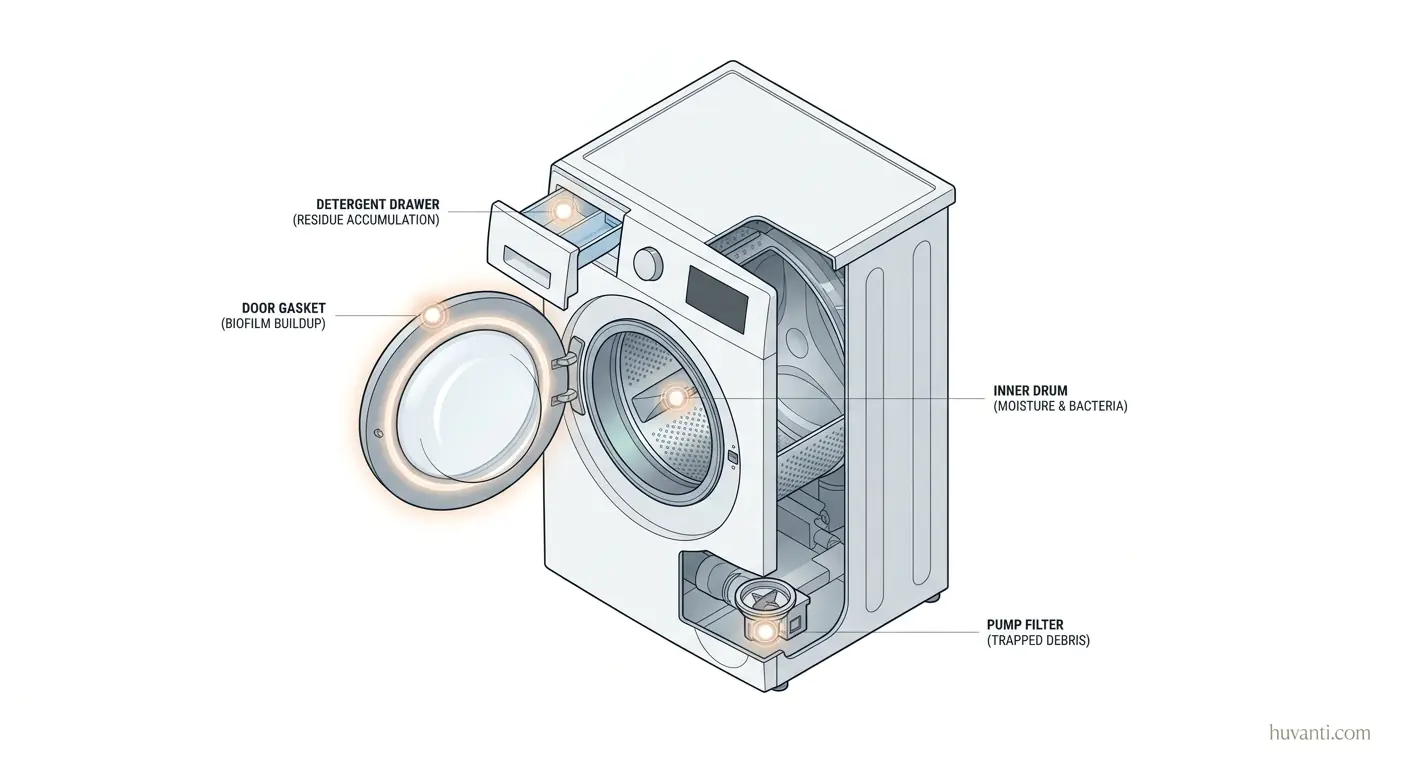
If your front load washer smells like a damp towel, you aren’t imagining it. The design that makes front loaders efficient also traps moisture, detergent residue, and lint. That combo becomes a sticky biofilm that mold loves. The good news: you can clear the smell and keep it gone with a simple plan.
In this guide, you will learn how to get mold smell out of front load washer, what causes the odor, how to find the real source, 10 easy ways to remove mold smell safely, quick mistakes to avoid, plus a prevention routine that actually works. I keep the steps short, practical, and focused on what gets results fast.
Table of Contents
What Causes the Mold Smell in a Front Load Washer
- Water sits in hidden places. The door gasket, the detergent drawer cavity, and the drain pump housing often stay wet.
- Residue feeds microbes. Too much detergent, liquid softener, and cold quick cycles leave a film on the drum and hoses.
- Cooler modern cycles. Energy saving cycles often use lower temps that don’t dissolve residue fully.
- Poor airflow after a cycle. Closing the door and drawer traps humidity, so odor builds between loads.
- Hard water scale. Mineral scale traps detergent and soil, which holds odor.
Before You Start: Tools and Supplies
You don’t need everything on this list, but having a few of these on hand will make the job faster.
- Rubber gloves and eye protection
- Microfiber cloths and paper towels
- Soft brush or old toothbrush
- Small nylon bottle brush or pipe cleaner for drain holes
- Flashlight
- White distilled vinegar
- Chlorine bleach
- Baking soda
- 3 percent hydrogen peroxide
- Washing soda or oxygen bleach
- Washing machine cleaner tablets
- A shallow pan or tray, a small bucket, and a towel
Important Safety Notes

- Never mix bleach with vinegar, ammonia, or other acids. Mix only with water.
- Ventilate the room and wear gloves for any chemical cleaner.
- Remove all laundry from the washer before cleaning cycles.
- If your washer has a Clean Washer or Self Clean cycle, use it whenever I say run a hot empty cycle.
Find Where the Smell is Strongest
This takes 2 minutes and helps you pick the right fixes.
- Open the door and sniff the fold of the rubber gasket. Check the lower fold and the small drain holes at the bottom.
- Pull out the detergent drawer. Smell the drawer and the cavity.
- Smell the drum and the door glass rim.
- Open the small service door near the bottom front and sniff near the pump filter cover.
- Smell the standpipe or drain where the hose goes into. If the strongest odor comes from the drain pipe, you likely have a plumbing trap issue, not a washer issue.
10 Easy Ways to Remove Mold Smell
Use one, or stack a few of these in order for a deep reset. I note when a step is best for a specific odor source.
1. Run a Sanitize or Tub Clean Cycle With Bleach
Best for a full machine reset and heavy musty odor.
What to do:
- Pour 1 cup of bleach, about 240 milliliters, into the bleach dispenser only. Don’t put bleach directly in the drum.
- Select Clean Washer, Self Clean, or the hottest sanitize cycle. If your washer heats its own water, choose the highest temperature option.
- When the cycle ends, wipe the inside of the drum, the door glass, and the gasket with a damp cloth. Leave the door open to air dry.
Tips:
- If the odor is severe, run a second hot empty cycle with plain water to rinse.
- Don’t add vinegar or anything else with bleach.
2. Do a Two Step Deep Clean Without Bleach
Best if you prefer to avoid bleach or have light odor that keeps returning.
What to do:
- Step 1 is a vinegar wash. Add 2 cups of vinegar, about 480 milliliters, to the detergent drawer and run the hottest normal cycle empty.
- Step 2 is a baking soda rinse. Sprinkle 1 cup of baking soda, about 220 grams, directly into the empty drum. Run a short hot cycle or a rinse and spin.
Why this works:
- Vinegar cuts mineral and soap residue, so biofilm loses its grip.
- Baking soda deodorizes and helps lift loosened grime.
Don’t run vinegar and baking soda in the same step. Use them back to back.
3. Deep Clean the Door Gasket and Drain Holes
Best for smells strongest at the door and visible black spots.
What to do:
- Put on gloves. Mix a cleaning solution. You can use a commercial mildew cleaner, a solution of 1 part bleach to 10 parts water, or straight 3 percent hydrogen peroxide.
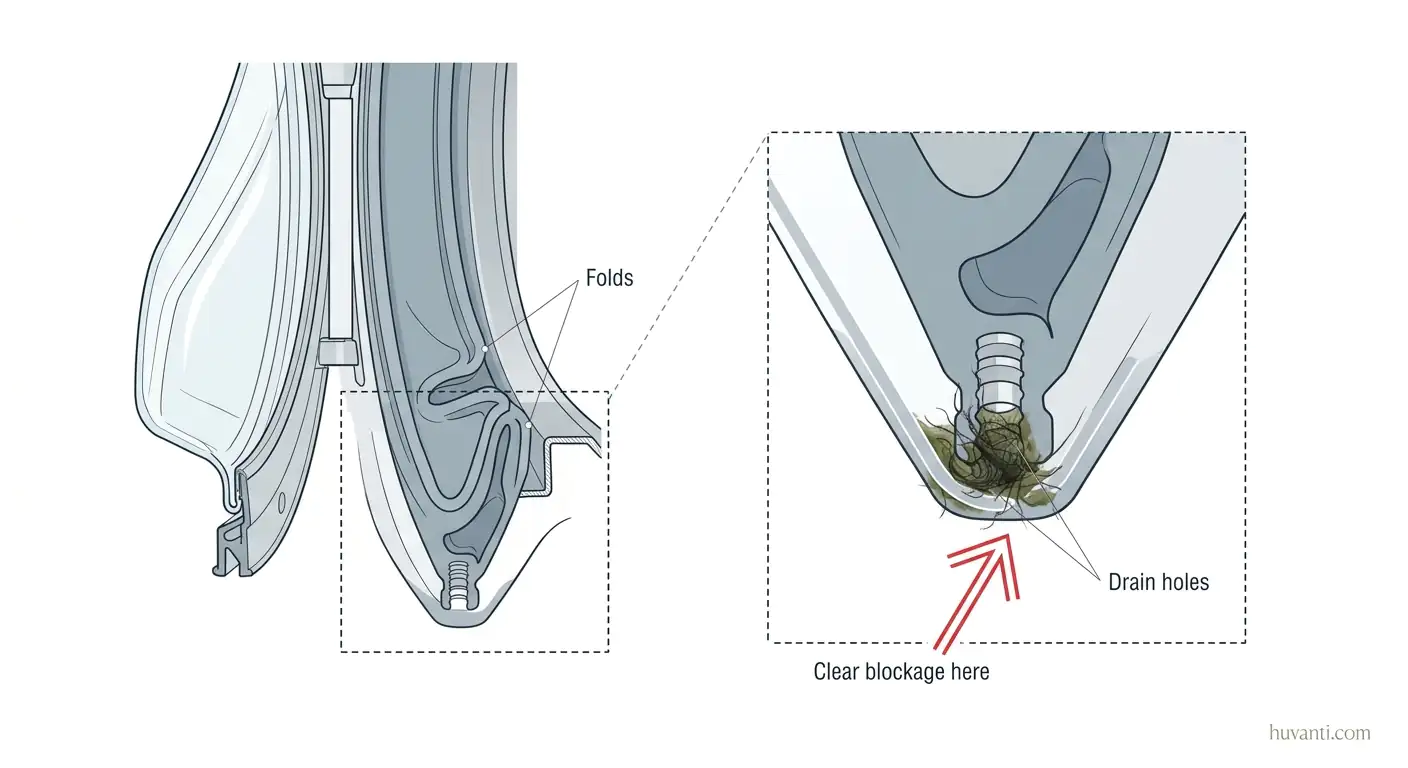
- Open the gasket fold gently and remove lint, hair, and coins. Check the small drain holes at the bottom of the gasket and clear them with a cotton swab or soft brush.
- Spray your cleaner on a microfiber cloth. Wipe every surface of the gasket, including deep in the folds. Let it sit for 5 minutes.
- Scrub any remaining spots with a toothbrush, then wipe dry. Leave the door open.
Pro tip:
- If the drain holes repeatedly clog, cut a thin strip of cloth, wet it with cleaner, and floss gently through the channel to pull out slime. Don’t poke anything sharp into the holes.
4. Remove and Scrub the Detergent Drawer and Housing
Best for sweet, sour smells and gunk in the dispenser area.
What to do:
- Pull the drawer out. Most have a release tab inside the softener cup. Check your manual if it resists.
- Soak the drawer in hot water with a splash of vinegar for 15 minutes.
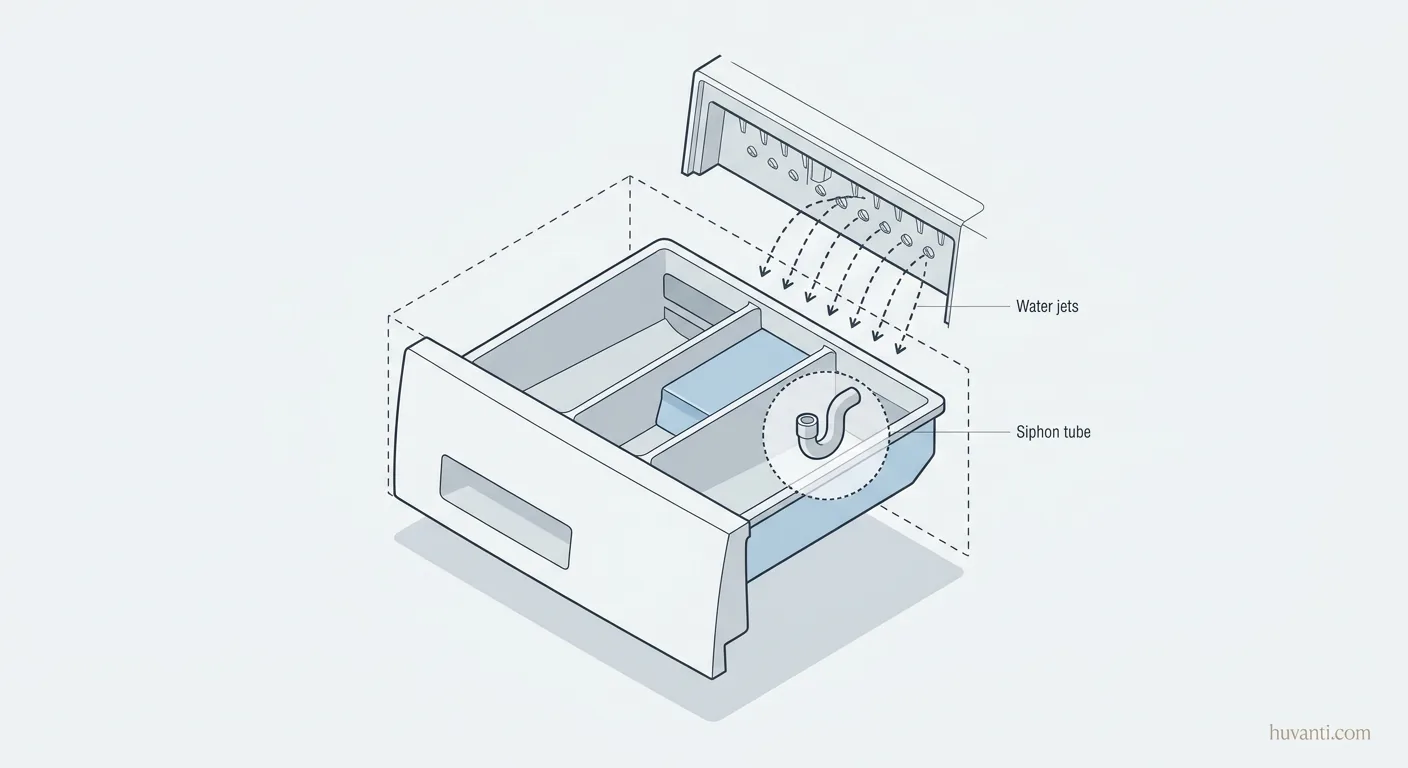
- Scrub each compartment and the small siphon parts. Rinse and dry.
- With a flashlight, look into the housing where the drawer slides in. Wipe the roof and corners. Use a toothbrush to scrub the top where water jets in.
- Reinstall the drawer dry and leave it cracked open to air out.
If you have auto dosing tanks, flush them with hot water periodically and wipe the lids and seals.
5. Clean the Pump Filter and Drain Trap
Best for earthy, swampy odors and poor draining.
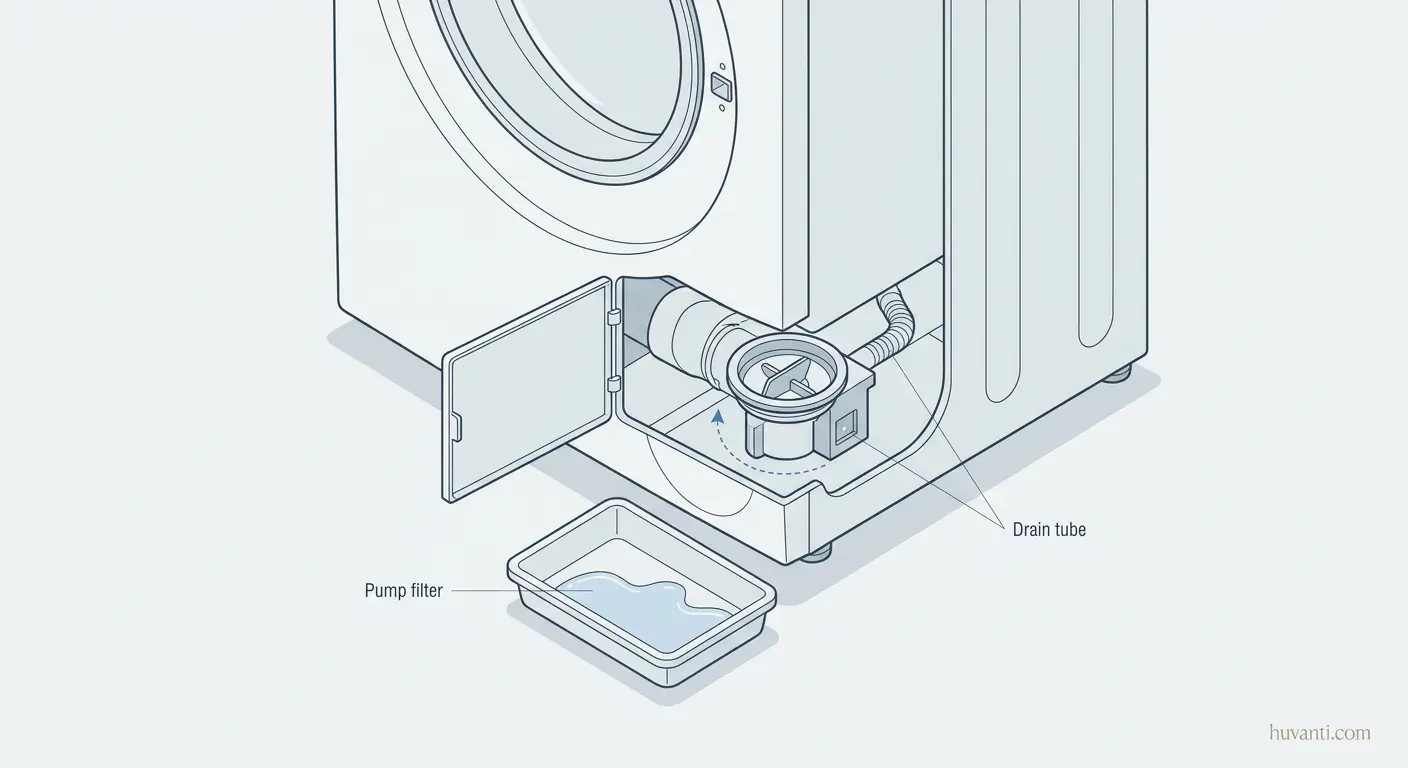
What to do:
- Unplug the washer. Place a tray and towels under the small service door near the bottom front.
- Open the drain tube and let water flow into a tray. Then unscrew the round pump filter slowly. Expect more water.
- Remove coins, lint, and debris from the filter. Wipe inside the cavity and the impeller area with a damp cloth.
- Rinse the filter under a tap, reinstall, and hand tighten. Close the panel, plug in, and run a short rinse.
This single task often removes a stubborn smell and prevents error codes.
6. Use a Washing Machine Cleaner Tablet
Best for maintenance cleaning and light odor, or after manual scrubbing to finish the job.
What to do:
- Drop 1 tablet into the empty drum. Don’t add laundry.
- Run Clean Washer or the hottest cycle.
- For heavy odor, repeat a second tablet cycle right away.
Why this works:
- These tablets use oxygen, surfactants, and chelators that dissolve biofilm and scale in places you can’t reach.
7. Hydrogen Peroxide and Washing Soda Hot Cycle
Best when you can’t use bleach but want a strong sanitizer.
What to do:
- Add 1 cup of 3 percent hydrogen peroxide and 0.5 cup of washing soda to the empty drum.
- Run the hottest cycle your machine allows.
- Wipe the drum and gasket when done, and air dry.
Notes:
- Hydrogen peroxide breaks down into water and oxygen, which makes it gentle on stainless steel and seals.
- Don’t use peroxide and vinegar together in the same step.
8. Descale With Citric Acid if You Have Hard Water
Best if you see white scale or live in a hard water area.
What to do:
- Add 1 cup of citric acid crystals, about 200 grams, to the empty drum.
- Run the hottest cycle.
- Wipe and rinse with a quick hot cycle if you see loosened residue.
Why this matters:
- Scale traps detergent and soil, which holds odor. Removing scale gives microbes fewer places to stick.
Don’t combine citric acid with bleach.
9. Clean the Door Glass Channel and Drum Lifters
Best when you smell odor even after cleaning the gasket and running hot cycles.
What to do:
- Dampen a thin cloth with cleaner. Slide it into the narrow groove where the door glass meets the gasket and wipe all the way around. Replace the cloth as it gets dirty.
- Wipe the back of the drum lifters, the plastic ribs inside the drum, with a cloth on your fingertips. Lint often hides behind them.
- Spin the drum by hand as you clean to reach every spot.
This small detail removes hidden slime that hot water alone misses.
10. Flush the Standpipe and Dry the Washer Fast
Best when the smell is strongest at the drain pipe or you need a quick odor reset today.
What to do for the drain:
- Pour 2 liters of very hot tap water into the standpipe slowly to refill the plumbing trap. If the odor fades within minutes, your trap was dry.
- If odor persists at the drain, flush with hot water again the next day. If that fails, a plumber should check for a partial blockage or a vent issue.
What to do for fast drying:
- When any cleaning cycle finishes, aim a small fan at the open door and dispenser for 20 minutes. If your washer has a venting or fresh air cycle, run it.
- Leave the door and drawer open until completely dry.
Drying the cabinet immediately starves microbes that cause odor of moisture and clears the smell quickly.
What to Avoid While Cleaning
- Don’t mix bleach with vinegar, ammonia, or any other cleaner.
- Don’t pour boiling water into the washer, which can warp plastics.
- Don’t scrub the gasket with abrasive pads or powders that can damage the surface.
- Don’t overuse vinegar in every load. It can be rough on some rubber parts over time.
- Don’t block the door open with hard objects that deform the gasket. Leave it ajar naturally.
Make the Fix Last: Prevention That Works
If you only do one thing, dry the washer after each use. These quick habits stop the smell from returning.
After every wash:
- Leave the door open and the dispenser drawer cracked open until dry.
- Remove laundry promptly. Don’t let wet clothes sit overnight.
- Wipe the bottom of the gasket with a small towel if you run consecutive loads.
Weekly:
- Run 1 hot load with powder detergent, like towels or bedding. Heat and low suds help clear residue.
- Clean hair and lint from the gasket and door glass.
Monthly:
- Run a Clean Washer or Self Clean cycle using either a machine cleaner tablet, 1 cup of bleach, or 2 cups of vinegar, but only one product at a time.
- Pull and rinse the detergent drawer.
- If your model has a pump filter, check and clean it. Some brands suggest every 2 to 3 months.
Smart detergent habits:
- Use HE detergent only. Pods can fail to dissolve in cold quick cycles, so use liquid or powder for those cycles or switch to a hotter wash when you use pods.
- Dose sparingly. In soft water, start with 1 to 2 tablespoons of liquid or 2 tablespoons of powder. In hard water, you may need a bit more.
- Use less or no fabric softener. A splash of vinegar in the rinse is an option, but not every load.
Room and machine airflow:
- Keep the laundry space ventilated. A small dehumidifier or an exhaust fan helps in humid climates.
- If your washer offers a vent or fresh air feature, enable it. Several newer models circulate air after the cycle to dry the gasket and drum.
Troubleshooting Stubborn or Strange Odors
- Rotten egg smell: Often a drain or water supply issue. Refill the standpipe trap with hot water. If you have well water, run a hot bleach cycle and compare. If the smell is only on hot washes, have the water heater checked. A corroded anode can cause sulfur odor.
- Sewer smell: Almost always a plumbing trap problem. Refill the trap with water. If it returns, call a plumber to check the standpipe and venting.
- Burnt or electrical smell: Stop and unplug the washer. That isn’t mold. Seek service.
- Odor returns within days: Check your dosing, clean the pump filter, and confirm the gasket drain holes are open. Also check the detergent housing roof, which often hides buildup.
- Visible mold behind the gasket you can’t reach: If a thorough wipe and a hot cycle don’t fix it, a technician can remove the front panel to clean behind the gasket or replace it. Gaskets are wear parts and are replaceable.
A Simple Seasonal Checklist
- Spring and fall: Descale with citric acid if you have hard water. Clean the pump filter. Inspect hoses for kinks and slow drain.
- Before vacations: Run a tub clean, then leave the door open. Pour a cup of water into the standpipe to keep the trap sealed while you are away.
- After heavy shedding season for pets: Clean the pump filter and run a machine cleaner cycle.
Final Thoughts
You don’t need harsh tricks or endless products to fix a smelly front load washer. Target the places where moisture and residue sit, clear the biofilm with heat and the right cleaner, then keep air moving. If you follow the 10 methods above and the quick prevention routine, you will both remove the odor now and stop it from coming back.
If something still smells off, use the troubleshooting section to separate a washer problem from a drain or water issue. Either way, you have a clear plan to get back to fresh laundry and a fresh machine.
All information in this guide is for educational and informational purposes only.
Frequent Asked Questions
Can I mix bleach and vinegar to clean faster?
No. Never mix them. Bleach and acids create toxic gas. Use bleach with water only. If you want to use vinegar, run it in a separate cycle after everything is rinsed.
How much bleach is safe for a tub clean?
Use 1 cup in the bleach dispenser for a full size washer. That is about 240 milliliters. Run the Clean Washer or hottest cycle, then wipe and air dry.
Is vinegar safe for the rubber gasket?
Occasional cleaning with vinegar is fine. Don’t soak the gasket in vinegar regularly or leave strong acid on rubber for long periods. Wipe dry after cleaning.
How often should I run a Clean Washer cycle?
Monthly works well for most homes. If you do many cold quick cycles, have hard water, or notice a hint of odor, run it every 2 weeks until things stay fresh.
What if I can’t remove the detergent drawer?
Most drawers have a small blue or gray tab inside the softener cup. Press it down to pull the drawer out. If it still resists, check your manual for the release method by model.
Will baking soda damage my washer?
Used as directed, no. One cup in an empty hot cycle is safe and helps deodorize. Don’t overuse it in every load, since it can leave residue if water is very cold.
Do washing machine cleaner tablets really work?
Yes, when used on schedule. They dissolve biofilm and scale in hidden areas. They work best as maintenance or right after you manually clean the gasket and drawer.
Why does the smell come back after a week?
Common reasons are using too much detergent, closing the door and drawer right after a cycle, clogged gasket drain holes, or a dirty pump filter. Fix those and the odor usually stops returning.
Can I add essential oils to make it smell nice?
Skip oils in the machine. Oils can coat sensors and add residue. If you want scent, use a small fabric spray on dry towels after washing, not inside the washer.
Is the smell from my washer or the house drain?
Sniff the open washer, then the standpipe the hose drains into. If the standpipe is stronger, fill the trap with hot water. If the odor is strongest at the gasket or drum, clean the washer using the steps above.
Do newer washers still get moldy?
Modern models often add venting cycles, antimicrobial gaskets, and drum clean reminders. These help a lot, but the same basics still matter. Use the right dose, run a monthly clean cycle, and keep the door and drawer open to dry.
Can I use hot water from the tap for cleaning cycles?
Yes. Choose the hottest setting available. If your washer heats internally, select sanitize or the highest temperature. Heat helps lift residue and kill microbes that cause odor.