You aren’t lazy, broken, or bad at adulting. Clutter drains energy, steals attention, and quietly ramps up decision fatigue. When you already feel low on fuel, even a tiny task can feel like a mountain.
This guide shows you how to declutter when you have no motivation and still make real progress. You will learn simple brain friendly tricks that cut friction, small wins that create momentum, and an easy plan you can follow even on hard days. I will give you 15 practical ways to start today, a 7 day micro plan, decision rules that erase overthinking, and a light maintenance routine that holds your gains.
The goal isn’t a picture perfect home. The goal is a livable space that supports you. Start small, stop early, and let progress compound.
Table of Contents
Why Motivation Vanishes When Clutter Builds
When your space is crowded, your brain works harder. That alone can lower motivation. A few common traps keep you stuck:
- Decision fatigue: Every item asks a question. Keep, toss, donate, where does it belong? Too many choices lead to freeze.
- Perfection pressure: If you think it must look perfect, you won’t start until you have perfect energy and perfect time. That day rarely arrives.
- Time blindness: Big vague tasks like “declutter the bedroom” feel endless. Your mind can’t see a finish line, so it delays.
- Friction: Missing bags, no clear categories, and far away donation spots all raise effort. More effort means less action.
So the fix is simple. Shrink decisions, lower friction, and make the first step tiny. That is how you get moving without waiting for motivation.
A 2 Minute Quick Start You Can Do Right Now
Try this right now. No prep.
- Drink a glass of water and play one song you like.
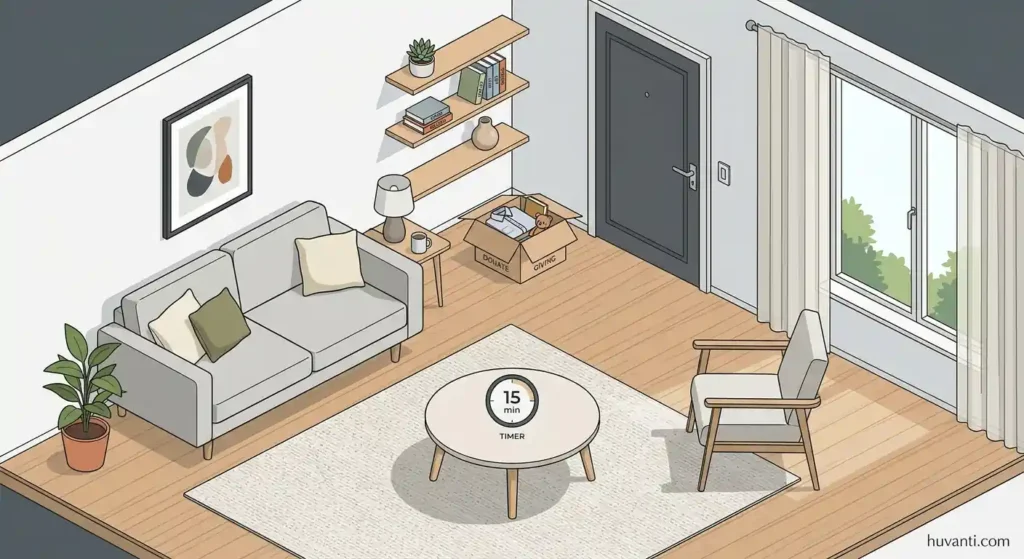
- Set a 2 minute timer. Stand in front of one surface you see every day.
- Remove obvious trash only. Nothing else. When the timer ends, stop.
- Take a photo. That is your first win. Small, clear, done. Momentum starts with visible progress.
Your Tiny Declutter Kit
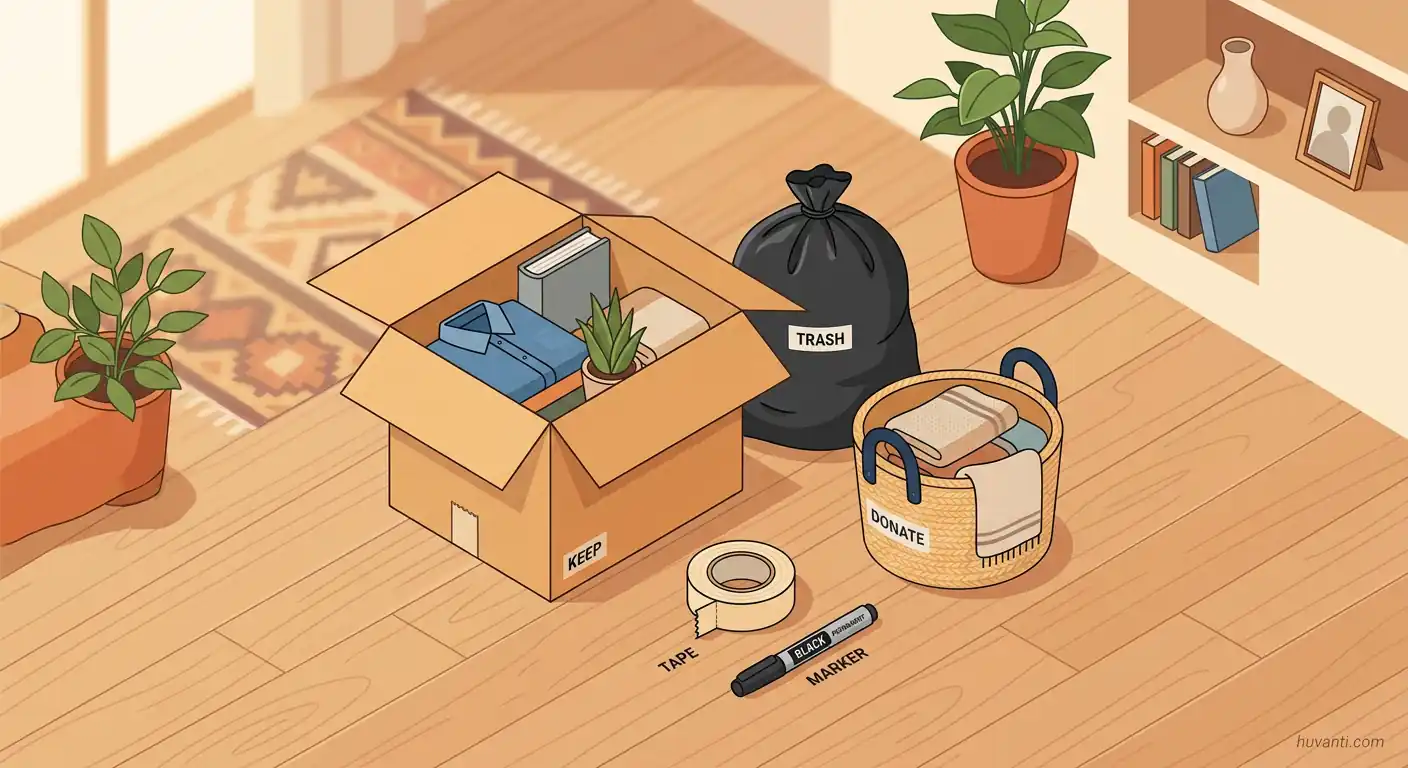
Keep this simple kit ready. It takes 1 minute to set up and removes most friction.
- One trash bag
- One donate box with lid
- One laundry basket for items that belong in other rooms
- Sticky notes or masking tape and a marker
- A soft cloth and all purpose spray
- A timer on your phone
- A permanent outbox spot near the door for donations and returns
The 15 Easy Ways to Start Today
Pick one method below. Stop when the time or item limit ends. Wins stack over weeks.
1. One Surface Reset
Choose a small surface you see daily. Nightstand, coffee table, bathroom counter.
How to do it:
- Lift everything off into the laundry basket.
- Wipe the surface.
- Put back only items you use every day.
- Move the rest to Keep Elsewhere, Donate, or Trash.
- Label your donate box and drop it at the outbox.
Why it works: One tidy zone lowers visual noise and calms your brain. That calm makes the next step easier.
2. Ten Item Sweep
You only handle 10 items. Fast and finite.
How to do it:
- Grab your trash bag and donate box.
- Walk one room and touch only 10 things.
- Decide fast. Trash, donate, or return to home.
- Stop at 10. Celebrate that you finished.
Why it works: A hard cap prevents overwhelm. Most people push past 10 once they start, but you don’t have to.
3. The 3 by 5 by 10 Timer Ladder
Use short sprints to break inertia.
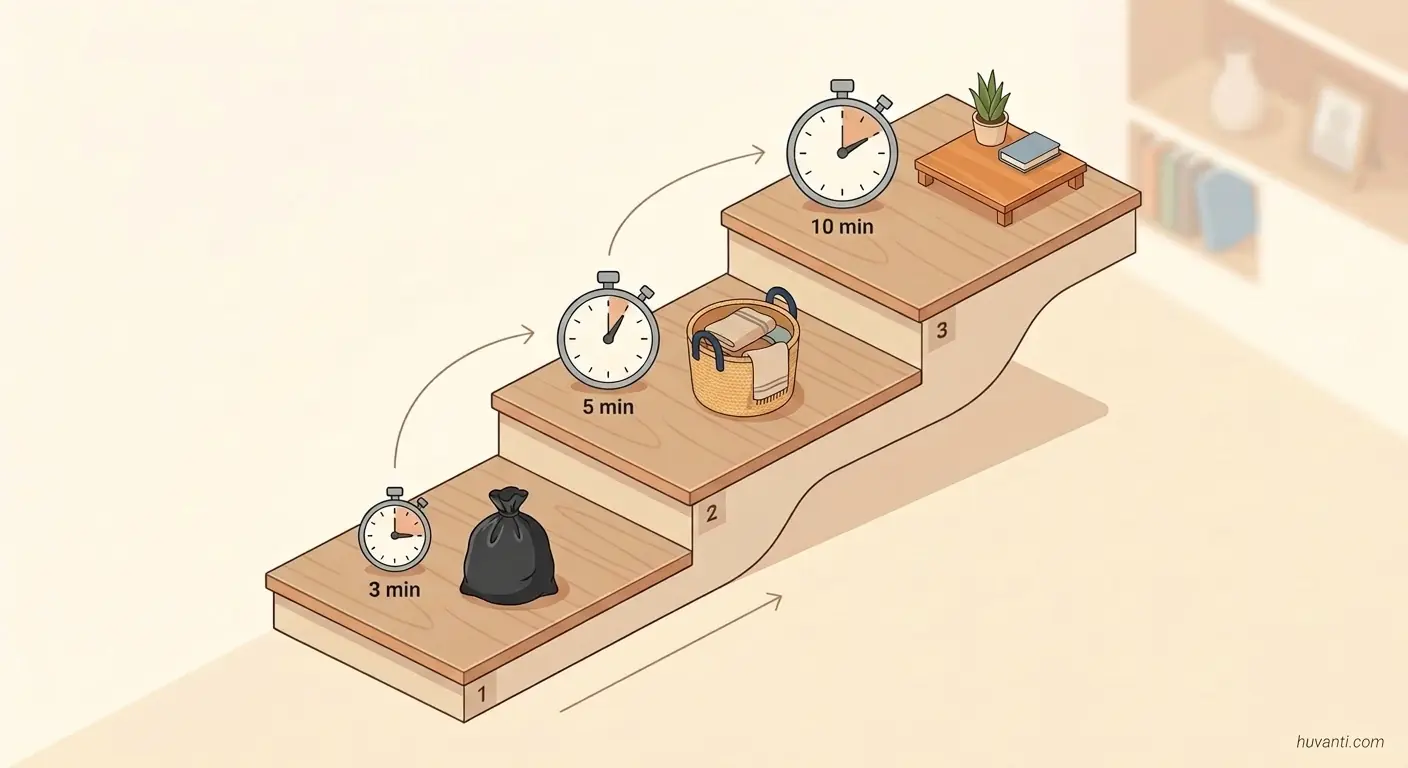
How to do it:
- Do 3 minutes of trash only.
- Do 5 minutes of dishes or laundry only.
- Do 10 minutes of one surface reset.
- Take a 5 minute break.
Why it works: Switching modes resets attention and prevents boredom.
4. Entry Zone Reset
Your entrance controls the daily flow. Fix this first for maximum daily payoff.
How to do it:
- Clear the floor. Shoes into a bin or rack.
- Add a key hook or a small tray.
- Create a paper catch. One vertical file or a magazine holder.
- Place a bag by the door for returns and donations.
Why it works: Fewer morning and evening snags keeps your future self motivated.
5. Laundry Launch
Laundry is clutter in motion. Move it.
How to do it:
- Start one load.
- While it runs, fold only the last dry load.
- Place a donation bag in the closet. When something doesn’t fit or is worn out, drop it in.
- Put socks and underwear away first for a fast sense of done.
Why it works: Laundry bottlenecks make bedrooms feel messy even when you clean. Break the loop.
6. The 1 In, 2 Out Rule for Hot Spots
Choose one category that spreads fast. Mugs, tote bags, beauty items, chargers.
How to do it:
- When you pick one item to keep in the hot spot, remove two similar items to donate.
- Use a container limit. Keep only what fits in one basket, bin, or shelf.
- Label the spot. Labels reduce drift.
Why it works: Container limits make decisions for you. No debate.
7. Decision Menu Cards
Decision paralysis makes you stop. So decide once, then follow the card.
How to do it:
- Write 20 tiny tasks on index cards. One card per task. Example: clear top drawer, toss expired spices, delete 20 photos, wipe bathroom mirror and sink, recycle old magazines.
- Shuffle, draw one, set a 10 minute timer, and do it.
- Add finished cards to a done stack. Watch it grow.
Why it works: A little randomness removes overthinking.
8. Photo Progress Method
Clutter blindness is real. Photos cut through it.
How to do it:
- Take a before photo of any spot.
- Do a 5 minute tidy.
- Take the after photo.
- Repeat this on the same spot for 3 days.
Why it works: Visible gains feel rewarding and keep you coming back.
9. Outbox System
Create a permanent, legal exit lane for stuff.
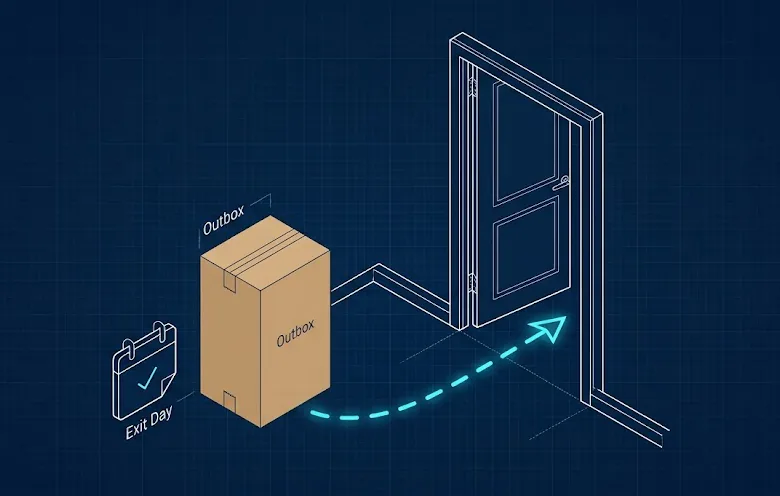
How to do it:
- Place one sturdy box near the door, labeled Donations and Returns.
- Add one small box in each closet.
- Pick one weekly exit day. Saturday at noon or whatever fits.
- When a box fills, it goes out on exit day. No backtracking.
Why it works: You remove friction at the last mile so stuff actually leaves.
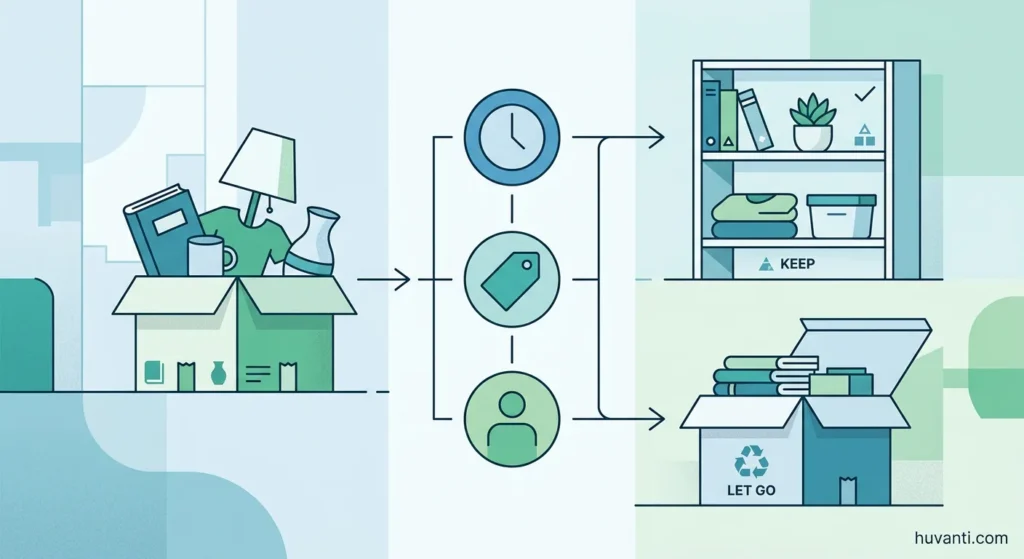
10. Four Bin Sort
This is the only sorting you need for most rooms.
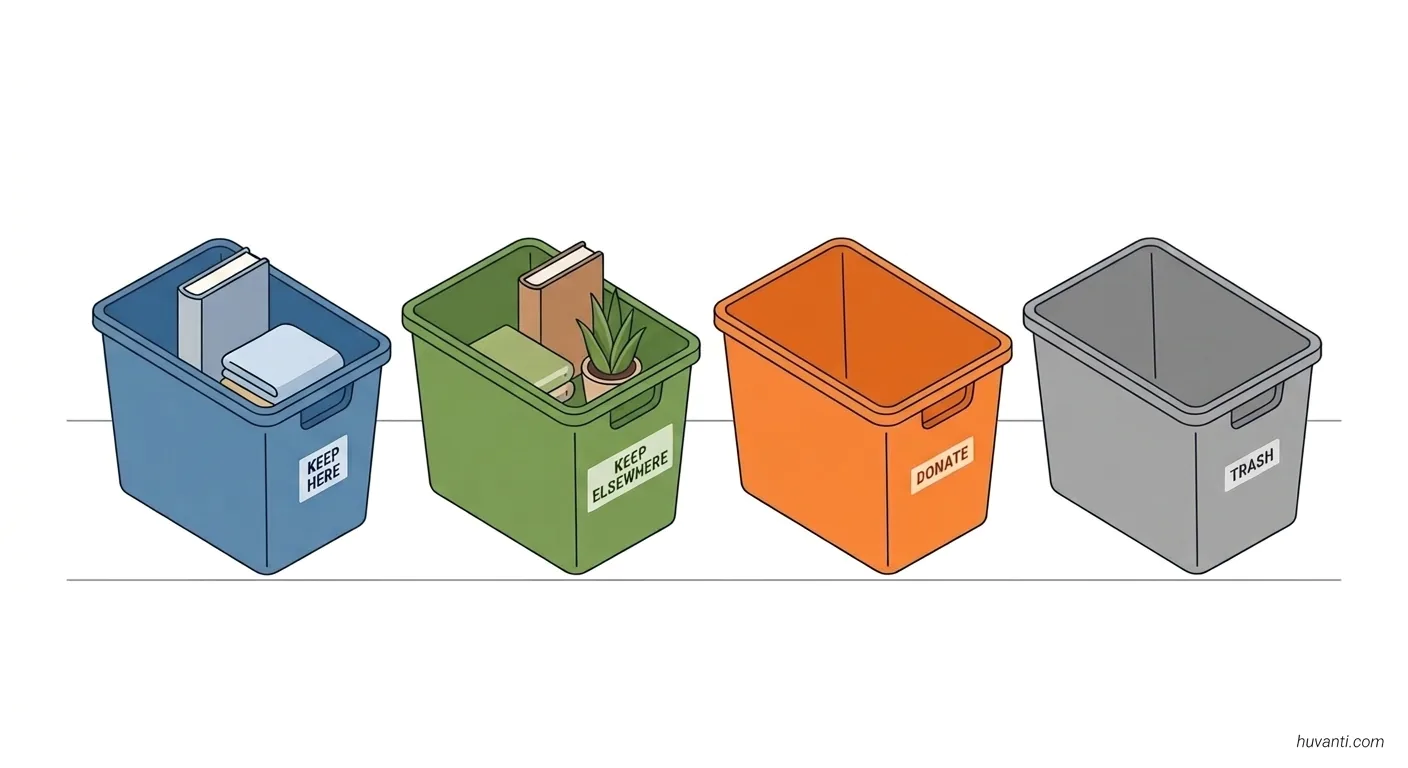
How to do it:
- Keep Here
- Keep Elsewhere
- Donate
- Trash or Recycle
- Stand in one spot and work left to right. Don’t leave the spot until the area is clear.
- When the Keep Elsewhere bin fills, walk it once and put everything away.
Why it works: Clear lanes, fewer decisions, no wandering.
11. Body Double Session
Working with someone, even virtually, supercharges focus.
How to do it:
- Text a friend and ask for 20 minutes of silent coworking on a call. Or join a virtual focus room.
- Say the target out loud. Example: I will clear the desk surface and empty one drawer.
- Start the timer. Mute if needed.
- At the end, show a photo or say what you finished.
Why it works: Light social pressure and support lower avoidance.
12. Decision Recipes for Common Stuck Items
Use pre made rules so you don’t debate every object. Try these:
- If I haven’t used it in 12 months and it doesn’t protect my health, it leaves.
- If I wouldn’t buy it again today, I consider letting it go.
- If it is a true duplicate, keep the best one and donate the rest.
- Gifts are symbols of care, not obligations. The care stays, the item can go.
- Paper rule: if I can get it online in 30 seconds, I don’t keep the paper.
Why it works: Rules protect your energy and keep you moving.
13. Sunday Reset Lite
A small weekly reset blocks clutter at the source.
How to do it:
- Dishes done, surfaces wiped, trash out.
- One load of laundry and put away.
- Reset living room pillows and blankets.
- Empty car trash and bring in cups and bottles.
- Set a 30 minute limit. Play a favorite playlist. Done is the target.
14. Digital Quick Wins That Support Your Space
Your phone and inbox pull focus away from home tasks. Clear the glare.
How to do it:
- Delete 50 photos. Screenshots and duplicates first.
- Unsubscribe from 3 emails you never open.
- Clear your downloads folder.
- Set one focus mode that silences notifications for your next 20 minute declutter sessions.
Why it works: Less digital noise frees attention for physical work.
15. One Minute Resets After Anchors
Attach tiny resets to things you already do. Examples:
- While the coffee brews, clear the sink.
- After you brush teeth, wipe the bathroom counter.
- When you bring in the mail, stand at the recycle bin and toss obvious junk.
- Before bed, return remotes and chargers to their homes.
Why it works: Routines remove choice and protect your progress.
A 7 Day Micro Plan That Respects Low Energy
You can finish this plan even on hard weeks. Each day has one small win and one optional extra.
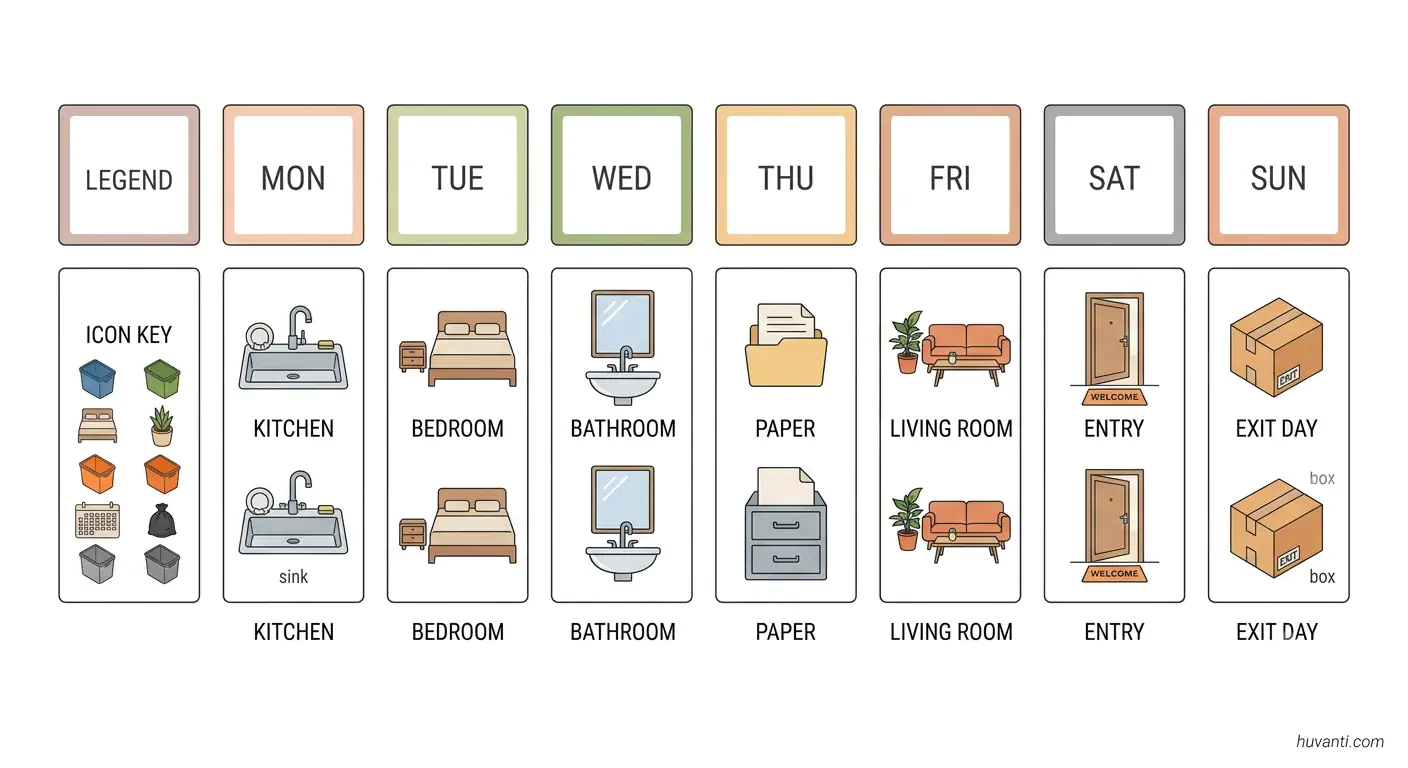
Day 1: Kitchen
- Win: Clear and wipe one counter or the sink.
- Optional: Toss expired items from the fridge door.
Day 2: Bedroom
- Win: Make the bed and clear both nightstands.
- Optional: Fill a donation bag with 5 clothing items you don’t wear.
Day 3: Bathroom
- Win: Clear and wipe the sink area.
- Optional: Toss expired products and empty bottles.
Day 4: Paper
- Win: Stand at the recycle bin and sort one inch of paper.
- Optional: Set up a vertical file for incoming mail.
Day 5: Living Room
- Win: Reset the coffee table and couch area.
- Optional: Collect stray cables and chargers into one labeled box.
Day 6: Entry and Car
- Win: Set a key tray and shoe bin at the door.
- Optional: Bag the car trash and bring in items that belong inside.
Day 7: Exit Day
- Win: Take donations and returns out of the house.
- Optional: Schedule next Sunday reset lite on your calendar.
Rules That Make Decisions Easy
Decision rules remove friction and speed everything up. Use as many as you like.
- Container rule: If it doesn’t fit in the chosen container, it doesn’t stay in this room.
- One touch rule for paper: Handle it once. Recycle, file, or act.
- Ten minute cap: You can always stop after 10 minutes. Most of the time you will want to keep going, but the promise makes it safe to start.
- Visible first: Start with what you see. Do hidden spaces later.
- Never start with sentimental items: Save those for a future focused session.
- Finish lines matter: End by taking trash out or putting donations in the outbox. Cross a line you can feel.
When Energy, ADHD, or Mood Is Part of the Picture
If you live with executive dysfunction, chronic pain, or low mood, you need a gentler approach that still produces results. Try these adjustments:
- Work seated as much as possible. Bring one drawer or basket to a table.
- Use bright timers and short sprints. Think 3 to 10 minutes.
- Reduce choices. Pre label bins and follow decision recipes.
- Body double for accountability and momentum.
- Lower the bar. One shelf or 10 items counts as a complete session.
- Build in recovery. Rest before you feel wiped out. Reward yourself immediately after.
Donation, Resale, and Recycling That Actually Happens in 2026
Getting items out of your home is half the job. Keep it simple.
- Donation: Check local community centers, shelters, thrift shops, and Buy Nothing groups. Many offer scheduled pick ups. Always verify what they accept before you bag everything.
- Resale: List only higher value or in demand items. Set a hard deadline. If it doesn’t sell by the date, donate it. Use clear photos and a one line honest description.
- Textiles: Many cities now accept clean textiles for recycling, even if not wearable. Look for municipal programs or mail in options.
- Electronics: Use certified e waste drop offs. Wipe data before you go. Many retailers run seasonal events for small electronics and batteries.
- Hazardous waste: Paint, chemicals, and some batteries need special handling. Check your city site for safe disposal days.
- Free curb alerts: Place a neat box with a visible Free sign and post to your local neighborhood group. Bring in anything still there by evening.
Common Mistakes That Kill Motivation
Avoid these traps and you will keep moving.
- Starting with keepsakes: This will stall you. Begin with easy, low emotion items.
- Buying storage before decluttering: Boxes won’t fix too much stuff. Declutter first.
- All day marathons: They burn you out. Use short, repeatable sessions.
- Vague goals: Don’t say “clean the kitchen.” Say “clear and wipe the main counter.”
- Letting donations boomerang: Once a bag goes into the outbox, it is gone.
- Spreading out: Don’t work in five rooms at once. Finish a tiny area and move on.
Keep It Going With Simple Maintenance
Maintenance isn’t about doing more. It is about doing less at the right time.
- Morning minute: Reset one surface while the kettle heats.
- Evening five: Return strays to their homes before bed.
- Weekly exit: Donations go out every week, rain or shine.
- Seasonal sweep: Once per season, run a 30 minute hot spot check. Clothes, kitchen gadgets, kids stuff, hobby gear.
- Future proof: Set a low buy bar. If it needs a new container to fit, don’t buy it today.
Troubleshooting When You Stall
Even a good plan hits bumps. Use this quick fix list.
- If you dread starting: Lower the first step until it feels silly. One item. One minute.
- If you keep wandering: Stand still and use the four bin sort. Don’t leave the spot.
- If decisions feel heavy: Pick one decision recipe and follow it blindly for 10 minutes.
- If you feel alone: Schedule a body double session. Say your goal out loud.
- If the room feels hopeless: Take a tight before photo, clear only trash for 5 minutes, then take an after photo. Proof of progress resets your mind.
- If you feel guilty about cost or waste: Keep the lesson, not the item. Let it leave and write one sentence about what you will do differently next time.
What You Just Learned and What to Do Next
You learned why motivation dips when clutter rises, and how to sidestep that trap with tiny, specific steps. You now have 15 ways to start today, a 7 day micro plan, simple decision rules, and a light maintenance routine that will hold your gains. Pick one method and try it for 10 minutes. That is enough to change the tone of your space and your day.
This guide is for educational and informational purposes only.
Frequent Asked Questions
What if I have almost no energy at all?
Start seated with a small container. Sort 10 items using the four bin method. Use a 3 minute timer. Stop and rest. Repeat later if you can.
How do I declutter when my family isn’t on board?
Claim one personal zone first, like your nightstand or a desk. Model the change. Use container limits for shared spaces. Offer choices, not demands. For kids, make it a game with a short timer and clear homes for toys.
What do I do with sentimental items?
Hold them for a future focused session. Start with easy categories to build skill. When ready, set a small time limit, take photos, keep a few best items, and let the rest go. Display what you keep so you can enjoy it.
How can I make decisions faster?
Use decision recipes. If you wouldn’t buy it again today, let it go. If it hasn’t been used in 12 months and it doesn’t protect your health, it leaves. Duplicates go down to the best one.
Should I sell items or just donate?
If it will sell quickly and is worth the time, try it with a strict deadline. Otherwise donate. Money isn’t the only return. Time, space, and relief matter more.
How do I stop clutter from coming back?
Use container limits, one in one out for hot categories, and a weekly exit day. Attach one minute resets to daily anchors like coffee time and bedtime.
What if I get overwhelmed halfway through?
Shrink the task. Switch to a trash only sweep for 3 minutes. Or move to an easier spot and come back later. Overwhelm means the step is too big, not that you can’t do it.
Is it better to do one room at a time or one category?
When motivation is low, space first is easier. Start with one visible area per room. When you feel stronger, try categories like books or clothes for deeper results.
How do I handle paperwork?
Stand at the recycle bin. Touch each paper once. Recycle, file, or act. Scan only what you must keep. Set a single inbox tray for new papers and clear it weekly.
What tools should I avoid buying?
Skip giant storage sets, random baskets, and specialty gadgets before you declutter. Use what you have first. After the edit, measure and buy only what solves a real problem.