Grocery stores are packaging machines. Plastic wrap, clamshells, mesh bags, and shrink film, it all piles up in your cart before you’ve even reached the checkout line. If you’re new to sustainable living, zero waste grocery shopping tips for beginners can feel overwhelming at first, but the shift happens faster than you’d expect once you build a few habits.
This guide walks through 10 practical steps you can start using on your next trip. No special equipment or perfect farmers market required.
Table of Contents
Key Takeaways
- Audit your trash and recycling before you shop, as it shows exactly where your packaging waste comes from.
- Bring bags, jars, and containers every time, and keep a backup set in your car.
- Bulk bins and package free produce cut the most waste for the least effort.
- Plan meals around what is already in your fridge to reduce both food waste and impulse buys.
- Build relationships with a few local shops instead of chasing a perfect zero waste store.
1. Start With a Waste Audit Before You Shop
Before you change anything, look at what you’re already throwing away. Pull out last week’s recycling bin and sort it by category: plastic clamshells, cardboard boxes, produce bags, and glass jars.
This 10 minute exercise tells you more than any checklist. Most beginners discover their biggest waste sources are just three or four items. Bagged salad, snack wrappers, and single use produce bags, in my experience.
Once you know your problem areas, you can target them directly instead of trying to overhaul your entire cart at once. That focus is what makes zero waste grocery shopping sustainable long term, rather than a one week experiment that fizzles out.
2. Bring Your Own Bags, All of Them
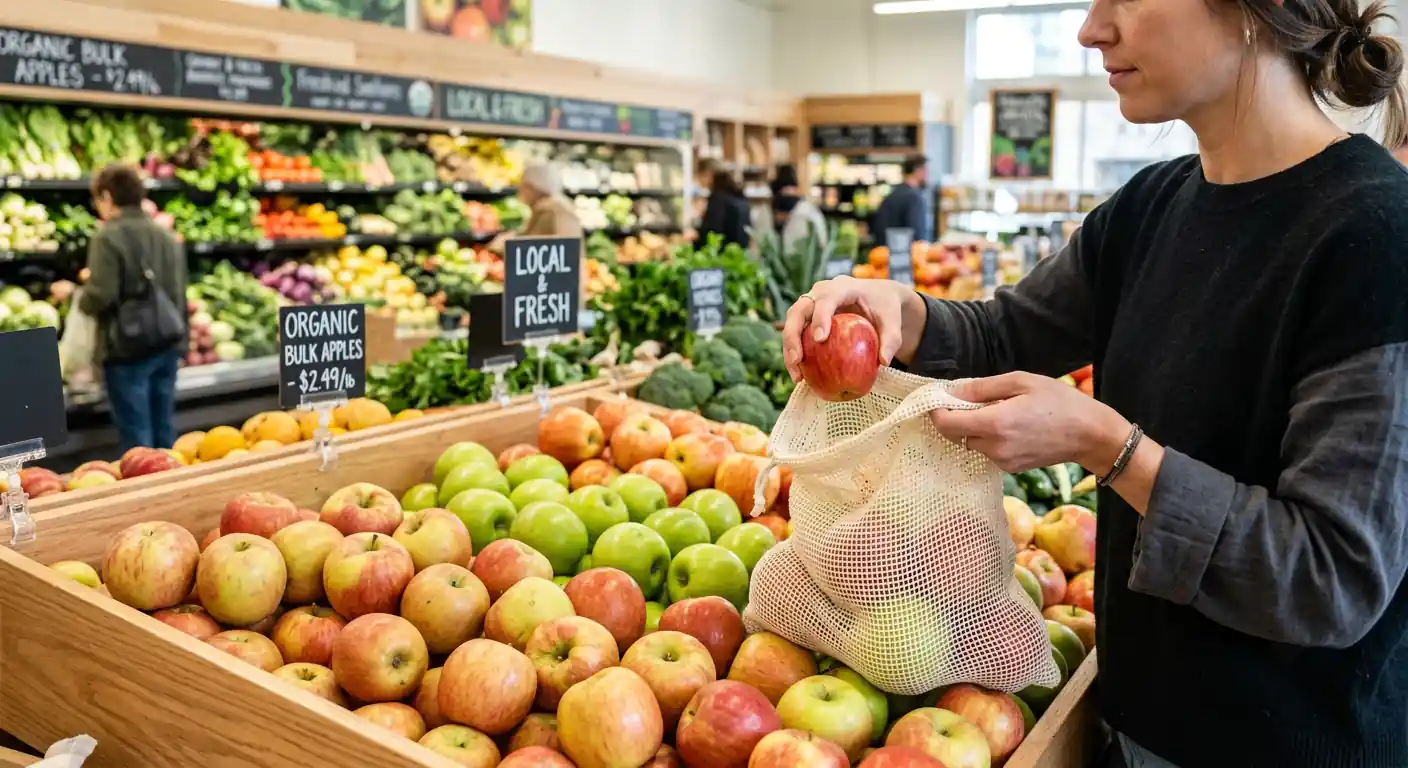
Reusable tote bags are the easy part. The habit most beginners skip is bringing bags for produce, bread, and bulk items too.
Keep a set in your car at all times:
- Cloth totes for the overall haul
- Mesh or cotton produce bags for fruits and vegetables
- A large bag for bread or bakery items
- A couple of small drawstring bags for bulk snacks or nuts
Some stores will tare, meaning weigh, your bags before you fill them so you aren’t charged for their weight. Ask a cashier once and you’ll know the process for every future trip.
Losing the habit is common at first. Try keeping bags near your car keys or in your trunk permanently, because out of sight means forgotten at the checkout.
3. Master the Bulk Bins
Bulk bins are where zero waste grocery shopping tips for beginners actually pay off in volume. Grains, beans, oats, spices, coffee, and even some cleaning products often come without any packaging at all.
Bring your own containers. Glass jars, cloth bags, or hard plastic tubs all work. Write the bin number and price per unit on a sticky note or your phone before you weigh out, since some registers need that code manually entered.
One thing beginners get wrong is assuming bulk means cheaper. It isn’t always true. Compare the per unit price against the packaged version before assuming you’re saving money, though you’re still cutting the packaging either way.
4. Choose Package Free Produce and Learn to Read Stickers
Loose fruits and vegetables are the simplest win in the entire store. Skip the pre bagged apples and the shrink wrapped cucumbers whenever a loose version sits nearby.
Those small stickers on produce carry more information than most shoppers realize. A 4 digit code starting with a 3 or 4 means conventionally grown. A 5 digit code starting with a 9 means organic. Neither tells you about packaging, so check the actual product for plastic wrap or foam trays regardless of the sticker.
Farmers markets skip almost all of this packaging by default. If one runs near you, even a monthly visit reduces a noticeable chunk of your household’s plastic footprint.
5. Shop the Perimeter First, Then Plan the Center Aisles
Grocery stores are laid out with fresh, less packaged food around the outer edges. Produce, bakery, deli, and dairy sit on the outside, while heavily packaged goods are stacked in the center aisles.
Build your cart from the outside in. Fill up on fresh items first, then head to the center only for the specific packaged goods on your list.
This isn’t about avoiding the center aisles entirely. Pasta, canned tomatoes, and pantry staples still matter. The goal is intention. You’re choosing what goes in your cart instead of grabbing whatever is at eye level.
6. Bring Reusable Containers for Wet or Messy Items
Deli counters, meat counters, and bakeries will often pack directly into your own container if you ask. Bring a lidded glass or stainless steel container and hand it over before they weigh out your order.
Some stores have policies against this due to health codes, so call ahead if you’re unsure. Others are happy to do it, you just have to ask, since most won’t offer unprompted.
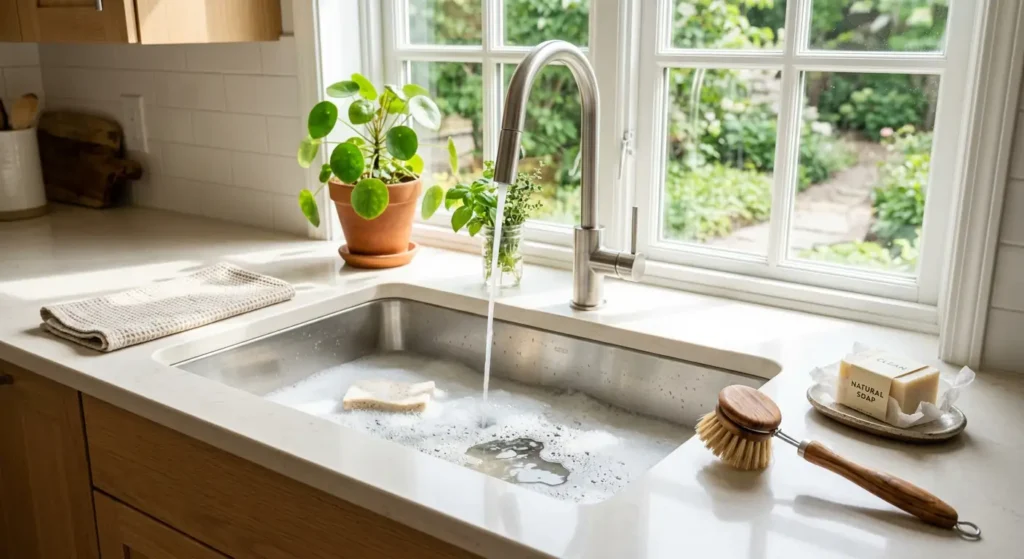
Cleaning these containers afterward matters as much as using them. Eco friendly hand washing methods for kitchen containers and dishes will keep your setup sanitary without adding disposable sponges or harsh chemical waste to the mix.
7. Plan Meals Around What You Already Have
Food waste and packaging waste are two sides of the same problem. According to the USDA, roughly 30 to 40% of the food supply in the United States goes uneaten, and a chunk of that starts with over buying at the store.
Check your fridge and pantry before writing a list. Build a few meals around ingredients that are already close to their use by date, and shop to fill gaps rather than restock everything.
A short weekly plan, even five meals sketched on a sticky note, cuts impulse purchases dramatically. Less impulse buying means less food that ends up wrapped in plastic and forgotten in the back of the fridge.
8. Pick Better Packaging When Zero Waste Isn’t Possible
Some products simply don’t come package free, especially in a typical US grocery store. When you’re stuck choosing, prioritize packaging in this order:
- Glass or metal, as both are widely recyclable and often reusable at home.
- Paper or cardboard, which is recyclable in most municipal programs.
- Plastic labeled #1 or #2, which are the most commonly accepted recyclable plastics.
- Plastic labeled #3 through #7, which are accepted in fewer programs, so check locally first.
This hierarchy won’t get you to zero waste on every item, and that’s fine. Progress beats perfection here. A jar of pasta sauce in glass beats one in a plastic pouch, even if neither is technically zero waste.
9. Store What You Buy So It Actually Lasts
Buying package free produce only helps if it doesn’t spoil before you use it. Loose greens, herbs, and vegetables often last longer stored in breathable cloth bags or wrapped in a damp towel inside the crisper drawer.
Swapping paper towels for reusable cloths does double duty here. Less waste at checkout, and better produce storage at home. Reusable fabric alternatives to paper towels for food storage and cleanup covers several options that work well for wrapping greens or lining a produce drawer.
Glass jars from bulk shopping double as storage containers once you’re home. Label them with a grease pencil so you aren’t guessing what is inside three weeks later.
10. Build Relationships With Local Farmers and Bulk Stores
Chasing a perfect zero waste grocery store often leads nowhere, especially outside major cities. A more realistic approach is finding two or three regular spots and getting to know how they operate.
Ask your butcher if you can bring your own container. Ask a bulk store owner if they’ll waive the bag fee if you bring cloth sacks every week. Ask a farmer at the market which items come without any wrapping at all.
These relationships compound over time. Store owners remember regulars, and regulars get more flexibility on packaging requests than a first time shopper ever will.
Final Thoughts
Pick one tip from this list and use it on your next trip. Bring bags, hit the bulk bins, or just do a waste audit before you head to the store, because one change beats a full overhaul that doesn’t stick.
Zero waste grocery shopping is a set of habits, not a checklist you finish once. Build them one grocery run at a time, and the packaging in your recycling bin will keep shrinking without you having to think about it as hard.
How much money does zero waste grocery shopping actually save?
It varies by household, but bulk buying often costs less per unit than packaged goods, especially for grains, beans, and spices. Savings shrink or disappear if you’re buying specialty zero waste products at a premium, so compare prices item by item rather than assuming waste free automatically means cheaper.
Do I need special containers to start?
No, reused glass jars, empty yogurt tubs, and old produce bags work fine when you’re starting out. Buy dedicated containers later, once you know which sizes and shapes you actually use.
What if my local grocery store doesn’t have bulk bins?
Focus on loose produce, better packaging choices, and reducing food waste through meal planning instead. Bulk bins help, but they’re one tool among several, not a requirement for making progress.
Is it sanitary to bring my own containers to a deli counter?
Yes, most stores allow it, though policies vary by state and by store. Call ahead or ask the counter staff directly, and expect them to weigh your empty container first, known as the tare weight, before filling it.
How do I stop forgetting my reusable bags?
Keep a full set in your car permanently instead of bringing them in from home each time. Losing this habit is the most common reason beginners give up in the first month.
Are frozen vegetables worse than fresh for zero waste shopping?
No, not necessarily. Frozen vegetables reduce food waste since you use only what you need, even though the bag itself is plastic. Weigh that trade off against your own habits, because if fresh produce spoils in your fridge, frozen may actually waste less overall.
What is the single easiest change to make first?
Bringing your own bags for produce and bulk items. It requires no new equipment beyond what you likely already own, and it addresses one of the most common sources of unnecessary packaging in a typical cart.
Does zero waste shopping take more time?
Yes, the first few trips take longer while you learn store layouts and bulk bin systems. Once the routine sets in, most shoppers report it adds only a few minutes compared to a conventional trip.
Can I do this on a tight budget?
Yes, skip specialty zero waste products entirely and focus on free changes. Bringing bags you already own, buying loose produce instead of pre bagged, and planning meals to cut food waste. These cost nothing extra and often save money over time.
What packaging should I avoid completely if possible?
Single use plastic produce bags and pre portioned snack packs create the most unnecessary waste for the least benefit. Loose produce and bulk snacks solve both with minimal effort.