Paper towels feel disposable in every sense of the word. You grab one, wipe up a spill, and toss it, usually after using maybe 10% of what it could actually absorb. If you are searching for reusable alternatives to paper towels in the kitchen, you already know the routine adds up. Money spent, waste generated, and a pantry shelf perpetually stocked with rolls you would rather not need.
The good news is that swapping out paper towels doesn’t require a lifestyle overhaul. Most of the alternatives below use materials you already own or can find for a few dollars. I’ve tested a handful of these in my own kitchen over the past few years, and the transition took less effort than I expected.
Table of Contents
Key Takeaways
- Unpaper towels and cotton rags handle 90% of everyday spills and wipe downs paper towels used to cover.
- Swedish dishcloths absorb up to 15 times their weight in liquid and last up to 1 year with regular washing.
- Linen and flour sack towels work best for glassware and surfaces where lint is a problem.
- A designated bin or basket for used cloths keeps the system from turning into laundry chaos.
- Most reusable swaps pay for themselves within 2 to 3 months compared to buying paper towels weekly.
Why Switch Away From Paper Towels in the First Place
Paper towels are a single use product built from a resource that takes energy and water to produce. The average household in the US goes through several rolls a month, and that adds up to a steady stream of waste heading straight to the trash. No recycling bin will take a used paper towel.
Cost is the other piece. A 12 pack of decent paper towels runs $15 to $20 depending on the brand, and that is a recurring expense that never stops. Reusable cloths cost more upfront but get used hundreds of times before wearing out.
There is also a practical angle. Reusable materials often perform better. Microfiber grabs grease that paper towels smear around. Linen leaves glass streak free. Once you find the right cloth for the right job, you stop reaching for paper out of habit.
1. Unpaper Towels (Cotton or Flannel)
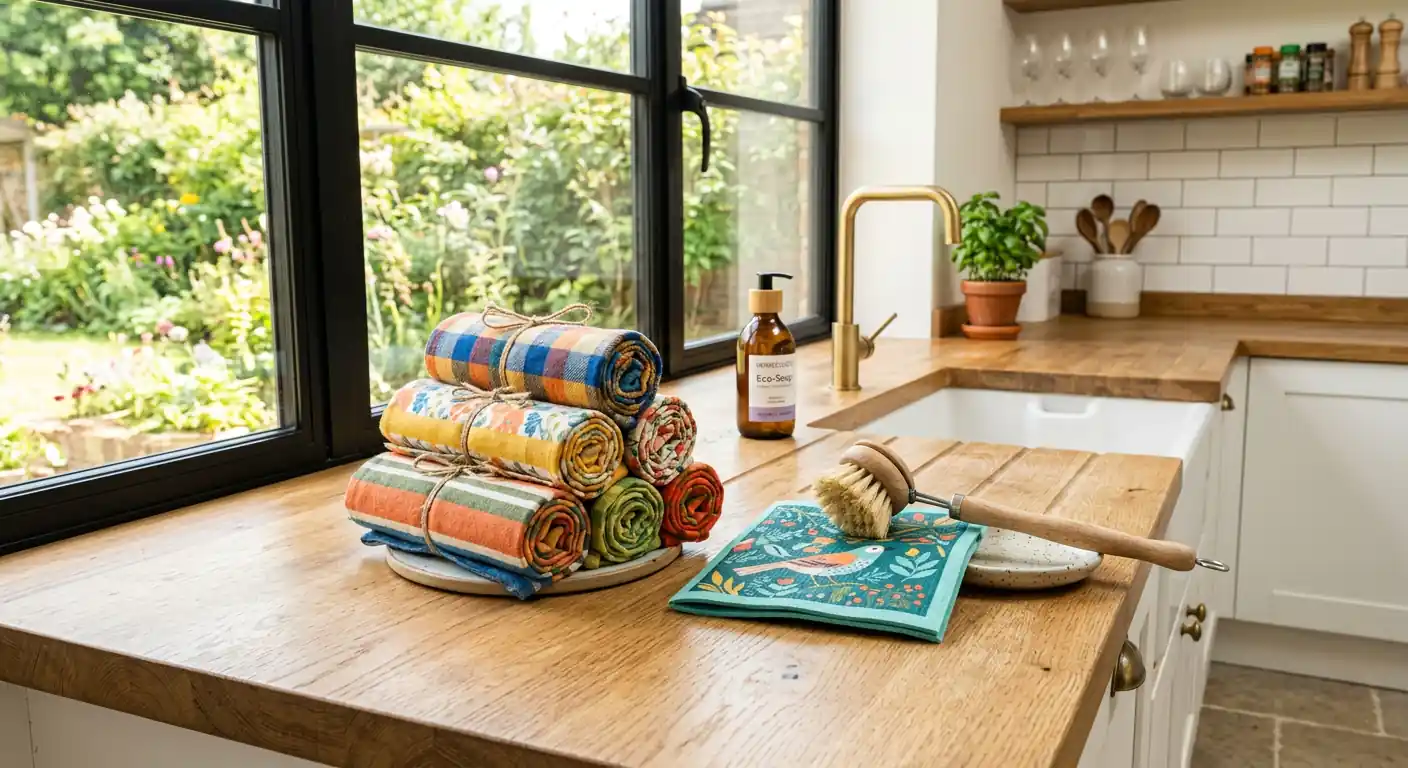
Unpaper towels are exactly what they sound like. Fabric squares cut to roughly the size of a paper towel sheet, sometimes sewn with a snap so they roll onto a paper towel holder. They are usually made from flannel, cotton, or a flannel cotton blend.
What makes them work so well is familiarity. You use them exactly like paper towels: wipe a counter, blot a spill, or dry your hands. The muscle memory transfers instantly, which is why unpaper towels tend to be the easiest entry point for people making this switch.
In my experience, a stack of 10 to 12 unpaper towels covers a household of 2 to 4 people for about 3 to 4 days between washes. Toss them in with a regular laundry load. No special cycle is needed, though skipping fabric softener helps them stay absorbent.
You can buy pre made sets online, or cut up old flannel shirts and t shirts if you sew. Either way, expect to spend $15 to $30 for a set that will outlast a year’s worth of paper towel purchases.
2. Swedish Dishcloths
Swedish dishcloths, sometimes sold under the brand name Skoy or similar, are made from a cellulose and cotton blend that starts stiff and softens with water. One cloth reportedly replaces up to 17 rolls of paper towels over its lifespan, according to claims from several Swedish dishcloth manufacturers, though actual mileage depends on how hard you use them.
These cloths absorb an impressive amount of liquid relative to their size, enough to mop up a spilled glass of water without needing a second one. They dry quickly too, which matters because a damp cloth left balled up on the counter is how mildew smells start.
Cleaning is simple. Toss them in the dishwasher’s top rack or the washing machine. Most last 6 to 12 months before they start to fray at the edges, at which point they are compostable if made from pure cellulose.
I keep 2 or 3 in rotation near the sink and 1 dedicated to counters only. Cross contamination between raw meat surfaces and countertops is worth avoiding, so having a designated cloth for each zone matters more than it seems.
3. Cotton Bar Mops
Bar mops are the thick, waffle weave towels you see behind restaurant bars and in professional kitchens. They are built for heavy duty wiping, tackling grease, spills, and wet counters, and they hold up to hundreds of wash cycles.
Compared to thinner dish towels, bar mops have more absorbent surface area per square inch. That waffle texture grabs onto grime instead of just pushing it around, which is exactly what you want when you are cleaning up after cooking bacon or draining pasta.
Restaurant supply stores sell them in bulk for a few dollars each, often cheaper per unit than boutique eco cloths marketed directly to home cooks. A dozen bar mops costs about as much as 2 or 3 packs of paper towels but lasts for years.
Keep a stack of 6 to 8 near the stove. Rotate them daily and wash on a hot cycle to fully sanitize between uses, especially if they have touched raw poultry or fish.
4. Linen Towels
Linen has a reputation for elegance, but it is also genuinely functional in a kitchen. The fiber is naturally lint free, which makes it the best option for drying glassware, wine glasses, and anything where a streak free finish matters.
Linen also dries faster than cotton because of its loose weave and quick dry properties. That quick dry property means less time sitting damp on a hook, which reduces the musty smell that plagues slower drying cloths.
The tradeoff is cost. Linen towels run $10 to $25 each depending on quality, noticeably more than cotton bar mops. But they last for decades with proper care. Many people inherit linen towels from parents or grandparents that are still in service.
Use linen specifically for glass, stainless steel, and polishing tasks rather than heavy spill cleanup. Save the tougher jobs for cotton or microfiber, and your linen stash will stay in good shape far longer.
5. Microfiber Cloths
Microfiber cloths are synthetic, made from ultra fine polyester and nylon fibers that create a huge amount of surface area per cloth. That structure is what makes them so effective at grabbing grease, dust, and grime without needing soap or cleaning spray in many cases.
For kitchen counters, stovetops, and appliance exteriors, microfiber often outperforms cotton. It picks up oil residue that cotton tends to smear, and it doesn’t leave lint behind on stainless steel finishes.
The downside is environmental. Microfiber sheds tiny plastic particles during washing, similar to synthetic clothing. If that is a concern for you, a mesh laundry bag designed to catch microplastic fibers during wash cycles helps reduce runoff, though it won’t eliminate it.
Buy a set of 6 to 8 microfiber cloths and designate them by task or color. One color for counters, another for appliances, and another for anything that touches raw food. This kind of color coding prevents cross contamination without needing to remember which cloth did what.
6. Flour Sack Towels
Flour sack towels are thin, tightly woven cotton towels originally used, as the name suggests, to hold flour and grain. Their loose but sturdy weave makes them surprisingly versatile. They are lint free like linen, absorbent like cotton, and cheap enough to buy in bulk.
They shine at tasks that need a delicate touch. Straining cheese, lining a bread basket, drying delicate glassware, or covering rising dough are all jobs flour sack towels handle better than a thicker terry cloth towel would.
A set of 6 flour sack towels typically costs $12 to $18, making them one of the more budget friendly reusable options on this list. They also fold flat for easy storage, which matters if drawer space is tight.
Wash them the same as any cotton towel. Use hot water, regular detergent, and no fabric softener if you want to preserve absorbency. They soften with every wash, which many people actually prefer over a stiff, brand new towel.
7. Beeswax Wraps (For Wiping and Covering)
Beeswax wraps get marketed mainly as a plastic wrap alternative, but they double as a light duty wiping tool for surfaces that don’t need much scrubbing. A quick wipe of a cutting board or the rim of a bowl works fine with a beeswax wrap in a pinch.
Made from cotton fabric coated in beeswax, tree resin, and jojoba oil, these wraps are naturally antibacterial to some degree, though they shouldn’t replace actual sanitizing for raw meat surfaces. Their real strength is covering bowls, wrapping cheese, or bundling produce. These are tasks that traditionally ate through rolls of plastic wrap and, indirectly, paper towels used for drying containers beforehand.
Expect a lifespan of about 1 year per wrap with regular use. Wash them in cool water with a mild dish soap. Hot water melts the wax coating and shortens their usable life significantly.
They aren’t a full paper towel replacement, but as a secondary tool in your rotation, they cut down on both plastic wrap and the paper towel you would use to dry a bowl before covering it.
8. Terry Cloth Rags (Repurposed Towels)
The simplest and cheapest option on this list involves cutting up old bath towels, hand towels, or worn out t shirts into rag sized squares. Zero cost, zero new materials, and an immediate use for fabric that would otherwise get thrown out.
Terry cloth’s looped texture makes it excellent for scrubbing, like baked on food on a stovetop or grime on an oven door. It isn’t the prettiest option and it won’t look styled on open shelving, but function wise, it competes with anything store bought.
Cut a worn towel into 8 to 10 rag sized pieces using scissors or pinking shears. Pinking shears reduce fraying at the edges. Store them in a bin under the sink specifically for messy jobs. This keeps them separate from your nicer everyday cloths.
Because these are already worn out materials, don’t feel precious about them. Use them for the ugliest jobs: grease traps, garbage can rims, and anything you wouldn’t want touching a nice towel anyway.
9. Cellulose Sponge Cloths
Cellulose sponge cloths sit somewhere between a sponge and a cloth, being flexible, absorbent, and able to handle both wiping and light scrubbing thanks to a slightly textured surface. Many brands sell these as compostable, plant based alternatives specifically marketed against paper towel use.
They hold water well, which makes them useful for washing dishes or wiping down surfaces that need a damp touch rather than a dry one. Eco friendly ways to wash dishes by hand covers how tools like this fit into a broader hand washing routine if you are rethinking more than just your paper towel habit.
Cellulose cloths do wear out faster than woven cotton. Expect 3 to 6 months of regular use before they start tearing. When they are fully cellulose with no synthetic mesh backing, most are compostable at the end of their life, which paper towels technically are too, but composting a paper towel still means it only got used once.
10. Cloth Napkins Doing Double Duty
Cloth napkins aren’t usually framed as a paper towel alternative, but in practice, they absorb small spills at the table and handle quick wipes just as well as a paper towel would for lighter tasks. If you already own a set for dinner, there is no reason they can’t pull double duty during the week.
Keep a stack of everyday cloth napkins, not the fancy ones reserved for guests, in a kitchen drawer for grabbing during meals or light cleanup. Spilled coffee, a wiped mouth, or a quick counter dab are all jobs a paper towel handles by habit, not necessity.
Cotton or linen napkins both work, and since you are likely washing them alongside kitchen towels anyway, there is no added laundry burden. This is less about buying something new and more about using what is already in your cabinet more deliberately.
Setting Up a System That Actually Works
Buying reusable cloths solves half the problem. The other half is building a routine so they don’t pile up in a soggy heap by the sink.
Designate a bin: A small lidded container or a hanging basket near the laundry room gives used cloths somewhere to go besides the counter. Empty it every 2 to 3 days, or whenever it is a third full.
Color code by task: Assign specific colors or patterns to specific jobs: one for counters, one for raw meat spills, and one for general drying. This small habit prevents the kind of cross contamination that makes people nervous about switching from disposable products.
Wash smart: Run a dedicated load of kitchen cloths every 2 to 3 days rather than mixing them into regular laundry, especially if any have touched raw meat or fish. Hot water plus a normal detergent cycle handles sanitizing for most household needs.
Keep a few paper towels around anyway: This isn’t an all or nothing swap. Some households keep a small roll on hand for genuinely gross jobs, like pet accidents or raw egg spills, while using reusable cloths for 90% or more of everyday kitchen tasks. That is still a real reduction in waste, and it is more sustainable as a habit than trying to eliminate paper towels completely on day one.
If you are also looking at what you are cleaning with, not just what you are wiping with, homemade cleaning spray recipes without vinegar pairs naturally with a reusable cloth setup, since a lot of surface cleaning happens with spray and wipe methods anyway.
Final Thoughts
None of these 10 options require you to give up convenience. They just relocate it. A drawer of cloths near the sink, a bin for dirty ones, and a laundry habit every few days is really all the system takes once it is set up.
Start with one or two categories rather than replacing everything at once. Grab a set of Swedish dishcloths or unpaper towels this week, see how they fit your routine, and add bar mops or linen towels once you know which jobs need what.
Frequently Asked Questions
How many reusable cloths do I actually need to fully replace paper towels?
Most households do well with 15 to 20 cloths total across categories. Unpaper towels, a few Swedish dishcloths, and some heavier bar mops or rags for tough jobs. That gives you enough to go 3 to 4 days between wash loads without running out mid week.
Do reusable paper towel alternatives smell bad after a few uses?
They can if left damp in a pile, which is true of any wet cloth. Wringing them out and hanging them to dry between uses, plus washing every 2 to 3 days, prevents the sour smell that comes from mildew buildup.
Can I put these in the dishwasher instead of the washing machine?
Yes, Swedish dishcloths and cellulose sponge cloths do fine in the dishwasher’s top rack. Cotton, linen, and microfiber cloths should go through the washing machine instead, since dishwasher detergent and heat cycles aren’t designed for fabric.
Are microfiber cloths actually eco friendly if they are made from plastic?
No, microfiber is a synthetic material and does shed microplastics during washing, so it isn’t a perfect environmental choice. It still reduces single use paper waste significantly, and using a microfiber catching laundry bag limits some of the shedding.
What is the best reusable option for cleaning up raw meat juices?
Cotton bar mops or dedicated terry cloth rags work best here, since they can handle a hot water wash and full sanitizing cycle afterward. Avoid using your good linen or Swedish dishcloths for raw meat cleanup to keep cross contamination risk low.
How long do unpaper towels actually last before wearing out?
With regular washing, a well made flannel or cotton unpaper towel lasts 1 to 2 years before the fabric thins out or edges fray badly. Snap style ones tend to lose their snaps before the fabric itself gives out.
Will switching to reusable cloths actually save money?
Yes, over time. A household spending $15 to $20 a month on paper towels recoups the cost of a reusable cloth set, usually $40 to $60 total across a few categories, within about 3 months.
Can I compost cellulose sponge cloths when they wear out?
Yes, pure cellulose cloths without synthetic mesh backing are compostable at the end of their life. Check the packaging first, since some blends include a small percentage of synthetic fiber for durability that isn’t compostable.
Do I need different cloths for different rooms, or can kitchen cloths do everything?
No, keep kitchen cloths separate from bathroom or general cleaning cloths. Food residue and bathroom grime call for different levels of sanitizing, and mixing them increases contamination risk in the kitchen.
What is the single best starter product if I only want to try one thing?
Swedish dishcloths are the easiest entry point. They are cheap, versatile, and immediately useful for spills, counters, and light dish drying. Once you see how much they replace, expanding into bar mops or unpaper towels feels like a natural next step.