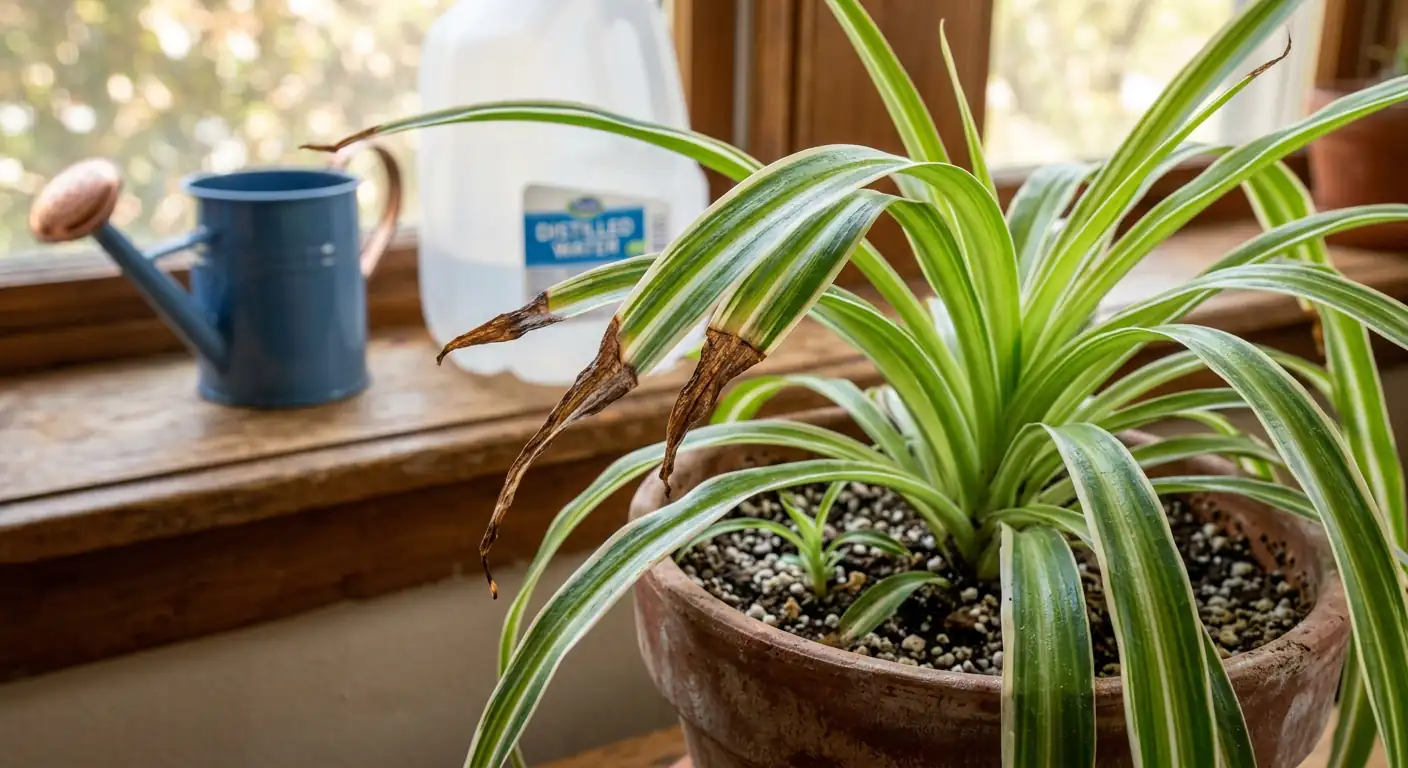
You switched to distilled water weeks ago. The brown tips are still there, maybe worse. That is frustrating, because everyone online swears distilled water solves this exact problem, and yet your spider plant hasn’t gotten the memo.
Here is the truth: distilled water only fixes brown tips caused by fluoride, chlorine, or dissolved salts in tap water. If your Chlorophytum comosum still shows crispy, brown tipped leaves after the switch, something else is driving it. This guide walks through 7 causes that have nothing to do with water purity, plus what actually fixes each one.
Table of Contents
Key Takeaways
- Distilled water only solves tip browning caused by tap water chemicals, it doesn’t fix fertilizer buildup, low humidity, or root stress.
- Flush the soil with plain water every 6 to 8 weeks to clear residual fertilizer salts even if you’ve never used tap water.
- Humidity below 40% is a common overlooked cause, because spider plants prefer 40 to 60%.
- A root bound pot can cause brown tips regardless of water quality because roots can’t take up moisture efficiently.
- Exclusive long term use of distilled water can strip minerals from soil, creating a new deficiency problem.
Disclaimer: All content provided here is for educational purposes only and isn’t a substitute for professional medical or botanical advice.
Why Distilled Water Isn’t a Cure All for Brown Tips
Distilled water removes minerals and chemical additives through evaporation and condensation. That makes it excellent for avoiding fluoride toxicity, a well documented cause of leaf tip burn in spider plants specifically. Chlorophytum comosum is one of the more fluoride sensitive common houseplants.
But brown tips are a symptom, not a diagnosis. They show up whenever a leaf loses water faster than its roots can replace it, or when something damages the tip cells directly. Water chemistry is just one possible trigger among many.
Think of it this way: switching water types treats one input. It doesn’t touch your pot size, your humidity, your fertilizer habits, or your light exposure. Those variables keep working on the plant whether your water comes from a bottle or the tap.
1. Fertilizer Salt Buildup in the Soil
This is the cause I see most often in spider plants that “should” be fine after a water switch. Fertilizer, even the gentle, balanced kind, leaves mineral salts behind in the soil as water evaporates. Over months, those salts accumulate in the top layer and around the pot’s edges.
Salt buildup pulls moisture out of root cells through osmosis, which is the same mechanism that makes tap water salts so damaging. Distilled water doesn’t undo salts that are already sitting in your potting mix from six months of regular feeding.
You’ll often see a white or yellowish crust on the soil surface or pot rim: roots near that crust turn dark and mushy, while the leaves connected to damaged roots brown from the tip inward.
The Fix
- Flush the pot thoroughly with room temperature distilled or filtered water. Pour roughly 3 times the pot’s volume through the drainage hole.
- Let it drain completely for 15 to 20 minutes before returning it to its saucer.
- Cut fertilizer strength in half for the next 2 to 3 feedings.
- Repeat the flush every 6 to 8 weeks going forward, regardless of water type.
In my experience, this single step resolves more mystery brown tips than any other fix on this list. If you feed your spider plant monthly and have never flushed the soil, start here.
2. Humidity Too Low for Chlorophytum Comosum
Spider plants are native to tropical and subtropical regions of South Africa, where ambient humidity runs well above what most US homes maintain, especially with HVAC systems running. Indoor humidity often drops below 30% in winter and even lower near heating vents.
When air is dry, leaves lose water through their surface faster than roots can pull it up, even with perfect watering habits. Tips, being the farthest point from the water source, dry out and brown first because they’re the last stop for moisture moving through the leaf.
Signs this is your cause: browning that is worse in winter, near heating vents, or in rooms with running air conditioning. If you place a hygrometer near the plant and see readings under 35%, humidity is a likely contributor.
The Fix
- Group plants together to raise local humidity through collective transpiration.
- Run a small humidifier nearby, especially during heating season.
- Avoid placing the pot directly above or beside a heat vent or radiator.
- Skip misting as a long term fix, because it raises humidity for minutes, not hours.
3. A Root Bound or Undersized Pot
Spider plants grow fast and produce dense, tuberous root systems that fill a pot within a year or two under good conditions. Once roots circle the container with no room left, water runs straight through the pot instead of soaking into the root ball.
That means your distilled water might be draining out the bottom without ever hydrating the plant properly. The tips brown from chronic mild drought stress, even though you’re watering on schedule.
Check by lifting the plant out of its pot, if you can do it without much resistance. Roots that circle tightly around the root ball, or that poke visibly through the drainage holes, confirm the plant needs a bigger home.
The Fix
- Choose a new pot 2 inches larger in diameter than the current one. Don’t go larger, or the excess soil holds water too long.
- Loosen the outer roots gently before repotting to encourage outward growth.
- Water thoroughly after repotting and let the plant recover in indirect light for 1 to 2 weeks.
What to do about drooping and root shock after repotting covers what is normal recovery versus a warning sign, since transplant stress can temporarily worsen brown tips before things improve.
4. Inconsistent Watering Schedule, Not Just Water Type
Distilled water changes what you’re pouring into the pot. It doesn’t do anything to fix how often or how much you pour. Spider plants tolerate a fair amount of drought, but wild swings between bone dry soil and soggy soil stress the roots repeatedly.
Each stress cycle damages a few more root tips. Damaged roots can’t move water efficiently, so leaf tips, again the farthest point from the source, show the damage first.
I’ve found that people who switch to distilled water often also become more careful waterers around the same time, which muddies the cause and effect. If your schedule was erratic before the switch and still is, the water type wasn’t the real issue.
The Fix
- Check soil moisture with a finger 2 inches deep before watering. Water only when it is dry at that depth.
- Water thoroughly until it drains from the bottom, rather than giving small frequent sips.
- Keep a simple log for 3 to 4 weeks to spot patterns you might be missing.
Diagnosing leaf discoloration that isn’t from overwatering is worth a look if you’re unsure whether your watering habits are actually the culprit or a coincidence.
5. Too Much Direct Light or Sun Exposure
Spider plants handle bright, indirect light well but scorch under prolonged direct sun, especially through south or west facing windows in summer. Leaf tips and edges bear the brunt of this because they have thinner tissue and less water reserve than the leaf’s center.
If your plant sits within a foot or two of an unfiltered window, and the browning shows up mostly on the sun facing side of the plant, light is a strong suspect. Distilled water can’t compensate for cellular damage from heat and UV exposure.
The Fix
- Move the plant 3 to 4 feet back from direct sun, or add a sheer curtain to diffuse the light.
- Rotate the pot a quarter turn every week or two for even growth and to reveal hidden damage patterns.
- Watch new growth over the following month. Undamaged new leaves confirm light was the trigger.
6. Temperature Stress and Cold Drafts
Chlorophytum comosum prefers a range of roughly 65°F to 80°F. Outside that range, leaf tissue at the extremities struggles to regulate water loss, and tips brown as a stress response.
Common culprits include drafty windows in winter, air conditioning vents blowing directly on the foliage, and placement too close to an exterior door that opens frequently. Sudden temperature swings, not just cold in general, seem to cause more damage than steady cool conditions.
The Fix
- Keep the plant at least 3 feet from exterior doors and AC vents.
- Avoid windowsills that drop below 50°F overnight in winter.
- Move the plant away from single pane glass during cold snaps.
7. Distilled Water’s Missing Minerals Causing Nutrient Lockout
Here is the twist that catches a lot of well meaning plant owners off guard. Distilled water contains essentially zero dissolved minerals. Used exclusively, over many months, it can actually leach existing minerals out of your potting soil faster than they’re replenished, since water always moves toward equilibrium and pulls minerals along with it during drainage.
Spider plants need trace amounts of calcium, magnesium, and potassium for healthy cell walls, particularly at leaf margins and tips. A prolonged deficiency shows up as the same brown tip symptom you’re trying to eliminate, which is why the fix can quietly become a new cause if you never reintroduce nutrients.
This doesn’t mean distilled water is wrong to use. It means it needs a companion: regular, appropriately diluted fertilizer to replace what the water itself won’t provide.
The Fix
- Feed with a balanced, diluted houseplant fertilizer every 4 to 6 weeks during the growing season, from spring through early fall.
- Use a fertilizer at one quarter to one half the label strength to avoid trading one salt problem for another.
- Consider alternating distilled water with filtered tap water occasionally if your tap water is otherwise low in fluoride and chlorine, to reintroduce trace minerals naturally.
How to Diagnose Which Cause Is Yours
Work through this short checklist before changing anything else:
- Check the soil surface for white crust, which points to cause 1.
- Check a hygrometer reading. Under 35% points to cause 2.
- Check root density by lifting the plant. Tightly circled roots point to cause 3.
- Review your last month of watering. Irregular gaps point to cause 4.
- Note the plant’s distance from windows and vents, which points to causes 5 and 6.
- Review your fertilizer history since switching to distilled water. A long gap points to cause 7.
Most cases involve more than one factor stacking together. A root bound plant sitting in dry winter air, for example, browns faster than either issue alone would cause. Address the most obvious one first, wait 3 to 4 weeks, then reassess new growth before making a second change.
Other houseplants show similar tip and edge browning for overlapping reasons. If you’re managing more than one plant with this issue, comparing causes of leaf tip browning across common houseplants breaks down how the same root causes play out differently by species.
Final Thoughts
Distilled water solves exactly one problem: mineral and chemical buildup from tap water. Everything else on this list, like fertilizer salts, humidity, root space, watering rhythm, light, temperature, and even the missing minerals in distilled water itself, keeps working on your spider plant whether the water is pure or not.
Start with the soil flush and a humidity check, since those two fixes resolve the majority of cases I’ve come across. Give any single change 3 to 4 weeks before judging results, and watch new growth rather than the already damaged leaves for proof the fix is working.
Frequently Asked Questions
Will trimming brown tips help the plant recover?
Trimming won’t reverse existing damage, but it stops the plant from spending energy on dead tissue and improves appearance. Cut at an angle following the leaf’s natural shape, staying just outside the green tissue. It won’t fix the underlying cause, so pair it with one of the fixes above.
How long does it take to see improvement after fixing the cause?
New, healthy growth typically appears within 3 to 6 weeks once the actual cause is addressed. Existing brown tips won’t turn green again, you’re watching for new leaves to grow in clean.
Can tap water ever be better than distilled water for spider plants?
Yes, if your local tap water is low in fluoride and chlorine, it can actually be better long term because it supplies trace minerals distilled water lacks. Check your municipal water report or test with a simple TDS meter before switching back.
Is brown tip damage a sign of pest problems?
Occasionally. Spider mites and mealybugs can cause tip and edge damage alongside stippling or visible webbing. Inspect the undersides of leaves closely with a magnifying glass if browning appears alongside sticky residue or fine webbing.
Should I mist my spider plant daily to fix brown tips from low humidity?
No, daily misting raises humidity for only a few minutes and doesn’t meaningfully change the plant’s overall environment. A humidifier or pebble tray provides more consistent results for actual humidity related browning.
How often should spider plants be repotted to avoid root bound stress?
Every 12 to 18 months during active growth is typical for a fast growing spider plant. Check root density yearly even if you aren’t ready to repot, since growth rate varies by light and season.
Does the type of pot material matter for brown tips?
Yes, terracotta pots dry out faster than plastic or glazed ceramic, which can help prevent overwatering but may worsen drought stress in dry climates. Match the pot material to your watering habits and home humidity rather than choosing based on appearance alone.
Can too much fertilizer cause brown tips even with distilled water?
Yes, and it’s one of the most common causes on this list. Fertilizer salts accumulate in soil regardless of water purity, so flushing the soil periodically matters even if you’ve never used tap water.
Are brown tips ever just normal aging in spider plants?
Yes, older, lower leaves naturally yellow and brown as the plant redirects energy to new growth. This is normal if it is limited to a few of the oldest leaves and new growth looks healthy and green.
What is the ideal watering frequency for spider plants to prevent brown tips?
Water when the top 2 inches of soil feel dry, which usually works out to every 7 to 10 days indoors, though this varies with light, pot size, and season. Consistency matters more than any fixed schedule.