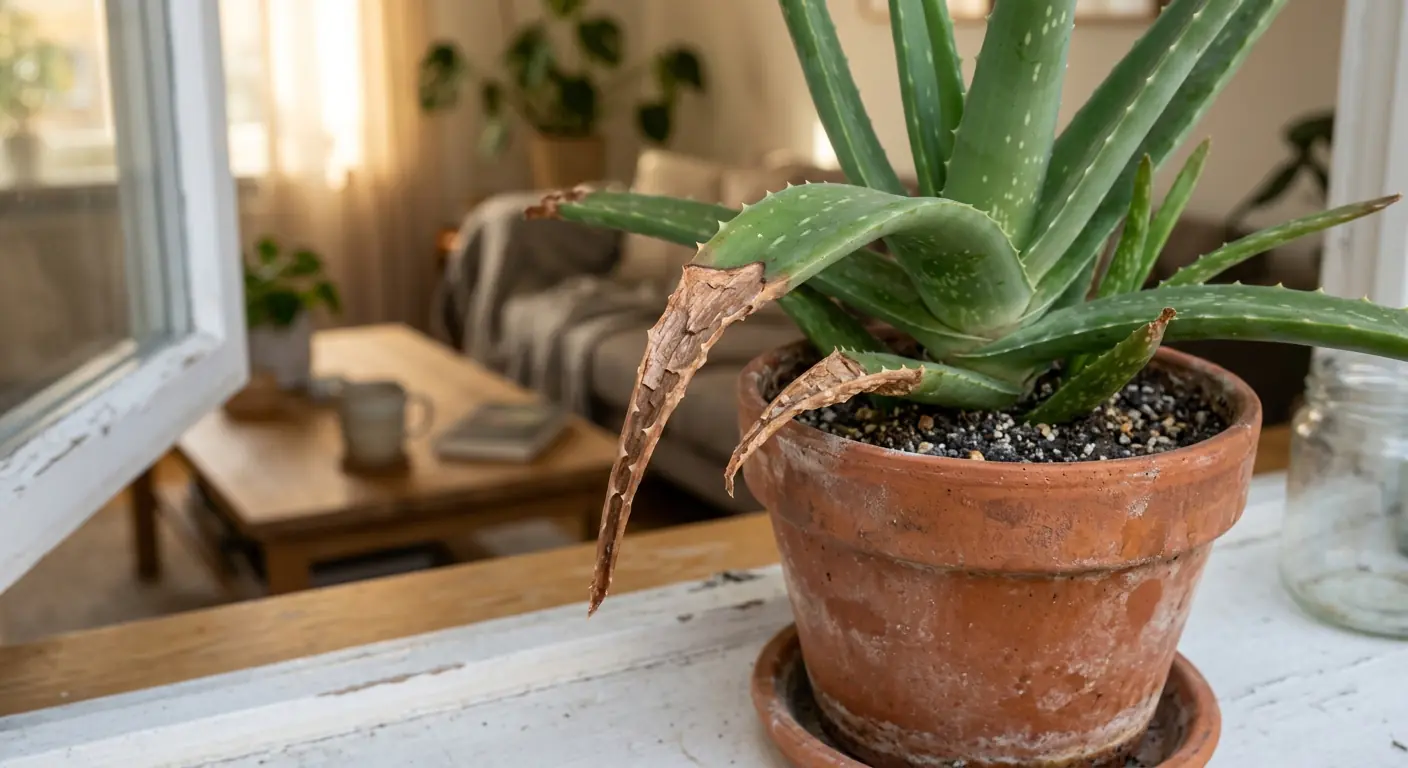
Brown tips on aloe vera almost always trace back to water, light, or soil problems, not disease. The good news is that aloe vera turning brown at tips is one of the most fixable issues in houseplant care, and most plants bounce back within a few weeks once you correct the root cause. This guide walks through all 11 causes, how to tell them apart, and exactly what to do about each one.
Table of Contents
Key Takeaways
- Overwatering and poor drainage cause the majority of brown tip cases. Check soil moisture before doing anything else.
- Aloe vera needs at least 6 hours of bright, indirect light daily. Too little or too much both cause browning.
- Tap water with high fluoride or salt content builds up in soil and burns leaf tips over time.
- Trim brown tips only after fixing the underlying cause, using a clean, sharp blade.
- Most aloe plants recover within 3 to 6 weeks once watering and light conditions are corrected.
What Brown Tips on Aloe Vera Actually Mean
Brown, crispy tips signal stress. The plant is pulling moisture and nutrients away from the leaf edges to protect its core, and the tissue at the tip dies off first because it is furthest from the roots. This is a survival response, not a random defect.
Aloe vera stores water in thick, fleshy leaves, which is what makes it a succulent. When something disrupts its water balance, whether too much, too little, or contaminated, the leaves show it fast. Tips brown before the rest of the leaf because they are the oldest and most exposed tissue.
I have grown aloe on windowsills that got blasted with afternoon sun and in bathrooms with almost no light at all. Both environments produced brown tips, just through opposite mechanisms. Diagnosing the cause correctly matters more than reacting quickly.
1. Overwatering and Root Rot
This is the number one cause of aloe vera turning brown at tips, and it is the first thing to rule out. Aloe roots sit in wet soil and start to suffocate within days, cutting off the plant’s ability to move water and nutrients up to the leaves.
Look for soft, mushy leaves near the base, a sour smell from the soil, or tips that are brown and slightly translucent rather than dry and crispy. Root rot often shows up alongside yellowing at the leaf base, not just browning at the tip.
Fix it: Stop watering immediately. Remove the plant from its pot and inspect the roots. Healthy roots are firm and white or light tan, while rotted roots are dark, mushy, and may smell unpleasant. Trim away any rotted roots with a sterilized blade, let the plant dry out for 24 hours, and repot in fresh, fast draining cactus mix.
2. Underwatering and Drought Stress
Aloe vera is drought tolerant, not drought proof. Go too long without water, and the leaves start drawing moisture from their own tips to keep the core alive, leaving dry, papery brown edges behind.
Underwatered aloe usually looks thin and slightly curled inward, almost like it is conserving itself. The soil will be bone dry several inches down, and the pot will feel noticeably light when you lift it.
Fix it: Water deeply until it runs out the drainage holes, then let the top 2 inches of soil dry out completely before watering again. In most homes, that is roughly every 2 to 3 weeks, though it varies with light, pot size, and season.
3. Too Much Direct Sunlight
Aloe likes bright light, but hours of direct summer sun through an unfiltered window can scorch leaf tips the same way it sunburns skin. The damage often appears as brown or reddish brown patches concentrated on the side facing the window.
This is especially common after moving a plant from a low light spot straight into full sun. The leaves haven’t built up tolerance yet, and the sudden intensity overwhelms them.
Fix it: Move the plant back a few feet from the window or add a sheer curtain to diffuse the light. If you are transitioning aloe to a sunnier spot, do it gradually over 1 to 2 weeks, adding an extra hour of direct light every few days.
4. Not Enough Light
At the other extreme, aloe kept in dim corners or north facing rooms stretches toward the nearest light source, growing pale, thin, and leggy. Over time, weak growth becomes more prone to tip dieback because the plant lacks the energy reserves to maintain healthy tissue.
You will usually notice elongated stems and wider gaps between leaves before browning appears. The brown tips here tend to be duller and less crisp than sun scorch damage.
Fix it: Relocate the plant to a spot with at least 6 hours of bright, indirect light daily. A south or east facing windowsill works well in most US climates. [INTERNAL_LINK: best window direction for succulents and light requirements guide]
5. Tap Water Chemicals, Fluoride and Chlorine
Aloe vera is notably sensitive to fluoride, a common additive in US municipal water supplies. Over months of watering, fluoride and chlorine can accumulate in the soil and cause a very specific symptom: tan or brown tips with a slightly yellow halo around the discolored area.
This type of damage builds slowly, so it is easy to miss until several leaves show it at once. It is more common in plants that have lived in the same pot and soil for a year or longer without repotting.
Fix it: Switch to distilled water, rainwater, or tap water left uncovered for 24 hours to let chlorine gas off. This doesn’t do anything for fluoride, unfortunately. Flushing the soil with distilled water every few months also helps clear built up minerals.
6. Fertilizer Burn and Salt Buildup
Aloe vera barely needs feeding. Overdoing it, or using a fertilizer too strong for succulents, leaves mineral salts in the soil that scorch root tips first and leaf tips soon after. Brown edges from fertilizer burn often look crisp and slightly curled, sometimes with a white, crusty residue visible on the soil surface.
This is one of the more preventable causes on this list, and one I see often in new plant owners eager to help their aloe grow faster.
Fix it: Flush the pot with plenty of distilled water to leach out excess salts, then hold off on fertilizing for at least 8 weeks. When you do feed again, use a diluted, balanced fertilizer formulated for succulents no more than once every 2 months during the growing season.
7. Poor Drainage or the Wrong Soil Mix
Regular potting soil retains far more moisture than aloe vera can tolerate. Even with correct watering habits, dense soil keeps roots sitting in dampness longer than they should, which eventually shows up as brown, water damaged tips.
Signs include soil that stays wet for a week or more after watering, or water that pools on the surface instead of draining through quickly.
Fix it: Repot into a cactus or succulent specific mix, ideally cut with perlite or coarse sand at a ratio of about 1 part perlite to 3 parts soil. Confirm the pot has at least one drainage hole. This one detail solves more aloe problems than almost anything else.
8. Pot Without Drainage Holes
This deserves its own entry because it is so common, especially with decorative ceramic pots. Water has nowhere to go, so it collects at the bottom, keeps roots perpetually damp, and produces the same rot driven browning described in cause 1, regardless of how carefully you water.
Fix it: Repot into a container with drainage holes, or keep the aloe in its nursery pot and place that inside the decorative pot as a cachepot. Empty any water that collects in the outer pot within an hour of watering.
9. Cold Damage and Temperature Stress
Aloe vera is native to warm, arid climates and struggles below 40°F. A drafty windowsill in winter, a cold car ride home from the nursery, or an air conditioning vent blowing directly on the leaves can all cause tip browning that looks water soaked at first, then dries out and turns dark brown or black.
Cold damage tends to appear suddenly, often within 24 to 48 hours of the temperature drop, unlike the slower onset of watering or light issues.
Fix it: Keep aloe in a spot that stays between 55°F and 80°F, away from drafty windows, exterior doors, and heating or cooling vents. Damaged tissue won’t recover, but new growth will be fine once temperatures stabilize.
10. Pest Infestations
Mealybugs and spider mites feed on aloe sap, and their damage often starts as small brown or discolored spots near the tip before spreading. Check the crevices where leaves meet the stem. That is where mealybugs like to cluster, appearing as small white, cottony masses.
Spider mites are harder to see but leave fine webbing and a stippled, dry texture on the leaf surface. Both pests thrive in dry indoor air, particularly during winter heating season.
Fix it: Wipe leaves down with a cloth dipped in diluted isopropyl alcohol, about 1 part alcohol to 1 part water, to kill visible pests. Then follow up with insecticidal soap or neem oil every 7 days for 3 weeks to catch new hatches. Isolate the plant from other houseplants while treating it. [INTERNAL_LINK: identifying and treating common succulent pests]
11. Natural Aging
Not every brown tip means trouble. Aloe vera sheds its oldest, lowest leaves over time as part of normal growth, and those leaves often brown and dry out from the tip inward before the plant releases them entirely.
The tell: This happens gradually, affects only the oldest bottom leaves, and the rest of the plant looks healthy, plump, and green. If new growth at the center looks fine, you are probably just watching the plant age normally.
Fix it: Nothing required. Trim the leaf if it bothers you cosmetically, or leave it. The plant will eventually shed it on its own.
How to Trim Brown Tips Correctly
Cutting off brown tips doesn’t fix the underlying problem, but it does stop the damaged tissue from spreading and improves how the plant looks while it recovers.
- Identify the underlying cause first and correct it. Trimming before fixing the root issue just means you’ll be trimming again in a few weeks.
- Sterilize scissors or a blade with rubbing alcohol to avoid introducing bacteria into the cut.
- Cut at an angle just below the brown section, leaving as much healthy green tissue as possible.
- Avoid cutting into the main rosette or stem unless the entire leaf is dead.
- Let the cut area air dry for a few hours before watering again to reduce infection risk.
Prevention: Keeping Aloe Vera Tips Green Long Term
A few consistent habits prevent almost every cause on this list from recurring.
- Water on a check first schedule: Test soil moisture with your finger 2 inches deep instead of watering on a fixed calendar.
- Use the right soil: A fast draining cactus mix in a pot with drainage holes solves both overwatering and root rot risk at once.
- Match light to location: Bright, indirect light for most of the day, with only gradual exposure to direct sun.
- Filter your water: Distilled or rainwater avoids the fluoride and chlorine buildup common in US tap water.
- Feed sparingly: Succulent fertilizer at quarter strength, no more than once every 2 months, and only during active growth in spring and summer.
- Repot every 2 years: Fresh soil clears out accumulated salts and gives roots room to grow without becoming rootbound. [INTERNAL_LINK: step by step guide to repotting succulents]
Final Thoughts
Diagnosing brown tips comes down to elimination. Check water and soil first, then light, then water quality, then pests and temperature. Most cases resolve with one or two adjustments, not a complete overhaul of your care routine.
Keep an eye on new growth over the next few weeks. If fresh leaves emerge plump, green, and free of discoloration, you’ve fixed the problem. The browned tips on older leaves are just cosmetic history at that point, and a clean trim is all that is left to do.
Frequently Asked Questions
Will brown tips on aloe vera turn green again?
No, once leaf tissue browns and dries out, it is dead and won’t regreen. The plant’s energy is better spent on new growth, so trim the damaged tip once you’ve fixed the underlying cause.
How often should I water aloe vera to prevent brown tips?
Water only when the top 2 inches of soil are completely dry, which is typically every 2 to 3 weeks indoors. Adjust for season, as aloe needs less water in winter when growth slows.
Can I save an aloe plant with severe root rot?
Yes, often, if you catch it before all the roots have decayed. Trim away rotted roots, let the plant dry out for a day, and repot in fresh, dry cactus mix, then hold off watering for about a week.
Is brown at the tip the same as brown spots on the leaf body?
No, not usually. Tip browning points to water, light, or mineral stress, while spots on the flat part of the leaf often signal sunburn, fungal issues, or pest damage. Location on the leaf helps narrow down the cause.
Should I mist my aloe vera to help with brown tips?
No, aloe is a desert succulent and doesn’t benefit from misting. Extra moisture on the leaves can actually encourage fungal problems in humid environments.
Does tap water really cause brown tips on aloe vera?
Yes, it can, particularly in areas with fluoridated municipal water. The effect builds slowly over months, so switching to distilled or rainwater is a reasonable precaution even if you aren’t certain it is the cause.
How do I know if it is underwatering or overwatering?
Underwatered leaves feel thin, dry, and slightly wrinkled, while overwatered leaves feel soft, mushy, or waterlogged. Check the soil moisture directly rather than relying on the leaves alone.
Can cold weather alone cause brown tips?
Yes, temperatures below 40°F, or even a cold draft from a window or vent, can damage leaf tips within a day or two. Move the plant away from cold air sources and the damage should stop spreading.
How long does it take for aloe vera to recover from brown tips?
Most plants show visible improvement within 3 to 6 weeks once the underlying cause is corrected. New, healthy growth at the center of the rosette is the clearest sign of recovery.
Do brown tips mean my aloe vera is dying?
No, rarely. Brown tips are a localized stress response, not a sign the whole plant is failing. As long as the center growth stays firm and green, the plant is very likely to recover.