You look around, and every object tugs at you a little. You could use it one day. It cost money. Someone you love gave it to you. So what do you do when your space is crowded and everything seems non-negotiable?
You learn to make faster, kinder decisions. That’s what this guide gives you.
You’ll learn why your brain fights letting go, how to make choices without guilt, and 17 simple, repeatable methods that help you release things without second-guessing. You’ll also get room-by-room tips, what to do with donations and selling, and habits that keep clutter from coming back.
If you came here wondering how to declutter when everything feels important, you’ll leave with a plan you can start today. This is practical, step-by-step, and designed to respect your memories, your money, and your time.
Table of Contents
Why Everything Feels Important and Hard to Let Go
Before you start, it helps to know what you’re up against. You aren’t lazy or messy. Your brain is wired to keep things.
- Endowment effect: Once you own something, you value it more than the same item on a shelf.
- Sunk cost fallacy: You want to keep an item because you paid for it, even if it adds no value now.
- Identity bias: You keep things linked to who you were or who you hope to be.
- Decision fatigue: A room full of choices drains your energy, so you keep everything to avoid the pain.
Knowing the traps lets you work around them. You’ll use tight boundaries, tiny decisions, and a few clever tests that reduce the mental load.
Set Yourself Up for Quick Wins
A strong start makes decluttering feel lighter. Do this first.
Define Your Finish Line for Today
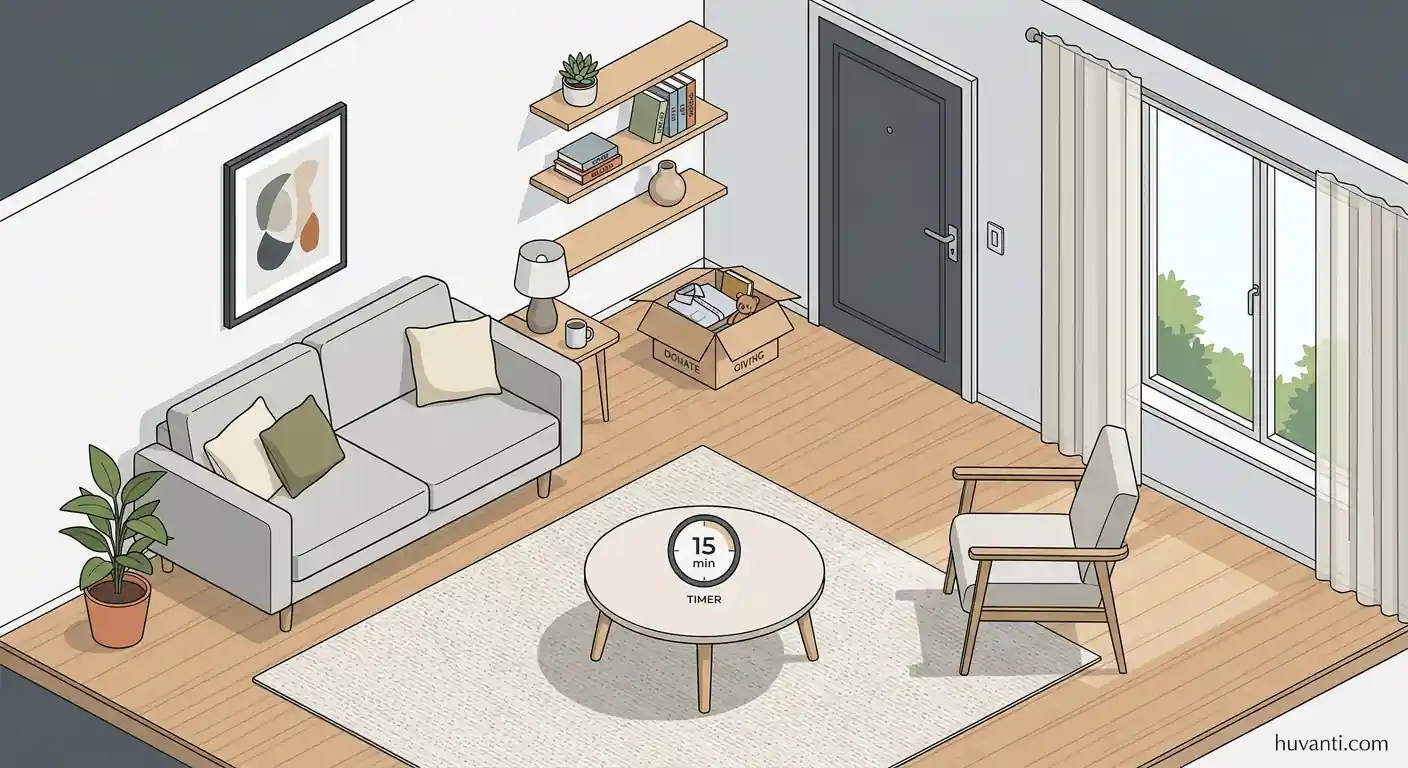
Choose one surface, one drawer, or one shelf. Set a 20-minute timer. This keeps you from spiraling and gives you a quick win.
Pick Your Lens
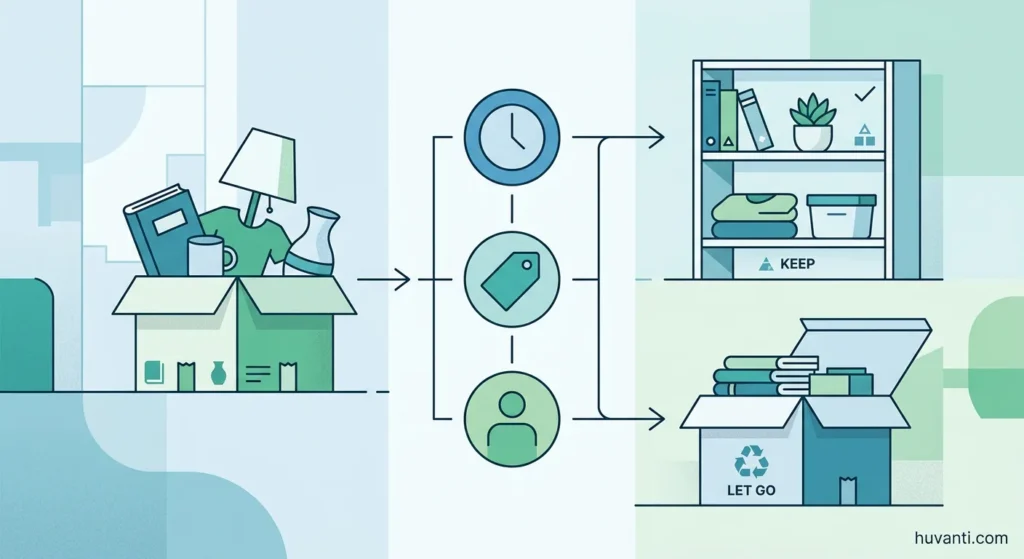
Ask this question for every item: Does this earn its space in my life now? If yes, keep. If no, decide the exit path.
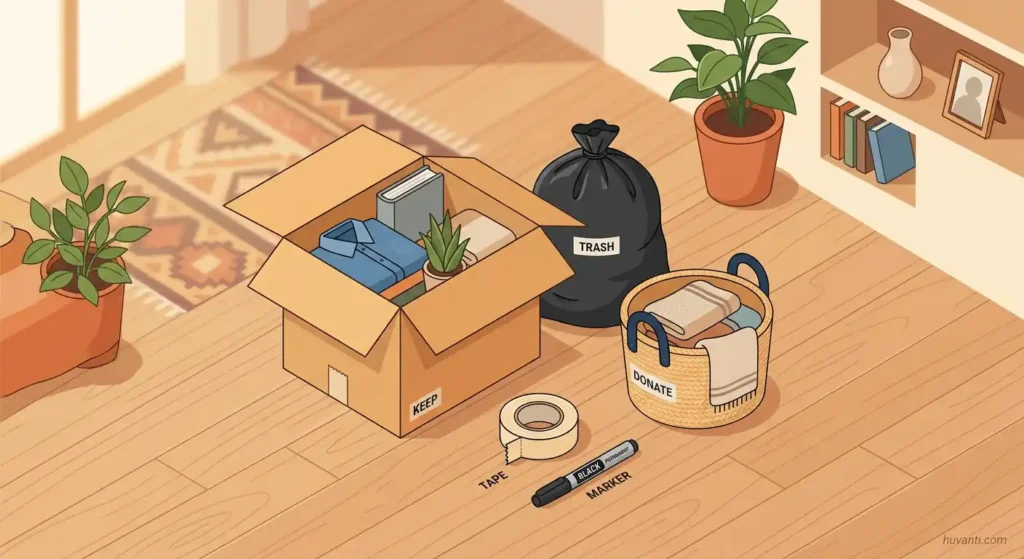
Prepare 4 Containers
- Keep here
- Keep but relocate
- Donate or sell
- Trash or recycle
Put the donate box near the door. Schedule a pickup or drop-off time right now. Decisions stick when the exit is real.
Set Your No-Pile Rule
You can have a short-term maybe box if you need it, but don’t create a mountain of maybes. You’ll learn a safe way to use quarantine later.
17 Simple Ways to Finally Let Go
Each method below lowers the stress of deciding and builds momentum. Use a few that fit your style, then mix and match.
1. The 90 Plus 90 Check
If you haven’t used an item in the last 90 days and you don’t see a real use in the next 90 days, out it goes. Adjust for seasons and special gear. For camping equipment, use a 12-month window.
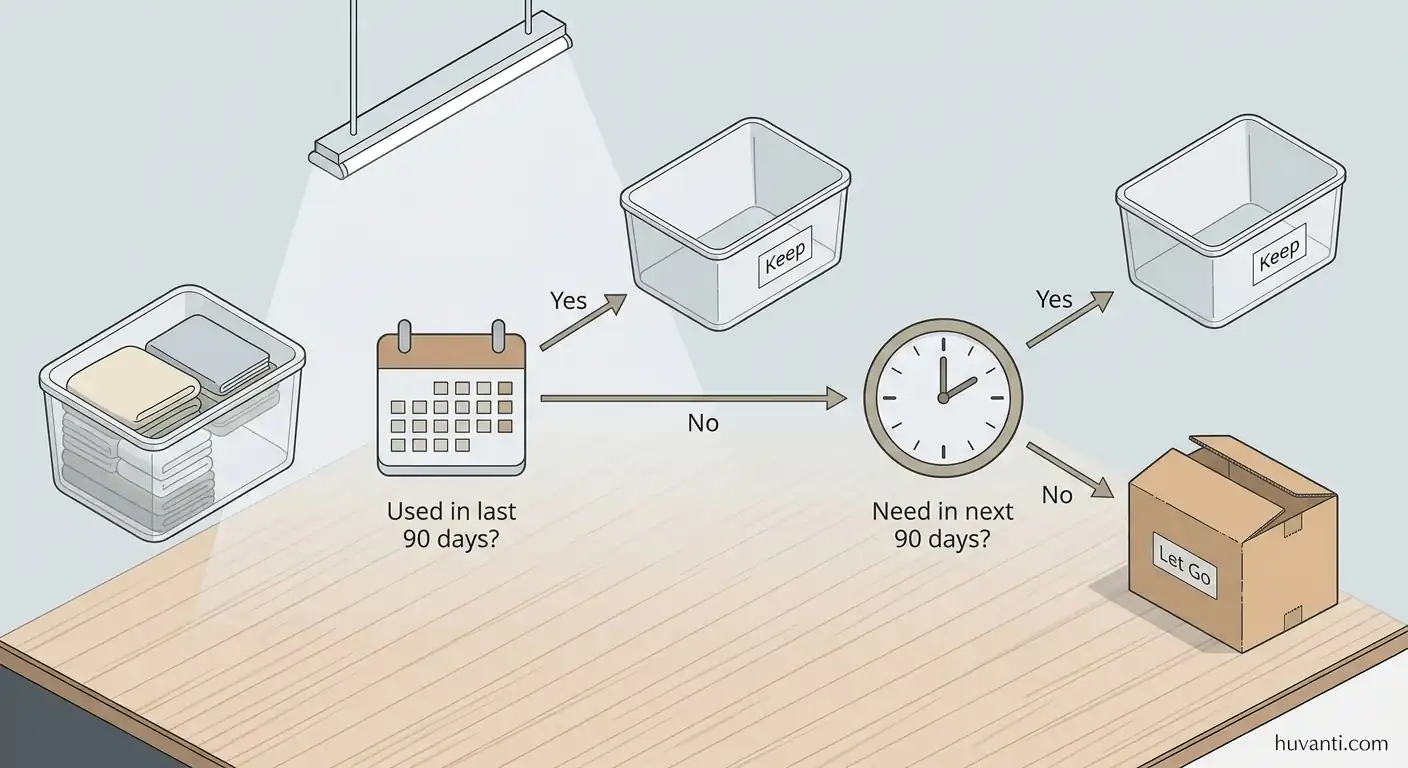
How to apply:
- Pull a category together like water bottles or baking tools.
- For each item, answer the 90 Plus 90 question out loud.
- Move non-qualifiers to donate or sell.
Why it works: It anchors the decision in time, not a vague someday.
2. The 20/20 Replacement Rule
If an item costs 20 dollars or less and you can replace it in 20 minutes or less, let it go now. Think extra cables, spatulas, nail clippers, sample containers.
How to apply:
- Sweep a drawer or bin for low-cost duplicates and just-in-case items.
- Apply the rule quickly. No long debates.
Why it works: You trade clutter for the option to replace only if you truly need it again. That rarely happens.
3. The Container Concept
Your space is the boss. You decide how much room a category gets. Everything must fit within that boundary. When it doesn’t fit, you pick favorites until it does.
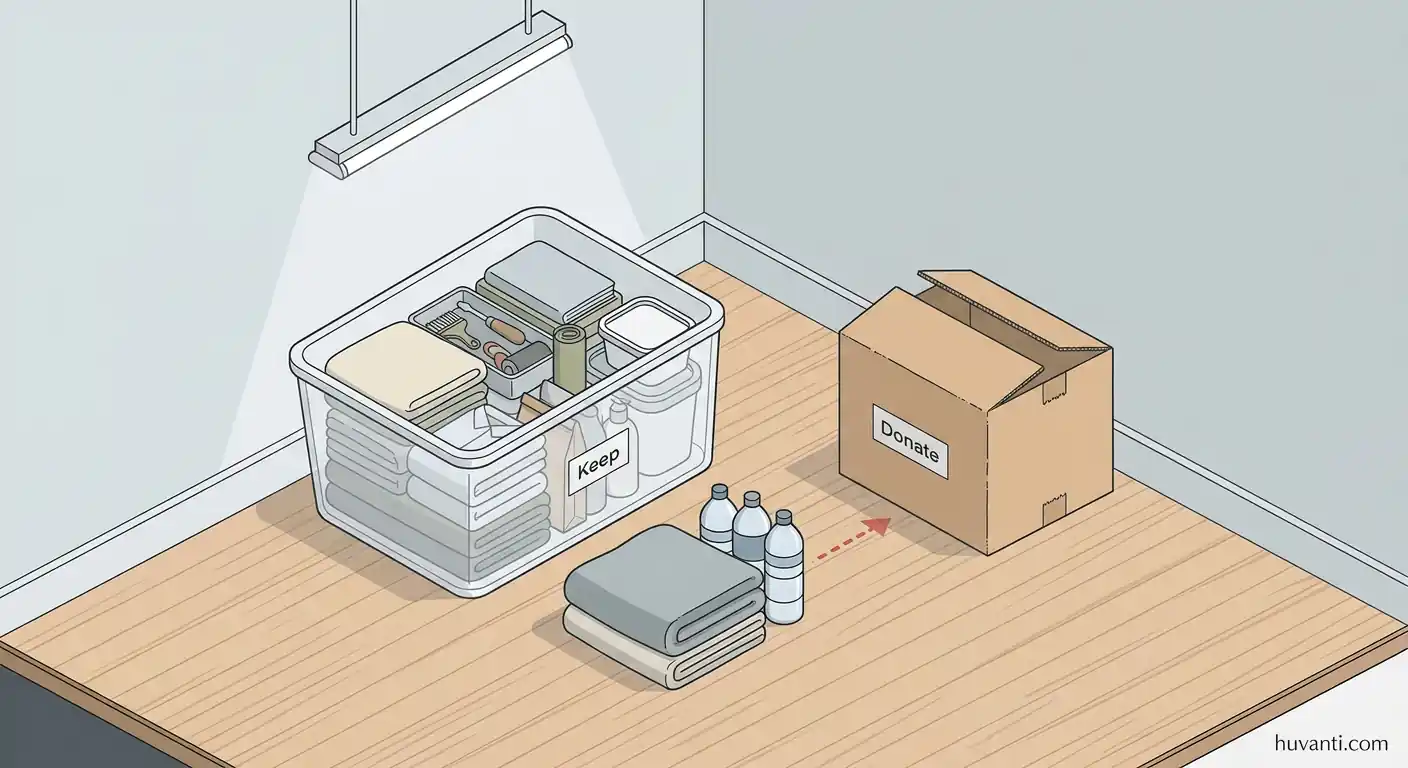
How to apply:
- Choose a bin, shelf, or drawer for categories like towels, board games, or hobby supplies.
- Fill with the best, most-used items first.
- Stop when it’s full. Release the rest.
Why it works: It shifts the question from keep or toss to what earns a spot in this container.
4. One-Shelf Sprint
Short sprints make progress addictive. Work in 15- to 20-minute bursts.
How to apply:
- Pick one shelf or one drawer.
- Empty it completely.
- Wipe it quickly.
- Put back only what you use and love.
- Move the rest to exit boxes before the timer ends.
Why it works: Clearing a small zone builds momentum and gives you a visible, clean win.
5. Photo and Release for Sentimental Items
Memories live in you, not in the object. A photo preserves the memory while you reclaim space.
How to apply:
- Take a clear photo of the item.
- Write a quick note about the story behind it if that helps.
- Thank the item for its role in your life.
- Donate or pass it on to someone who will use it.
Why it works: You honor the past while making room for the present.
6. The Quarantine Box
If you freeze on a decision, place the item in a sealed box labeled with today’s date. Set a reminder for 30 to 90 days. If you don’t miss it, donate the box without opening it.
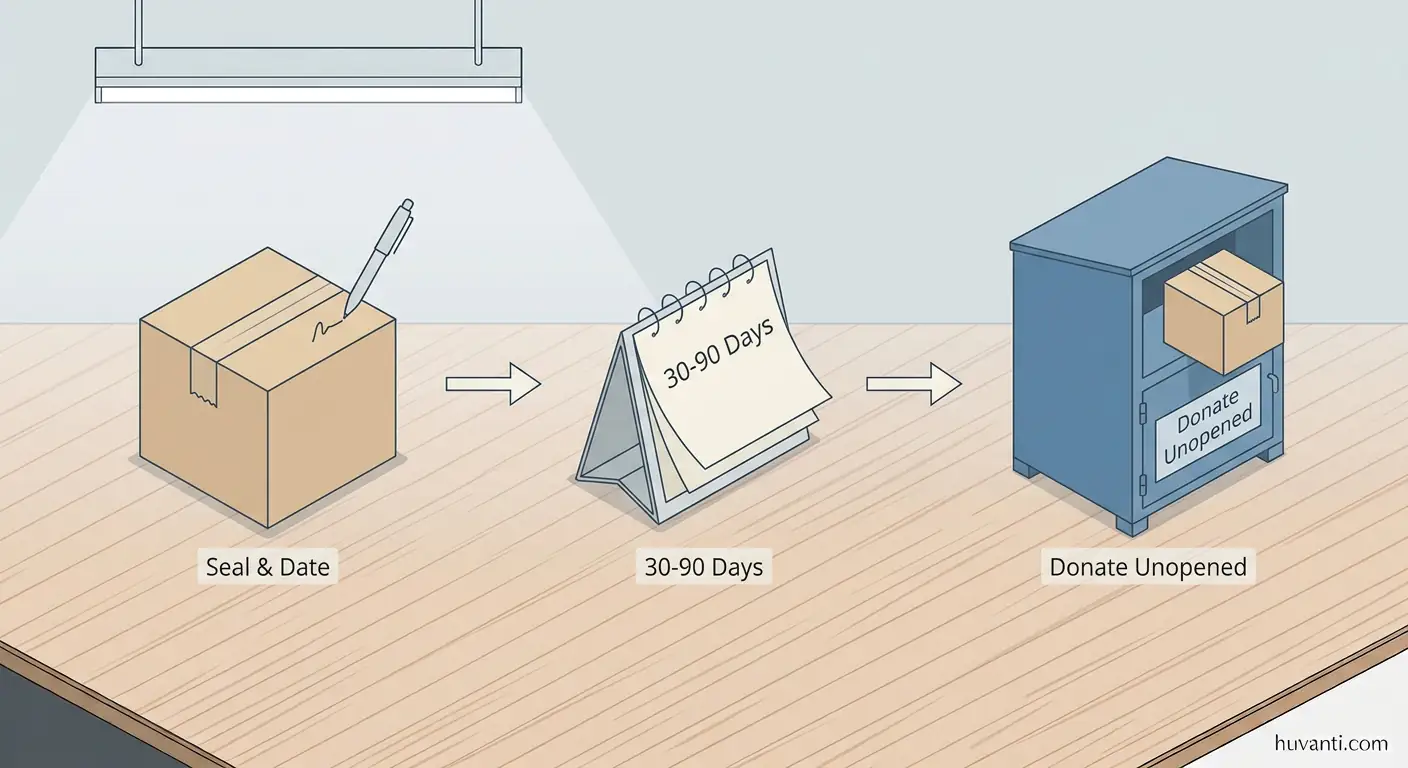
How to apply:
- Use this sparingly for things that trigger anxiety.
- Keep the box out of sight.
- Follow through on the reminder.
Why it works: It gives your brain a safety net and proves you didn’t need the item.
7. The Numbers Game for Clothes
Choose a simple number for each type of clothing based on your real life. For example, 10 tees, 5 pairs of jeans, 12 pairs of socks.
How to apply:
- Pull one category at a time.
- Choose your top favorites first.
- Stop at your number.
- Let go of the rest or keep a small buffer if you’re new to this.
Why it works: You cut decision fatigue and make out-the-door mornings easier.
8. Keep the Best Duplicate and Release the Rest
Duplicates hide everywhere. You only need your favorite can opener, two sharp knives that you sharpen, one extra set of sheets per bed.
How to apply:
- Line up duplicates side by side.
- Choose the best based on condition, comfort, and use.
- Donate extras the same day.
Why it works: Better tools, less clutter, smoother days.
9. Paper Triage With a 3-Pile Rule
Paper is sneaky. Give it a simple path now.
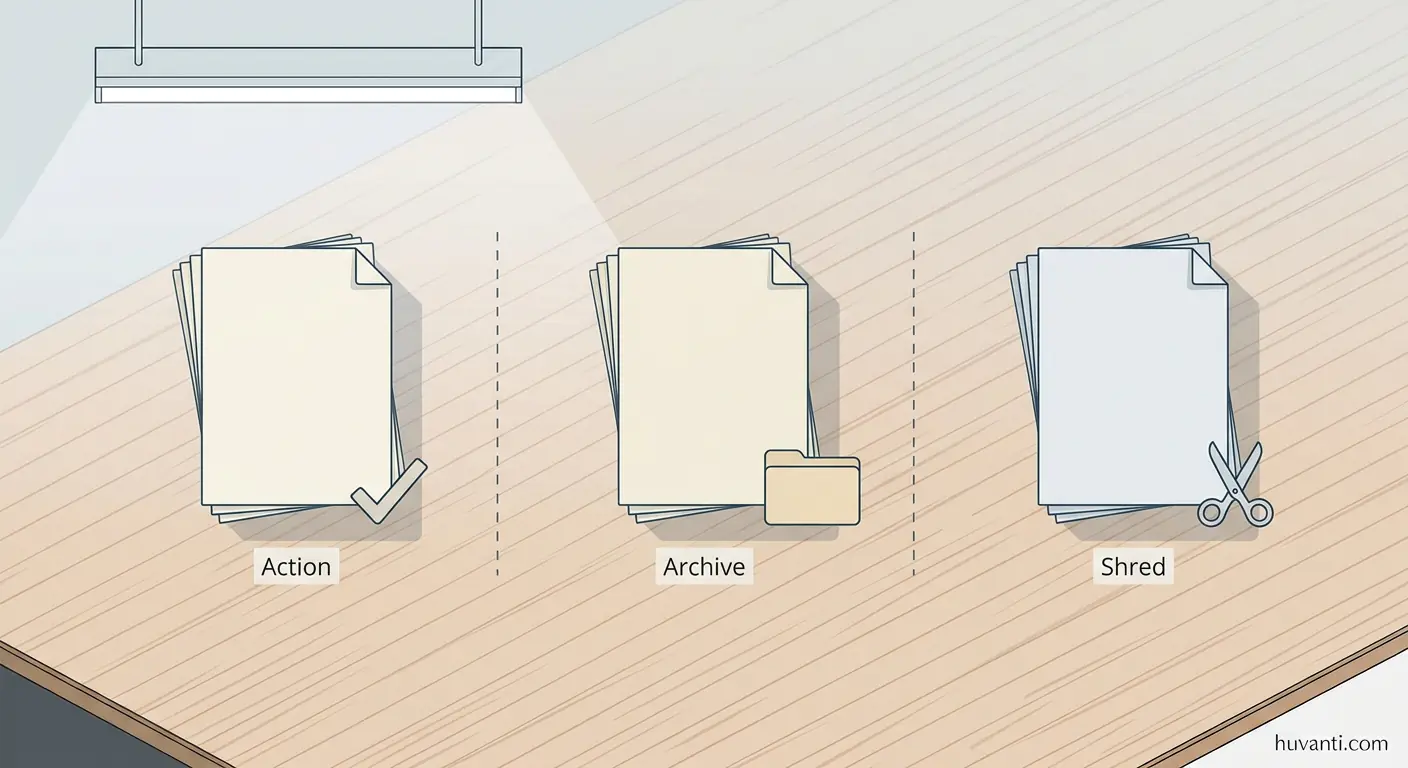
How to apply:
- Create 3 piles: Action, Archive, Recycle or Shred.
- Action means you must do something in the next 30 days. Put it in a visible folder and assign a weekly time to handle it.
- Archive is long-term records. Scan or file with clear labels and a single home.
- Recycle or shred everything else immediately.
Why it works: It stops paper from piling up and keeps only what matters.
10. Unfinished Projects Test
Parts for a project older than 12 months are usually clutter. Free the parts so someone else can use them.
How to apply:
- Gather all supplies for each project into one place.
- Set a realistic 2-week window to start or continue one project. Put it on the calendar.
- If you don’t touch it in that window, release the supplies.
Why it works: You reclaim energy from stale commitments and make room for projects you actually enjoy now.
11. Sunk Cost Reframe
You already paid the money. Keeping an item doesn’t get your money back. Using your space wisely is how you stop the loss.
How to apply:
- When cost guilt shows up, say this: I paid to learn what I like, and now I choose space over this item.
- Move it to the exit box. If it has high value, choose a sell-by date and list it in one sitting.
Why it works: It turns a regret into a lesson and closes the loop.
12. Future Self Filter
Hold the item and ask: Would future me thank me for keeping this? If not, out it goes.
How to apply:
- Picture your ideal room. Clear floor, easy-to-clean, items you use often.
- If the item doesn’t fit that picture, release it.
Why it works: You shift loyalty from past purchases to the life you want now.
13. Schedule the Exit Before You Start
Clutter shrinks fast when it leaves your home fast.
How to apply:
- Book a donation pickup or set a drop-off time before your session.
- Keep a running donation bag by the door.
- When it’s full, it leaves that day.
Why it works: You avoid backsliding. Out of your space means out of your mind.
14. The 24-Hour Rule for the Outbox
Give yourself a short cooling period if you’re nervous, then commit.
How to apply:
- Put items in an outbox.
- If you don’t feel a true, specific need within 24 hours, move them out of the house.
Why it works: You allow emotion to settle while preventing months of maybes.
15. Gifts Without Guilt
A gift does its job when it made you feel cared for. You don’t owe it lifelong storage.
How to apply:
- Thank the person in your mind or with a note if it feels right.
- Keep what you use and love.
- Release the rest to someone who will enjoy it.
Why it works: You separate love from objects.
16. Clear the Visible Surfaces Every Night
Counters and flat surfaces set the tone for the whole room.
How to apply:
- Pick 3 surfaces that matter most to you, like the kitchen counter, coffee table, or bathroom vanity.
- Do a 5-minute reset before bed.
- Keep a small catch-all tray and empty it every Sunday.
Why it works: Daily light resets block clutter from spreading.
17. Digital Clutter Counts
When your phone and laptop feel lighter, your brain does too.
How to apply:
- Unsubscribe from 10 emails today. Search the word “unsubscribe” and batch it.
- Archive or delete old downloads and desktop files. Keep one simple folder system by category.
- Back up photos, then curate 15 minutes at a time. Favorite the best, delete the rest.
Why it works: Less digital noise means more focus and fewer missed tasks.
Room-by-Room Quick Tips
Closet
- Start with what you reach for first. Pull favorites before you touch the rest.
- Try the reverse hanger trick. Turn hangers backward today. Flip a hanger forward when you wear an item. In 60 days, review what never moved.
- Keep a small repair kit. If you don’t mend it within 14 days, let it go.
Kitchen
- Empty one drawer and one shelf. Return only what you used in the last 60 days.
- Keep one set of daily dishes that match and stack well. Extra sets can live in a bin for guests or move on.
- Use clear bins or lazy Susans so you see what you own.
Bathroom
- Toss expired products and samples you don’t love.
- Keep daily items in a small caddy that fits under the sink or in a drawer.
- Limit backups to one extra per product you truly use.
Kids’ Spaces
- Rotate toys. Keep a small active set on a shelf and store the rest in a labeled bin. Swap monthly.
- Give every toy a home by type. Label with words or pictures.
- Involve kids with a choice. Keep 10 favorites, choose 5 to share.
Office
- Box old paperwork by year with a destroy-after date on the box.
- Keep one in-tray and one action list. No stacks on the desk.
- Hide visual noise. Cords, spare tech, and stationery live in a single drawer or bin.
Garage or Storage
- Start with safety and access zones. Clear pathways and keep only what you can lift safely.
- Group by activity, like gardening, sports, or tools. Apply the container concept to each.
- Bulky items that you use once a year may be cheaper to rent when needed.
What to Do With Everything You Let Go
Make it easy to move things out and you’ll declutter faster.
Donate
- Check local guidelines. Many places accept clothing, linens, housewares, books, and small furniture in good shape.
- Some items need special handling. Baby gear with recalls, mattresses, and broken electronics often can’t be donated.
- Consider local shelters, community groups, libraries, and school programs for specific categories.
Sell
- Only sell what will move fast and for a clear price. Set a minimum value threshold like 30 dollars to make the effort worth it.
- Batch photos, write simple titles, list in one session, and set a sell-by date. If it doesn’t sell by then, donate.
- Meet in safe public places and accept electronic payments.
Recycle
- E-waste: Take old phones, laptops, printers, and cords to certified e-waste drop-offs. Wipe devices first.
- Textiles: Many cities accept worn-out textiles for recycling. Bag and label as rags if needed.
- Paper and cardboard: Flatten and recycle. Shred anything with personal info.
Shred and Privacy
- Shred documents with names, addresses, account numbers, or signatures.
- For smart devices and hard drives, perform a full reset or remove and destroy the drive.
Keep Clutter From Coming Back
Decluttering is a project. Staying clutter-light is a habit.
Use 5-Minute Resets
Morning and night, spend 5 minutes returning items to their homes. Set a simple playlist to keep it moving.
Practice 1-In, 1-Out
When something new comes in, one similar item goes out the same day. New sweater in, old sweater out.
Do a Weekly Sweep
Pick one short block on your calendar. Empty your catch-all tray, clear your inbox, return wanderers to their homes, and schedule a donation drop if a box is full.
Shop With a List and a Pause
If you want something, add it to a list and wait 24 hours. If you still want it and you have a place for it, go for it.
Keep Containers Honest
When a bin or drawer is full, it’s full. Upgrade space only if it aligns with your values, not because clutter is pushing you.
Troubleshooting When You Feel Stuck
- You feel guilty about the money: Remember, keeping it doesn’t refund the cost. Decluttering stops the ongoing cost of space and stress.
- You are afraid you might need it: Set a clear test like the 90 Plus 90 check or use the quarantine box.
- You feel overwhelmed: Narrow the scope. One drawer. One timer. One decision at a time.
- Family isn’t on board: Model the change in your space first. Keep shared areas neutral until you have wins to show. Invite, don’t pressure.
- Sentimental overload: Limit sentimental sessions to 20 minutes. Pair with the photo method. Keep a small memory box with only the treasures that truly light you up.
Final Thoughts About How to Declutter When Everything Feels Important?
You don’t have to become a minimalist to feel the relief of a lighter home. You only need a repeatable way to decide what stays and what goes. Now you have 17 simple methods, plus room-by-room tips, exit strategies, and habits that keep your progress.
Start with one shelf. Use one test. Box one donation. And then do it again tomorrow. You’ll learn faster than you think, and your space will start to reflect the life you actually live.
This guide is for educational and informational purposes only. Trust your judgment, take your time, and be kind to yourself as you let go.
Frequent Asked Questions
How do I start decluttering when I have no time?
Start with 10 items in 10 minutes. Grab a grocery bag, fill it from one area, and get it out of the house.
What if I regret donating something later?
Use the quarantine box. Seal it, date it, set a 30- to 90-day reminder. If you don’t need it by then, you likely never will.
How do I handle gifts I don’t use?
Thank the giver, keep the sentiment, release the object. A gift fulfills its purpose when it delivers care, not when it sits unused.
Is it better to sell or donate?
Yes, if it will sell fast for meaningful money, sell. No, if listing it will delay your progress, donate. Space and momentum are worth more than small cash.
How do I declutter sentimental items without feeling awful?
Use photo and release. Keep a small memory box for the few items that truly represent the story, not every piece of it.
What should I do with important documents?
Create 3 homes: an action folder, a simple archive with labels, and a shred box. Scan key records and back them up.
How do I stop buying more clutter?
Wait 24 hours before purchases. Know where the item will live. Practice 1-in, 1-out. Shop your home first.
How often should I declutter?
Do small weekly resets and plan one focused session monthly for deeper categories like clothes, kitchen, or paper.
What if my partner keeps bringing stuff home?
Agree on shared boundaries like one shelf or one closet zone. Keep your areas clear, invite them to try a small sprint, and celebrate wins.
How do I declutter with kids in the house?
Focus on visible surfaces and shared spaces, rotate toys, and involve kids with simple choices. Keep sessions short and upbeat.