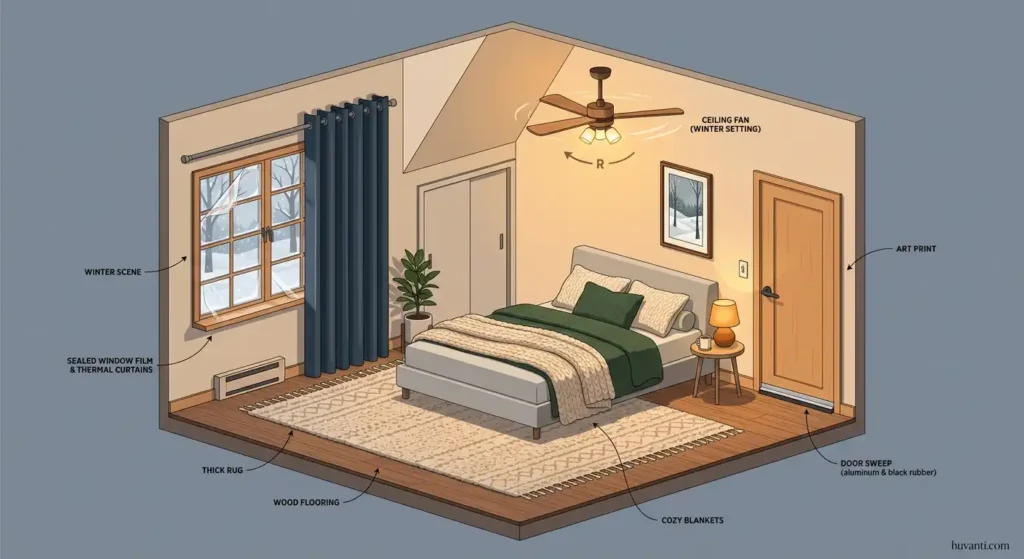
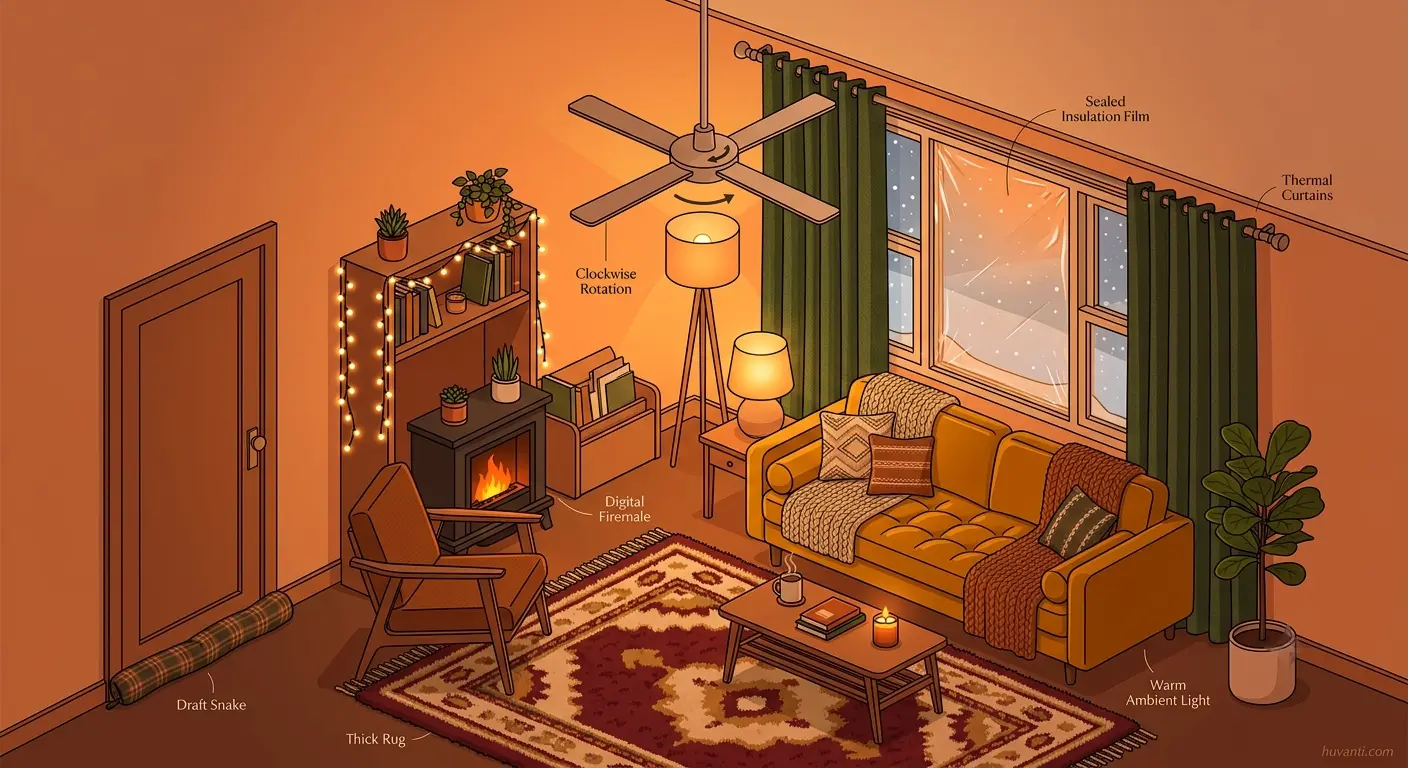
Cold rooms drain energy and focus. The good news is you can warm up an apartment a lot without turning on the heater. In this guide, you will learn exactly what to fix first, how to stop drafts fast, which low-cost upgrades make the biggest difference, and how to set daily habits that keep heat in. Everything here is renter-friendly, reversible, and updated for what works now. You will also get a simple weekend plan and a clear safety checklist, plus answers to common questions.
Table of Contents
Before You Start: How Apartments Actually Lose Heat
Cold sneaks in three main ways:
- Drafts: Air leaks around windows, doors, outlets, and gaps carry away warm air and pull in cold air. This is the number one comfort killer.
- Conduction: Heat flows through glass and thin walls. Bare windows and uninsulated floors feel cold even when there is no draft.
- Stratification: Warm air rises and pools near the ceiling while you sit in the cooler zone below.
If you stop the leaks that you can feel, insulate the thinnest surfaces, and mix the air gently, your rooms feel warmer at the same thermostat setting or even with the heat off during shoulder seasons.
The 13 Easy Ways
1. Seal the Leaks You Can Feel
Why it works:
Air that slips through tiny gaps keeps you in a constant draft. Stop that flow and the apparent temperature jumps fast.
What to do:
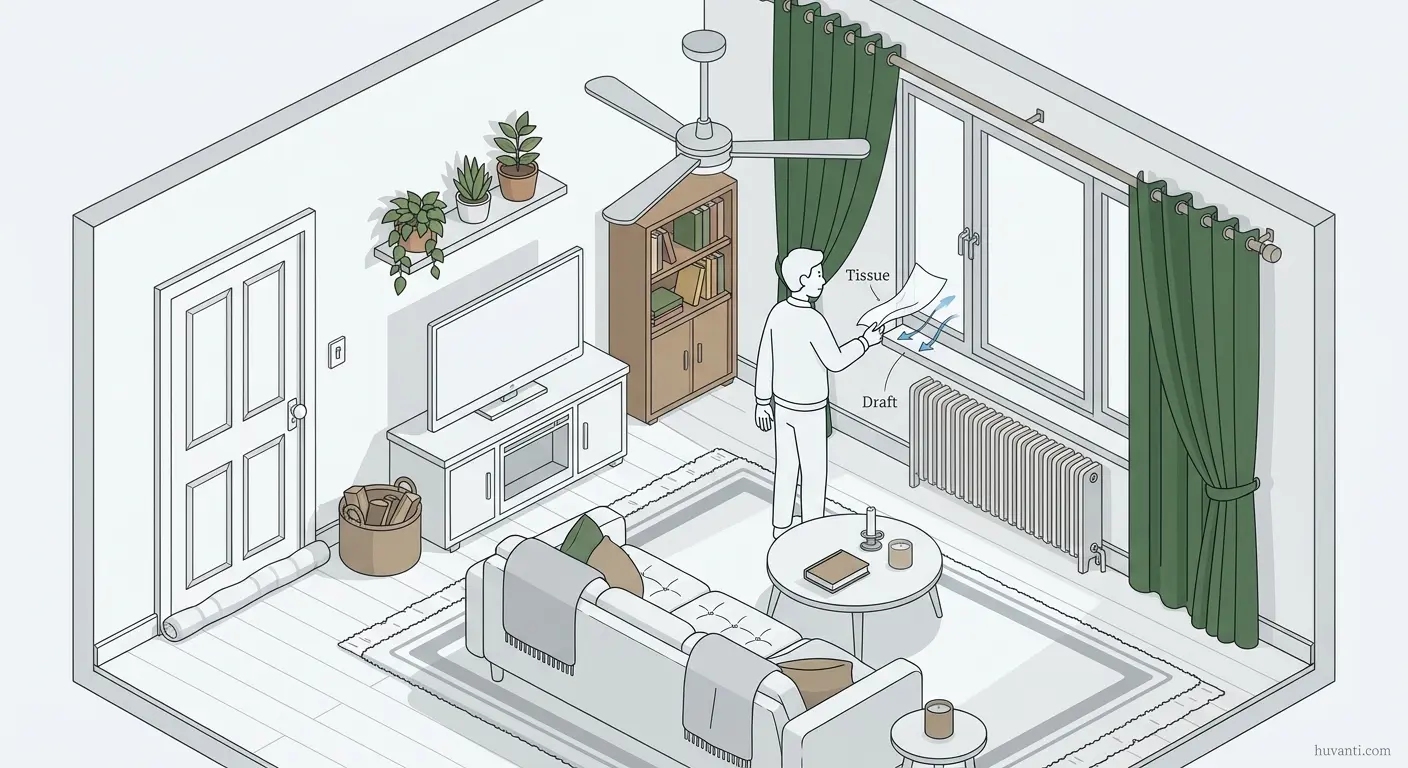
- Draft hunt: On a breezy day, close windows and doors. Hold a strip of tissue or light thread near frames, baseboards, and outlets. If it flutters, you found a leak. You can also use the back of your hand to feel a cool streak.
- Weatherstrip windows and balcony doors: Use V-strip or adhesive foam along the meeting rails and sides where sashes touch the frame. Press it firmly on a clean, dry surface.
- Add a door sweep: Install a screw-on or stick-on sweep at the bottom of your entry door so the flexible blade just kisses the floor. If you rent, a peel-and-stick model is fully removable.
- Use removable rope caulk: Press it into small cracks around window trim and along the edge where the sill meets the frame. It pulls off in spring without residue.
- Seal outlets and switches on exterior walls: Pop off the cover plate and add a foam gasket. Replace the plate. For cable boxes or gaps around pipes, push in backer-rod foam or use putty.
Tips:
- Prioritize the big offenders: entry door, balcony slider, and the top and bottom of double-hung windows.
- Clean with rubbing alcohol before applying adhesive products so they stick through winter.
2. Tighten Up Your Windows Fast
Why it works:
Glass is thin. Even a small air gap or bare pane bleeds heat. A tight inner layer traps air and slows that loss.
What to do:
- Install clear window film kits: These shrink tight with a hair dryer to create an invisible inner layer. Cut the film larger than the frame, apply the double-sided tape to the trim, press on the film, then warm it so it tightens. It removes cleanly in spring.
- Use V-strip where sashes meet: This stops rattles and air sneaking through the moving parts.
- Add a thin bead of temporary sealant on seasonal windows you won’t open. Look for removable or water-cleanup types made for renters.
Tips:
- Clean the glass first so the tape adheres and the film is clear.
- Don’t block fire escape windows. Always keep one egress path free and easy to open.
3. Layer Window Coverings the Smart Way
Why it works:
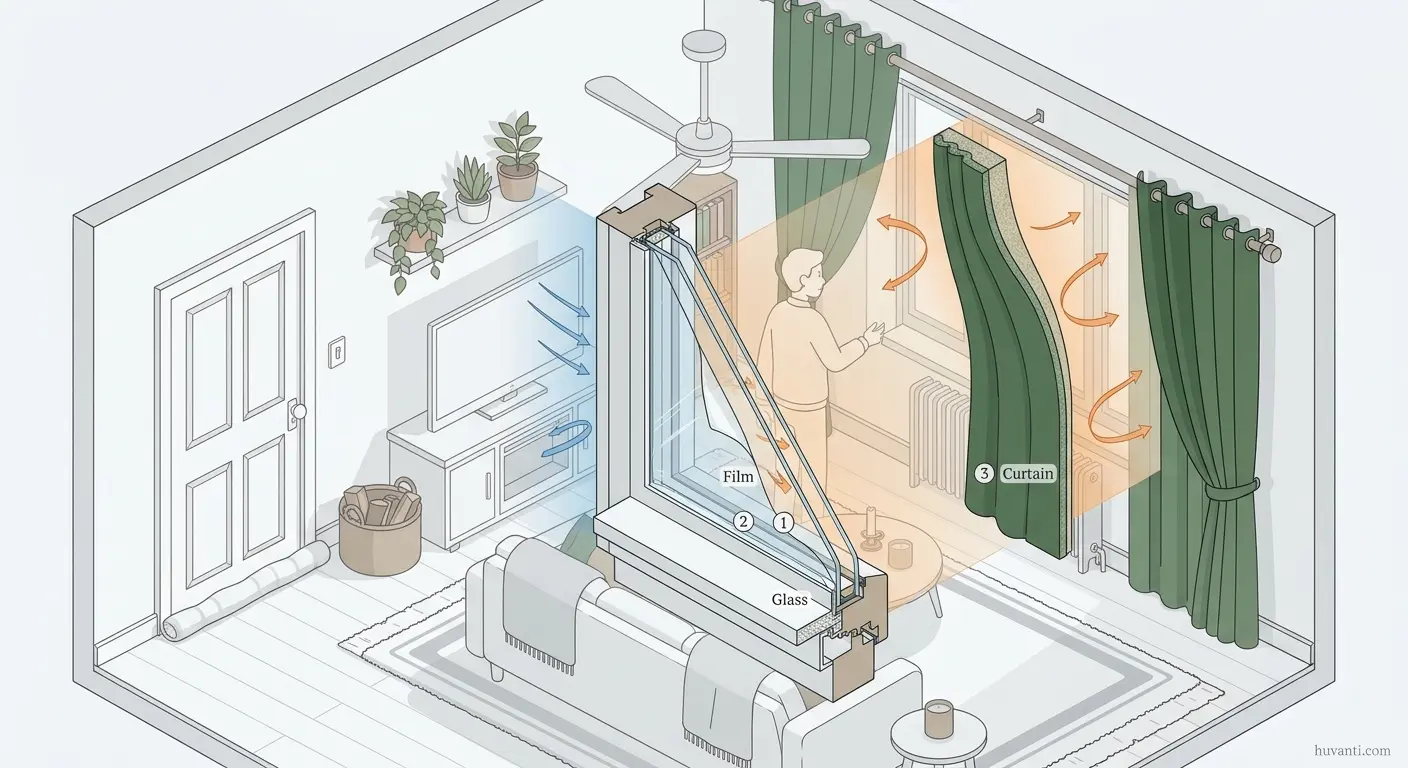
Textiles slow heat flow and block drafts. Layering traps air between fabric layers, which increases the insulation value.
What to do:
- Hang thermal curtains that reach the floor and mount them as close to the wall as you can. Use a wrap-around rod or add simple side returns so air can’t flow behind the fabric.
- Add cellular shades or a roller shade inside the frame. Close both at night. Open both to capture sun during the day.
- Create side seals: Use self-stick magnetic tape on the wall and the curtain edge, or press the curtain edges to the wall with removable hooks and small binder clips. This blocks the chimney effect behind curtains.
- Add a second sheer layer for daylight privacy. Sheer in the day, thermal at night gives you control without cold edges.
Tips:
- Leave a small gap at the top if you have a working radiator under the window so warm air can rise into the room.
- If you can’t drill, use spring tension rods inside the frame, or adhesive hooks with a lightweight rod.
4. Use the Sun Every Day
Why it works:
Sunlight is free heat. Even cold winter sun can bump the room temperature.
What to do:
- Open shades on south-facing windows by late morning. Move plants and objects that cast shade off the glass.
- Close all shades and curtains before sunset to trap the gain.
- Keep glass clean inside and out if you can access it safely. A thin film of dust cuts solar gain.
Tips:
- North-facing windows rarely add heat. Keep those covered most of the day.
- If privacy is a concern, use top-down-bottom-up shades so you can open the upper part for sun and keep the lower part covered.
5. Build a Simple Internal Storm Window
Why it works:
An internal storm creates a second sealed layer with an air pocket that slows heat loss a lot compared to bare glass.
What to do:
- Measure the inside of the window frame. Subtract a small amount so the insert fits without forcing.
- Cut a sheet of clear acrylic to size at the store or with a fine-tooth blade. You can also use rigid clear vinyl if you prefer flexible material.
- Add thin weatherstrip foam around the acrylic edge to make a snug seal.
- Press the panel into the frame. Use quarter-round trim held with removable double-sided tape, or apply magnetic tape to the frame and steel tape to the panel for an easy on-and-off fit.
Tips:
- Mark panels by room so you can reinstall them every season in minutes.
- For renters, avoid adhesives on painted surfaces if your lease forbids it. Use compression fit with foam and no tape.
6. Stop the Door Draft
Why it works:
Entry doors leak a lot, especially at the bottom and along the latch side. Warm air also rises up stairwells and draws cold air in through your door.
What to do:
- Install a quality door sweep. If your hallway is unheated, a tight sweep can add real comfort.
- Add adhesive foam weatherstrip along the jambs where the door meets the frame. Close the door on a slip of paper to check the seal. You want a slight pull as you remove it.
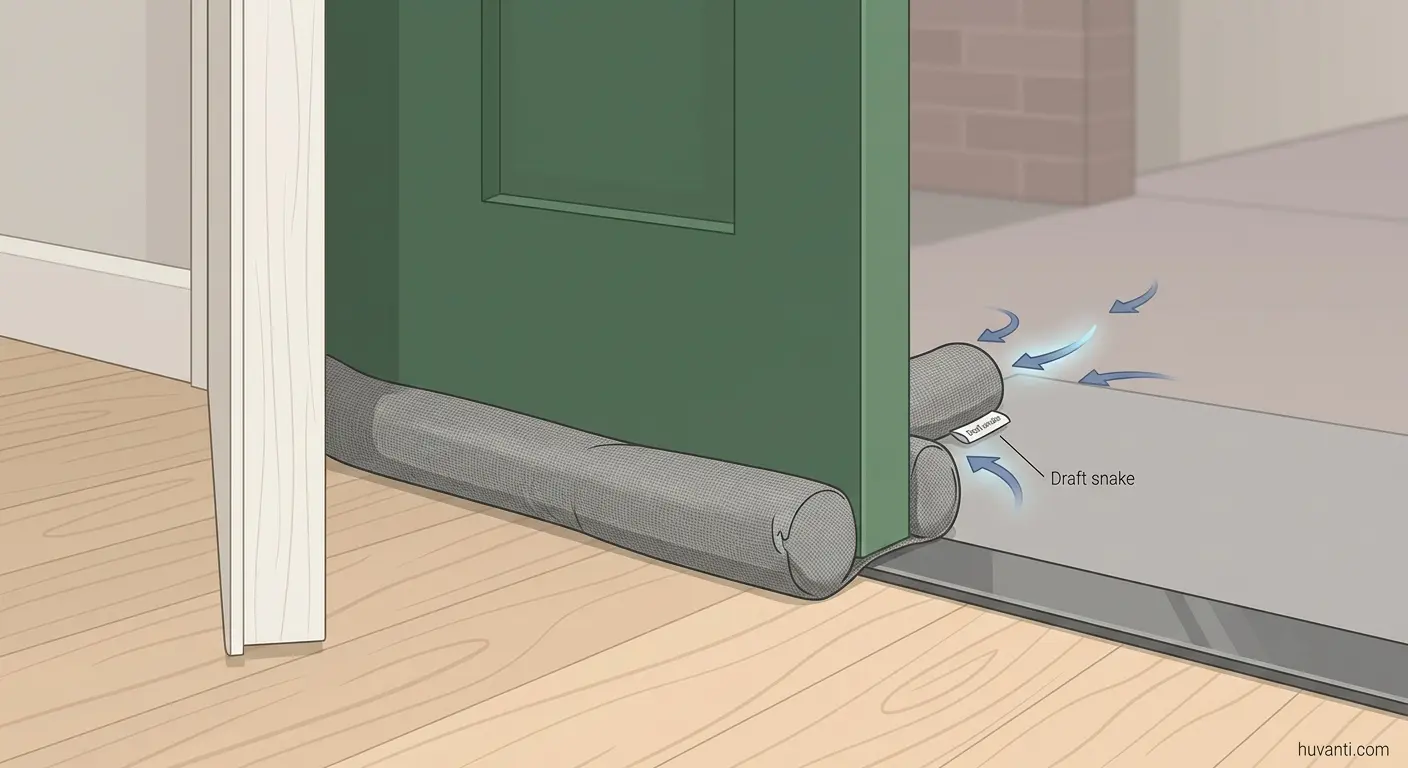
- Use a draft snake or door pillow on interior doors to colder rooms. A rolled towel is a fine stand-in.
Tips:
- A thick curtain over a drafty interior door adds an extra barrier. Mount it to a rod that projects so the fabric can cover the frame.
- Don’t block the gap on a bathroom door if you rely on it for ventilation when you shower. Manage moisture first, then close the door when air is dry.
7. Warm Up Your Floors
Why it works:
Cold floors steal heat from your body. Covering them slows the heat flow and reduces the chill.
What to do:
- Lay thick area rugs with a dense rug pad. A felt or felt-rubber pad insulates better than a thin foam pad.
- In bedrooms, add soft foam puzzle mats under a thin rug where you stand most. These are affordable and easy to lift later.
- Use slippers and warm socks. Your feet carry a lot of your comfort.
Tips:
- If you have radiant floors or a baseboard heater, keep rugs a safe distance so you don’t trap heat where it could create a hazard. Follow the clearance recommendations in your building.
8. Plug Hidden Air Paths
Why it works:
Many small gaps add up. Stopping them can remove that constant cool drift you feel even with windows sealed.
What to do:
- Window air conditioner sleeves: If your AC lives in the window, use a tight cover on the indoor side in winter. For through-the-wall units, install a winter cover that seals around the edges.
- Fireplaces that you don’t use: Close the damper. Add a chimney balloon or a snug foam insert to block the flue, then place a reminder card on the hearth so you remove it before any future use.
- Under-sink and closet penetrations: Where pipes enter the wall, push in backer-rod foam and finish with paintable caulk if allowed. Use removable putty if you need a fully reversible option.
- Baseboards and trim: If you see a shadow line, run a thin bead of caulk along the top edge. Choose a product labeled removable if your lease requires it.
- Old mail slots or keyholes: Add a brush seal or a tight cover on the inside.
Tips:
- Work on a cool, windy day so leaks are easier to spot.
- Take photos before and after to restore the original look when you move out.
9. Rearrange for Warmth
Why it works:
Your layout can make you feel colder or warmer without changing the air temperature.
What to do:
- Pull your sofa and reading chair a few inches off an exterior wall. That gap reduces radiant heat loss from your body to the cold surface.
- Place bookcases on exterior walls. Full shelves add an insulating layer.
- Move your bed away from a cold window and avoid lining it up with a drafty door.
- Keep tall furniture from trapping warm air near the ceiling. Leave space above radiators if your building turns them on later in the season.
Tips:
- Add a folding screen as a visual and thermal buffer if you must sit near a cold surface.
10. Control Indoor Humidity
Why it works:
Dry air feels cooler because sweat evaporates faster and your skin loses heat. Slightly higher humidity feels warmer at the same temperature.
What to do:
- Aim for a relative humidity of about 30 to 45 percent. Use a simple digital hygrometer to monitor it.
- Simmer a kettle briefly while you cook meals and let the steam spread. Don’t leave a stove unattended. Always keep safety first.
- After a hot shower, if your bathroom doesn’t have mold issues, open the door to let steam move into the living space. If you see condensation on cold surfaces, vent more and scale back.
- Add a few leafy plants and keep the soil slightly moist. Plants release moisture slowly and naturally.
Tips:
- Stay under 50 percent to avoid condensation on windows and mold on cold surfaces.
- Wipe window sills dry if you see moisture collecting.
11. Circulate Air the Right Way
Why it works:
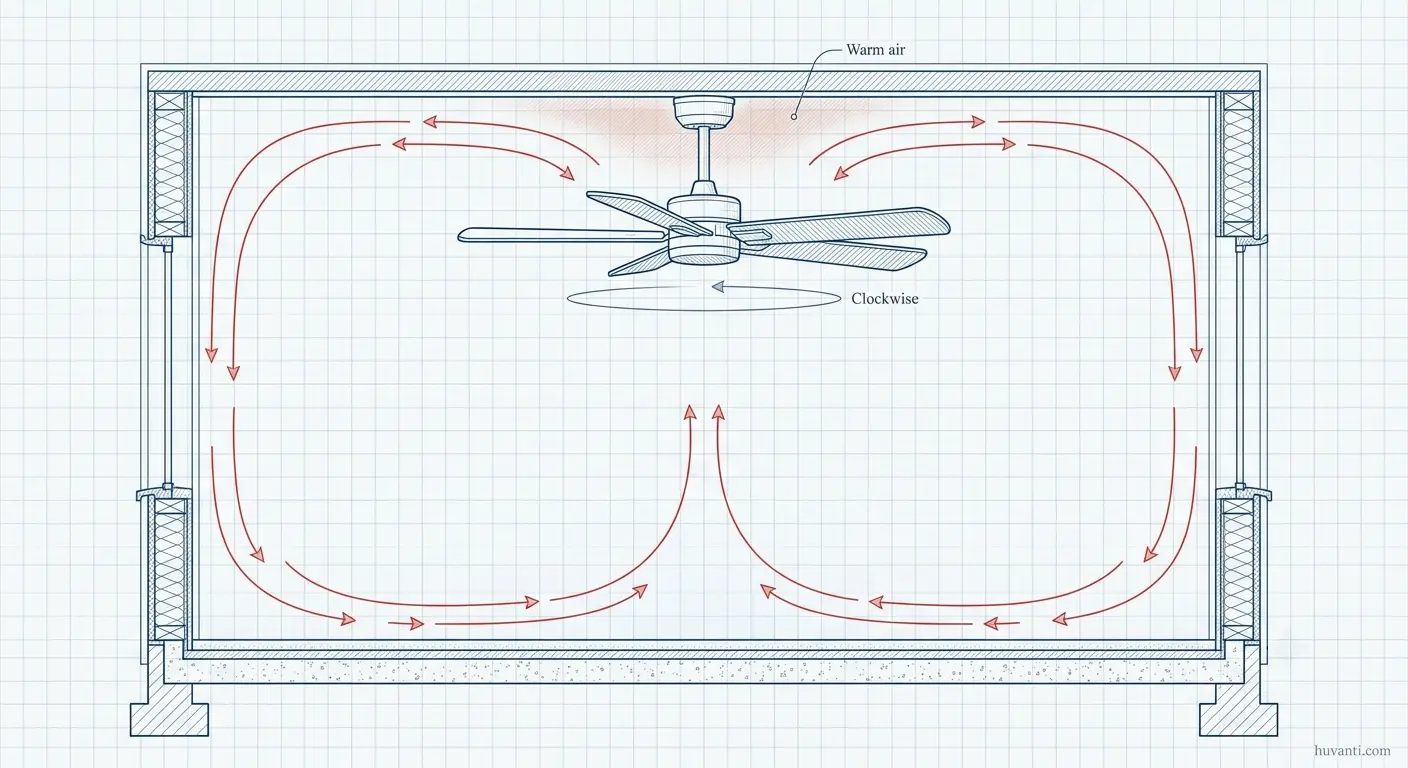
Warm air collects at the ceiling. Moving it down gently warms the room where you sit without creating a chill.
What to do:
- Reverse your ceiling fan to spin clockwise and run it on low. This pulls air up and pushes warm air out along the ceiling and down the walls.
- Use a small desk fan on low pointed at the ceiling corner of the room. This mixes the air without blowing directly on you.
Tips:
- If any fan makes you feel cooler, slow it down or move it. The goal is gentle mixing, not a breeze on your skin.
- Close bath and kitchen exhaust fans when you aren’t using them. They can pull warm air out of the apartment.
12. Make Heat While Doing Normal Life
Why it works:
Every appliance and your own body add a little heat. You can keep more of it indoors with a few habits.
What to do:
- Batch cooking: When you are already cooking a meal, prepare extra soup or grains for the week. The stove heat ends up in your home anyway. Never use a gas or electric oven as a space heater. That is unsafe.
- Let hot dishes and pots cool on a trivet in the kitchen so the heat moves into the room. Keep children and pets away and practice safe handling.
- Do laundry during the day so any moisture and mild warmth contribute when you are awake to manage it.
Tips:
- Keep a lid on pots most of the time to control extra humidity. Vent briefly if you see condensation.
13. Dress and Bundle the Cozy Way
Why it works:
Your clothes are insulation. The right layers keep your skin warm so you can relax without a heater.
What to do:
- Start with a light base layer that wicks moisture, add a warm mid-layer, then a soft outer layer. This traps air at each level.
- Wear thick socks and soft slippers with a grip sole. Feet matter.
- Keep a throw blanket where you sit. A shawl or robe works wonders at a desk.
- Use a hot water bottle wrapped in a towel to warm your lap or feet while you read. Fill it safely, close it tightly, and never place near bare skin.
Tips:
- Small moves add up. A beanie or light cap can make a chilly evening much easier without changing the room.
Room-by-Room Tactics That Work
Living Room
- Seal the biggest window and the entry door first.
- Place rugs under the coffee table and in walkways.
- Layer shades and curtains, and close them just before sunset.
Bedroom
- Move the bed off the window wall.
- Use a draft snake at the door if the hallway is cold.
- Choose flannel sheets and an extra blanket so you sleep warmer.
Kitchen
- Cover the window with film and a shade. It is a high-gain area in the day and a high-loss area at night.
- Cook in batches so you use the warm-up time well.
- Store heavy pots on an exterior wall shelf to add a bit of thermal mass.
Bathroom
- Check the exhaust fan damper for backdrafts. If you feel cold air dropping through the fan when it is off, a backdraft damper may be stuck. Report it to your building or add a magnetic cover when not in use if allowed.
- Use a thick bath mat to cut floor chill.
Entryway
- Add a tight door sweep and a washable runner rug.
- Hang a thick curtain on a tension rod inside a drafty vestibule if your layout allows it.
Safety and Building Rules to Respect
- Never use a gas range or oven to heat a room. It creates carbon monoxide risk and fire risk.
- Don’t block fire exits with film, screws, or furniture. Keep at least one window in each room easy to open.
- Keep fabric clear of heaters and light fixtures. Follow the clearance markings on any appliance in your home.
- Avoid sealing up any required fresh air vent that your building depends on. If you are unsure, ask your super before covering a vent.
- Choose renter-friendly products. Removable caulk, rope caulk, adhesive foam, film kits, tension rods, and Command-style hooks save your deposit.
- Read your lease before drilling holes or painting.
A Simple Weekend Game Plan
Friday evening:
Walk the apartment with a notepad. Mark every draft. Check each window and door. Open and close shades to see where light leaks along the sides.
Saturday morning:
Buy what you need. Two film kits per large window if you want a double layer, weatherstrip foam, V-strip, a door sweep, rope caulk, foam outlet gaskets, a rug pad, and a hygrometer. Clean window trim and door edges so adhesives stick.
Saturday afternoon:
Install weatherstrip and door sweep at the entry. Seal the leakiest window with film. Add outlet gaskets on exterior walls.
Sunday morning:
Layer window coverings in the living room and bedroom. Add side returns or simple side seals. Lay rugs and pads where you stand and sit most.
Sunday evening:
Set your daily routine. Open sun-facing shades by late morning, close them before sunset, and reverse the ceiling fan on low.
Daily Habits That Keep You Warm
- Sun in by day, sealed by night.
- Keep interior doors to colder rooms closed with a draft snake.
- Run exhaust fans only as long as needed.
- Put on warm socks the moment you get home.
- Sip warm drinks and keep a throw blanket within reach.
What to Do When the Heat Should Be On but Isn’t
If your building is required to provide heat and you are below your local standard, contact your landlord or super in writing. Document indoor temperatures with a simple thermometer at several times of day. Air sealing and curtains help, but heat is a basic service in many cities during the heating season. Use these steps as a bridge, not a replacement for required heat.
Final Thoughts – How to Keep Apartment Warm Without Heating?
You now have a clear path to a warmer apartment without turning on the heat. You learned how to find and seal the worst leaks, how to upgrade your windows with removable layers, how to use curtains the right way, and how to set daily habits that trap warmth. You also saw room-by-room tactics, a weekend plan, and safety rules to keep everything renter-friendly and low risk.
Start with the biggest gains. Seal the entry door, tighten the draftiest window, and layer your coverings so you trap heat at night. Add a rug where your feet land every morning. Reverse the fan. Then, fine-tune with small gaps and daily sun management. If your building owes you heat and you are still cold, document it and ask for service.
All information here is educational. Use what fits your space and lease, and always put safety first. When you build these habits into your routine, you stay cozy through winter and save energy without sacrificing comfort.
Frequently Asked Questions
How do I know where my biggest drafts are?
Walk the perimeter with tissue or incense and a flashlight at night. Where the tissue flutters or the smoke trail bends, you have a leak. Look for light coming in around door edges and under thresholds. Feel for cool streaks near outlets and baseboards on exterior walls.
Is window film safe for renters and easy to remove?
Yes. Clear film kits use double-sided tape on the trim and remove cleanly in spring if you follow the instructions. Warm the tape with a hair dryer and peel slowly. Test a small area first if your paint is fragile.
Do thermal curtains really make a difference?
Yes. A thick, well-fitted curtain can cut the chill from bare glass and slow drafts at the edges. They work best with side seals and a top valance to stop air from flowing behind the fabric.
Can bubble wrap on windows help?
It can, especially on a single small window you don’t need to see through clearly. Lightly mist the glass, press the bubble wrap bubbles facing the glass, and it will cling. It isn’t as clear as film and is best in bathrooms or storage rooms.
What humidity level feels warm but doesn’t cause mold?
Aim for 30 to 45 percent relative humidity. Above about 50 percent, you may see condensation on windows and cold corners, which can lead to mold. Use a hygrometer and adjust cooking, showering, and ventilation to stay in range.
Should I run a ceiling fan in winter?
Yes, on low and in reverse. That mixes warm air from the ceiling down the walls and back into the room without a breeze on your skin. If you feel colder, slow it or turn it off.
Will rugs help if I have downstairs neighbors?
Yes. Rugs with a thick pad warm your feet and cut sound transmission. They also reduce drafts that move along the floor plane.
How can I cover a window air conditioner for winter?
Use a snug indoor cover sized for your unit and seal the edges with removable tape or foam. For through-the-wall units, a fitted winter cover with a tight perimeter works well. Sealing this path often removes a large cold leak.
What is the fastest way to feel warmer tonight?
Close all curtains after sunset, roll a towel as a draft snake for the entry, put on warm socks and a soft layer, and sip a hot drink under a throw blanket. If you have a fan, run it on low in reverse to bring down warm air.
Is it okay to seal every vent and crack?
No, don’t seal required ventilation or anything needed for safe operation of your appliances. Focus on obvious drafts at windows, doors, outlets, and around trim. If in doubt, ask your building staff which vents must stay open.