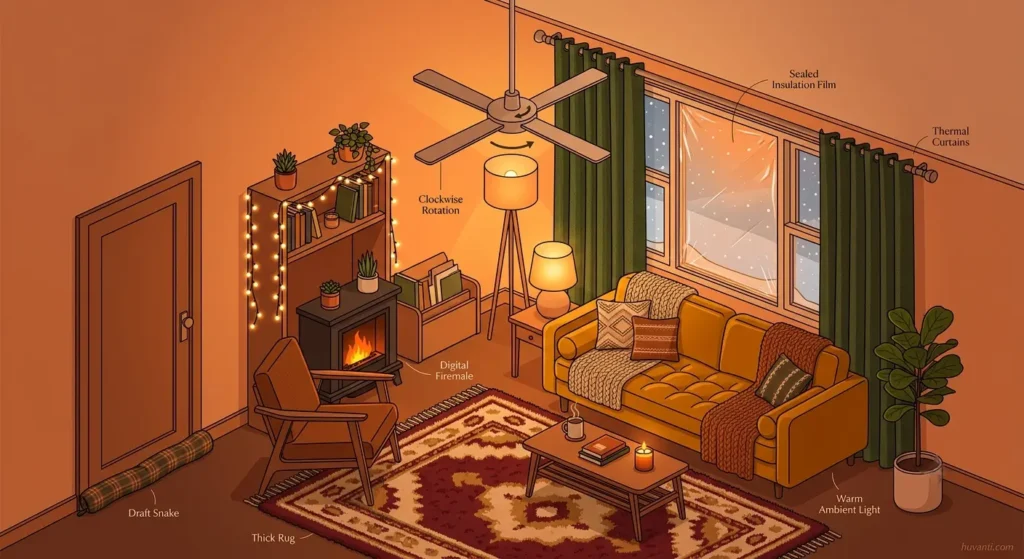
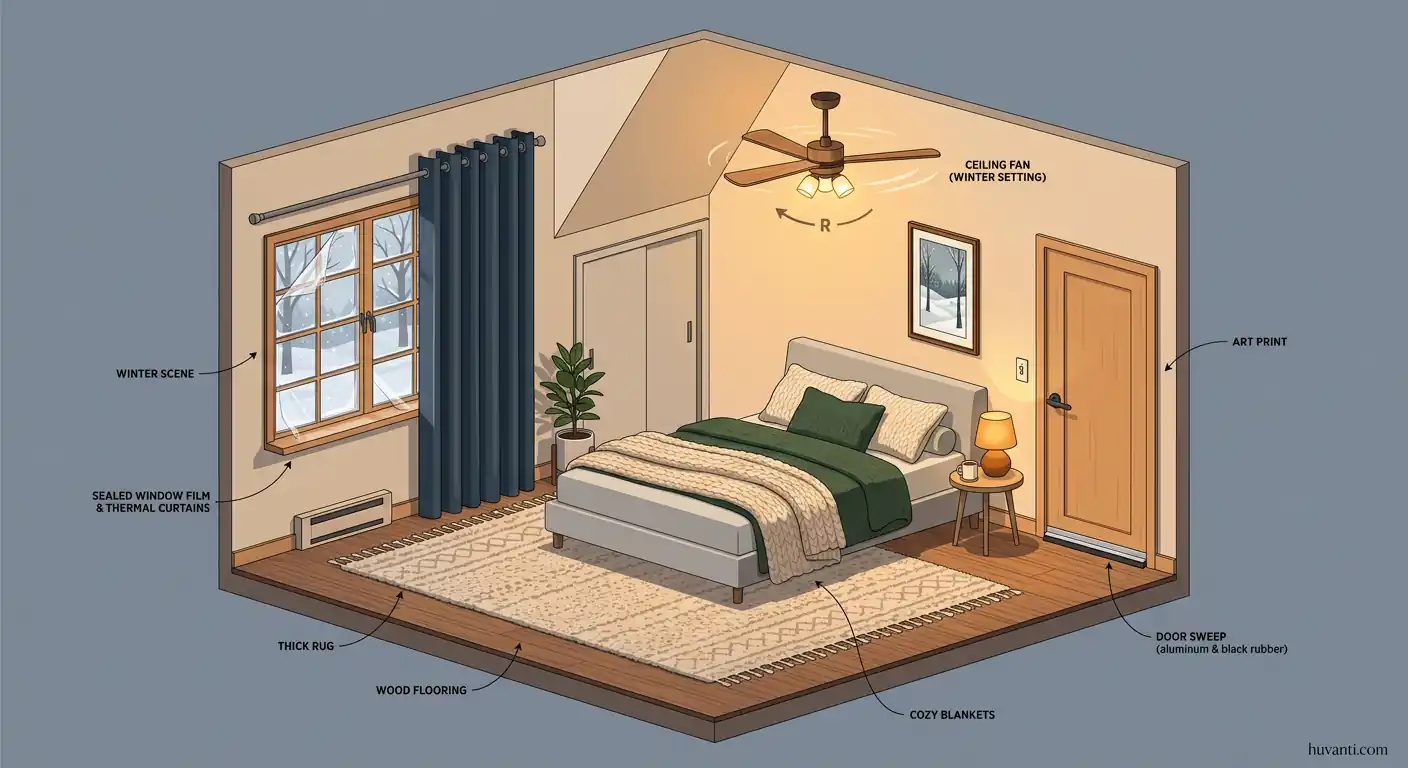
You don’t need a remodel or a new furnace to make a cold room feel comfortable. Most heat escapes through tiny gaps, bare windows, and poor air movement. So the smartest fixes are simple: stop the leaks, trap the heat you already pay for, and direct warmth where it matters.
In this guide, you get practical, low-cost ways to warm up a chilly room. You’ll learn how to find drafts in under 15 minutes, how to insulate windows without ruining the view, how to rearrange a room for better heat, and how to use a space heater safely and efficiently. I’ll also show you how humidity and airflow change how warm you feel, and when a quick fix won’t cut it.
Everything here favors affordable materials, renter-friendly steps, and easy wins.
Table of Contents
1. Hunt Down Drafts and Seal Them Fast
Warm air sneaks out and cold air sneaks in through cracks you barely notice. Finding and sealing those tiny leaks is usually the cheapest way to make a room warmer.
What to check first:
- Window frames, sash locks, and trim gaps
- The gap under exterior and hallway doors
- Electrical outlets and switch plates on exterior walls
- Baseboards where the wall meets the floor
- Around pipes, cables, and dryer vents
How to find leaks in 15 minutes:
- Close windows and doors.
- Turn on a bathroom fan or kitchen hood to create slight negative pressure.
- Hold a thin tissue or incense stick along the edges. If it flutters or the smoke pulls, you’ve found a leak.
Quick seals that work:
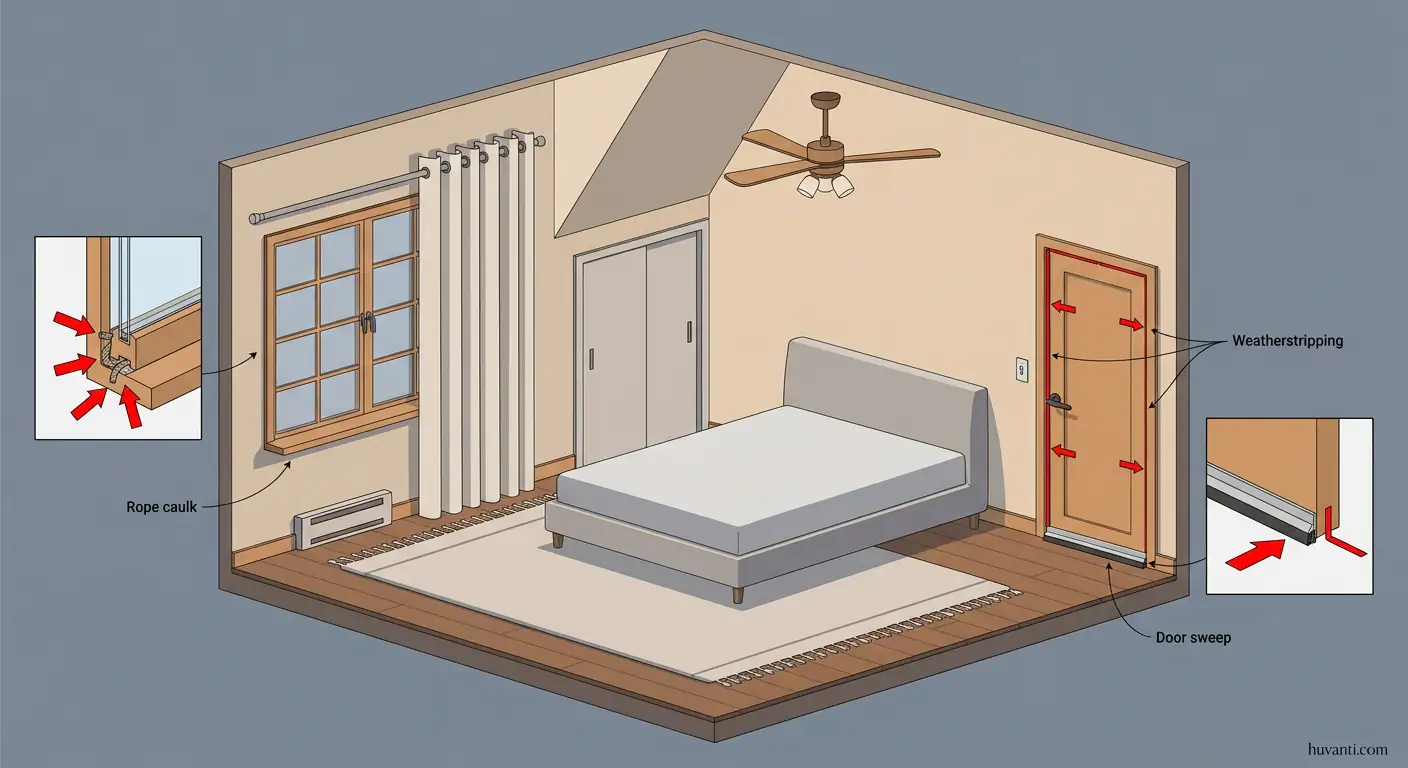
- Self-adhesive foam or rubber weatherstripping on drafty window sashes and doors. The cost is low, and the result is immediate.
- A door sweep or draft stopper to close the floor gap. Screw-on models seal best, but a weighted draft snake is easy for renters.
- Rope caulk pressed into window trim gaps. It peels off in the spring.
- Clear paintable caulk along baseboards and trim. Use a small bead and a damp finger for a clean line.
- Foam gaskets behind outlet and switch plates on exterior walls. They’re cheap and take seconds to install.
Tip: Focus on the biggest leaks first. A ¼-inch gap under a door leaks more heat than a handful of hairline cracks.
2. Add Window Insulation the Fast, Cheap Way
Bare glass bleeds heat. Insulating the glass, even temporarily, can make a room feel calmer and warmer.
Options that don’t wreck your view:
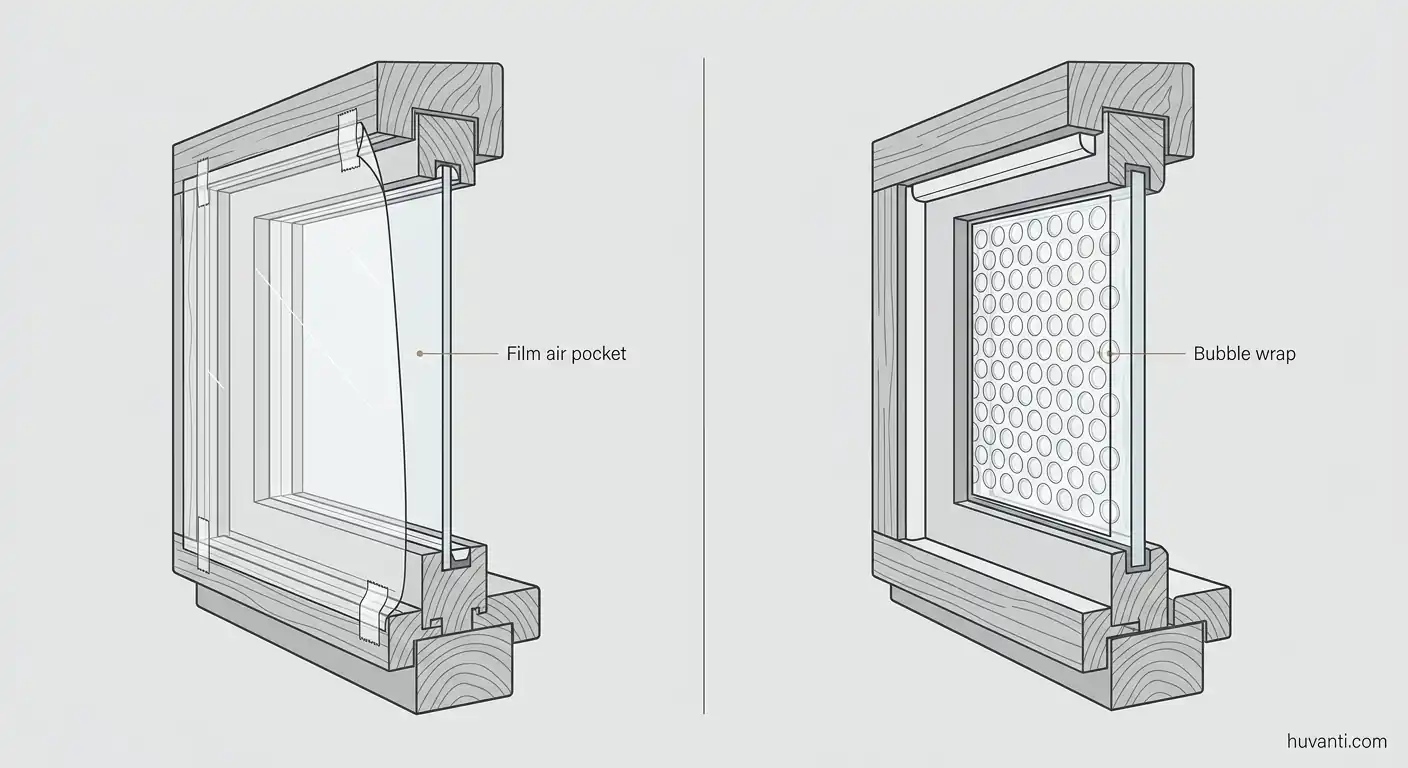
- Clear shrink-film kits: Apply the film with double-sided tape, warm it with a hair dryer, and it tightens clear. Expect a noticeable difference and a clean look through winter. Remove in the spring.
- Static-cling low-emissivity film: A reusable film that reduces heat loss and glare. Gentle on glass and renter-friendly.
- Bubble wrap method: Mist the glass with water, press small bubble wrap against it, bubble side toward the glass. It looks utilitarian, but it’s fast and surprisingly effective on basement or bathroom windows.
Don’t forget the edges. Seal the trim with clear caulk if you can. That stops the sneaky leaks that films don’t catch.
3. Layer Curtains and Liners for Nighttime Warmth
Thick curtains act like a blanket for your windows, especially at night when heat loss spikes.
What to use:
- Thermal curtains with tight side hems and a dense liner
- A second sheer panel near the glass to create an air gap
- DIY liners made from fleece or flannel clipped to the back of your current curtains
- A magnetic or hook-and-loop strip along side jambs to reduce side drafts
How to use them:
- Open curtains fully on sunny windows during the day to let light in.
- Close them before dusk to trap warmth.
- Make sure the bottom touches the sill or floor so drafts don’t slip underneath.
Small room tip: Mount the rod a few inches wider than the window and return the curtain to the wall with a small bracket at each side. That blocks side leaks you can feel on windy nights.
4. Warm Up the Floor with Rugs and Pads
If your feet are cold, you’ll never feel warm. Bare floors and thin carpets let heat escape and make the air near the floor feel chilly.
Simple floor upgrades:
- Add a thick area rug with a dense pad. A felt or foam-rubber pad stops cold from wicking up and quiets the room too.
- Use interlocking foam tiles under a rug in playrooms or home gyms. They’re cheap, soft, and removable.
- Seal floor gaps along baseboards with clear caulk to stop air washing under the wall.
If a room sits above an unheated space, floor insulation below is ideal, but that isn’t always possible. A rug with a good pad is your next best move.
5. Rearrange Furniture to Work with Heat, Not Against It
The room layout can either help or fight your heat source.
What to do:
- Pull sofas and beds 12 to 18 inches away from exterior walls so cold surfaces don’t chill you.
- Clear a 24- to 36-inch space in front of radiators, baseboards, or supply vents. Fabric absorbs heat and blocks airflow.
- Move a reading chair to an interior wall. You’ll feel warmer even if the thermostat stays the same.
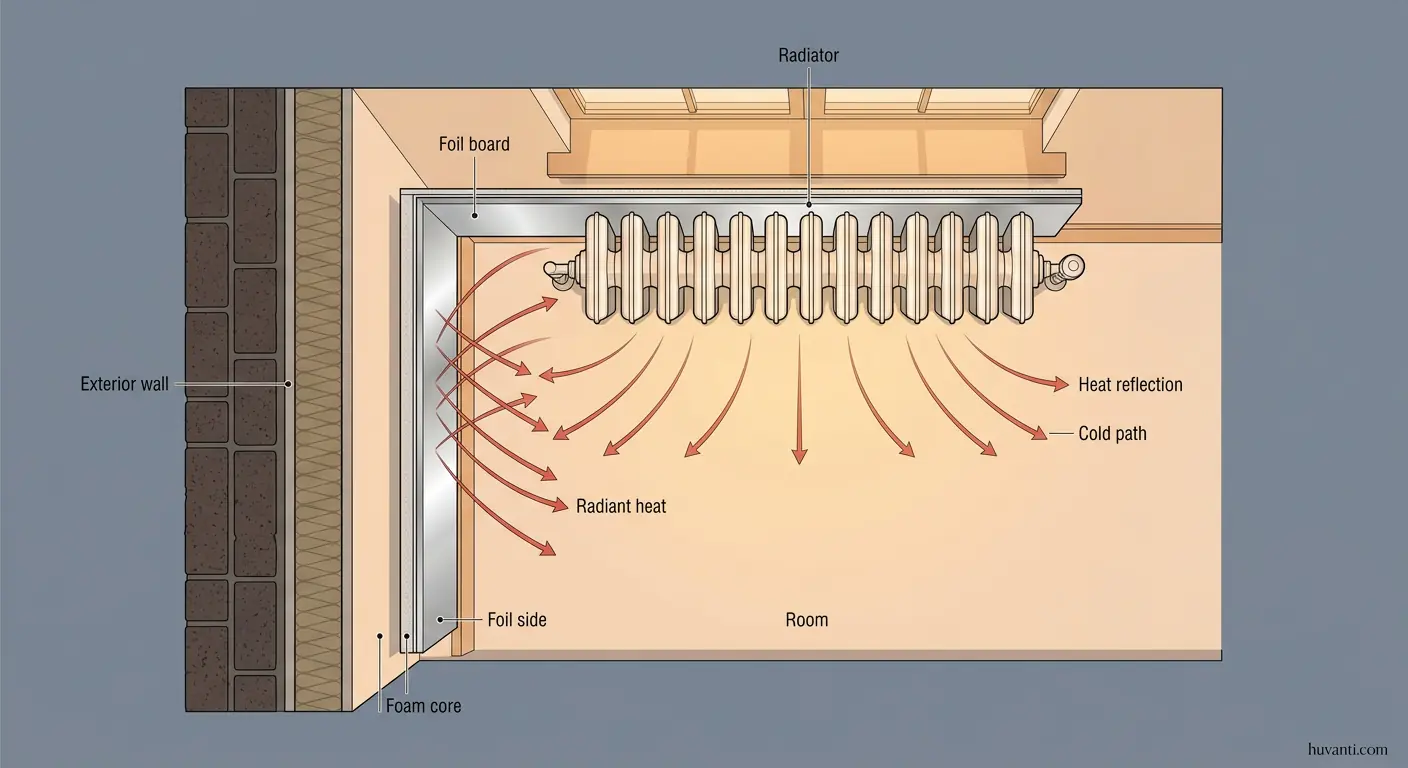
Bonus upgrade for hot water radiators: Add a reflective panel behind the radiator. A sheet of foil-faced foam board, cut to size and set behind the radiator, bounces heat back into the room. Keep foil away from electrical outlets, and don’t let it contact hot metal.
6. Boost Heat from Radiators and Vents with Gentle Airflow
Warm air often pools near the ceiling or sticks by the radiator. A little circulation spreads that heat where you sit.
Try this:
- Clip a small fan on low behind a radiator to push warm air into the room.
- Place a quiet desk fan on the floor, aimed along the wall where the heater sits. Keep it on the lowest setting.
- For forced-air systems, check that supply registers are open and returns are clear. Don’t block returns with furniture. If a register is under a curtain, use a register deflector to route air out from under the fabric.
Avoid cranking big fans. You want a slow, steady push, not a draft.
7. Reverse the Ceiling Fan to Bring Warmth Down
Heat rises. If you have a ceiling fan, use winter mode to nudge that warmth back toward you.
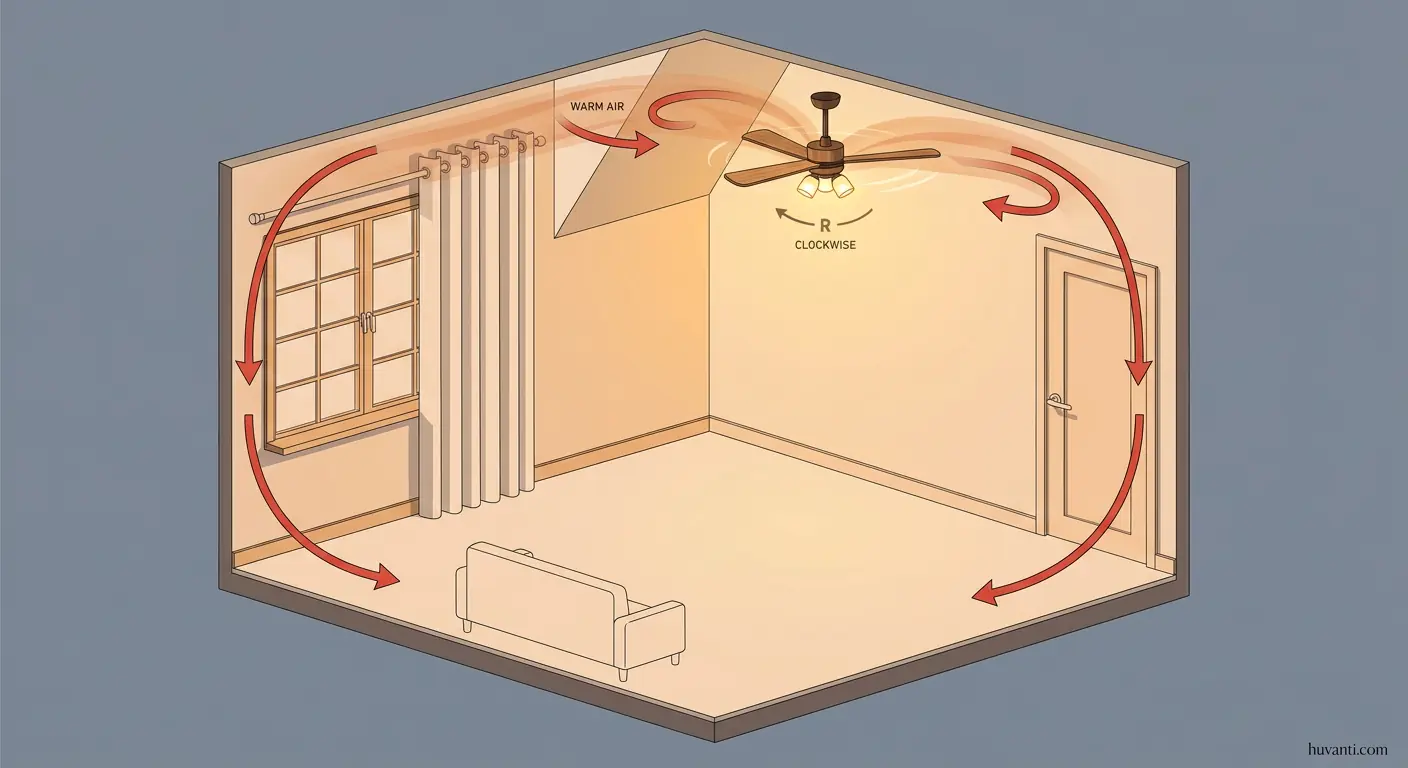
How to set it:
- Flip the direction switch on the fan body to clockwise when viewed from below.
- Run it on the lowest speed. The goal is gentle upward flow at the walls, which pushes warm air down in the center.
- Test it with a thin strip of tissue held near the wall. You should see a slow upward movement. If it blasts your hair, it’s set too high.
8. Zone the Space and Block Heat Escapes
You pay to warm the room you’re in. Stop that heat from drifting away.
Easy zoning tricks:
- Close doors to hallways and unused rooms.
- Hang a thick curtain across a wide doorway with a tension rod. If you add a tieback, it opens easily when you need it.
- Cover pet doors and mail slots with a better-insulated flap or a magnet-closing option.
- If you have an unused fireplace, close the damper tightly. For a bigger fix, insert an inflatable chimney draft stopper or a cut foam panel wrapped in plastic. Label it so you remember to remove it before any fire use.
Safety note: Never block a vent or combustion air supply to a gas appliance. If in doubt, leave it open.
9. Use a Space Heater the Smart, Safe, and Cheap Way
A small heater can make one cold room comfortable without raising the whole home’s thermostat. The trick is choosing the right type, placing it well, and running it efficiently.
Types at a glance:
- Ceramic tower or box heaters: Good for quick warm-up and spot heating. They blow warm air.
- Oil-filled radiators: Slower to heat, but steady and quiet. Great for bedrooms.
- Infrared heaters: Radiant warmth you can feel on your skin. Useful when you stay in one spot.
Size and placement:
- Match heater output to room size. For a small bedroom, 750 to 1000 watts often works. A larger living area might need 1500 watts.
- Place it on the floor, on a flat, stable, non-shag surface, at least 3 feet from anything that can burn. Aim it toward your seating area.
Safety musts:
- Look for tip-over protection, overheat shutoff, and a thermostat.
- Plug directly into a wall outlet. Don’t use power strips or extension cords.
- Keep pets and fabrics away from the heater face.
- Turn it off when you leave the room or sleep, unless it’s designed and labeled for unattended use, which is rare.
Cost to run, made simple: Electric cost equals watts times hours used divided by 1000 times your rate per kilowatt-hour.
Example: a 1500-watt heater for 4 hours at $0.16 per kilowatt-hour. 1.5 times 4 equals 6 kilowatt-hours. 6 times 0.16 equals $0.96.
Use the lowest setting that keeps you comfortable, and a thermostat or smart-plug schedule to avoid wasted hours.
10. Warm the Person, Not Just the Room
If you only need a cozy corner, personal heat solves the problem for pennies.
Low-watt comfort wins:
- Heated throw or blanket with auto-shutoff. Most run 50 to 150 watts and feel amazing on the couch.
- Heated foot pad under a desk. Warm feet make your whole body feel warmer.
- Hot water bottle in a cover. Boil water safely, fill, and tuck it near your feet in bed or on your lap.
- Layer clothing made of wool or fleece. Trap air close to your body.
These don’t heat the air, but they deliver comfort fast at the lowest cost.
11. Use Humidity to Feel Warmer Without Raising the Thermostat
Dry winter air makes you feel cooler because sweat evaporates faster. A modest bump in humidity can make the same room temperature feel more comfortable.
Aim for 35 to 50 percent relative humidity. Use a cheap digital hygrometer to track it.
Ways to add moisture gently:
- Run a small cool-mist humidifier in the room you use most.
- Place a wide bowl of water near, not on, a radiator or supply register. The moving air will lift moisture.
- Dry a load of laundry on a rack in the room if your home’s ventilation can handle it.
Watch for condensation on windows and walls. If you see moisture collect, dial back humidity and ventilate briefly with a 5-minute window crack at midday.
If your room is below 30 percent humidity, you’ll likely feel a big comfort bump once you reach the mid-30s.
12. Grab Free Heat from the Sun During the Day
Sunlight is free heat. Use it.
Daily routine:
- Open blinds and curtains on sun-facing windows right after sunrise.
- Keep the glass clean to improve solar gain.
- Place a dark rug or chair where the sun hits to absorb and re-radiate warmth.
- Close everything before dusk to trap the day’s heat indoors.
Even in deep winter, a sunny afternoon can lift a room several degrees if you give the light a path in and a way to stay.
13. Tame Fireplace and Chimney Drafts
An open chimney acts like a straw that pulls warm air out of your room.
Do this:
- Make sure the damper is fully closed when you aren’t using the fireplace.
- If you never use it, insert a chimney balloon or a custom foam plug just above the firebox. Both are removable.
- Seal around the fireplace surround with high-temperature-rated sealant if you find gaps.
- Always tag any insert or plug clearly. Remove it before any fire use, and keep a carbon monoxide alarm in the home.
14. Insulate the Attic Hatch or Ceiling Above the Room
If your chilly room sits under an attic, a leaky attic hatch or pull-down stair opening can dump cold air into the space.
Fast fixes:
- Add adhesive foam weatherstrip around the hatch frame.
- Build or buy an insulated cover box for pull-down stairs. You can make one from rigid foam board and tape. Seal the seams.
- Check for gaps in ceiling fixtures and use caulk or putty to seal air leaks around electrical boxes from the attic side, if accessible.
This is a small project with an outsized impact on rooms directly below.
15. Finish with Small, High-Impact Tweaks
These don’t take long, and they add up.
Do a quick pass:
- Install foam gaskets behind all outlet and switch plates on exterior walls.
- Add pipe insulation to any exposed hot water or radiator pipes in the room to keep more heat in the water until it reaches the radiator.
- Adjust door latches so doors close snugly without a gap. If you can see light, you’re losing heat.
- Fill larger trim cracks with foam backer rod, then caulk. It saves caulk and makes a flexible seal.
- Use a peel-and-stick door jamb seal to tighten a loose door along the latch side.
None of these are flashy. You’ll feel the difference the next windy night.
Quick Warm-Up Game Plan You Can Do Today
Short on time or cash? Use this path for the fastest comfort boost.
- Find and seal the worst leaks: door sweep, weatherstrip, outlet gaskets.
- Add a rug and pad to the coldest floor area.
- Open sun-facing curtains by day, close at dusk.
- Reverse the ceiling fan to winter mode.
- Run a small, safe space heater on low with a thermostat where you sit.
- Raise humidity to the mid-30s with a humidifier and monitor with a hygrometer.
This stack handles drafts, radiant cold, airflow, and personal comfort in a single afternoon.
Safety Notes You Shouldn’t Skip
Warmth is great. Safety is greater.
- Never use a gas oven, range, or grill to heat a room. Combustion creates carbon monoxide and moisture.
- Keep anything that can burn at least 3 feet from space heaters, radiators, and baseboards.
- Install and maintain smoke alarms and carbon monoxide alarms according to local code.
- Don’t block combustion air intakes or dryer vents.
- If you smell gas or see soot around a gas appliance, stop and call a qualified pro.
When Cheap Fixes Aren’t Enough
Some cold rooms point to bigger issues. Watch for these red flags.
- Condensation or frost inside windows even at normal humidity
- Drafts from electrical boxes or recessed lights that persist after sealing
- Uneven temperatures between rooms even with doors open and vents clear
- A floor that feels icy above a crawlspace or garage
- A furnace or boiler that runs constantly but can’t hold temperature
If you see these, plan a deeper look at insulation, duct balancing, or air sealing beyond the room.
Final Thoughts
You came here for cheap ways to warm up a room. You now have a full playbook that works in any home or apartment. Start by stopping leaks, insulating windows, and using the sun. Add rugs, fix airflow with a ceiling fan on low, and zone the room with doors and curtains. If you still need a boost, bring in a safe space heater and raise humidity a little. Every step is simple, low-cost, and focused on comfort first.
Use the cost math to run a heater wisely. Use the safety checklist to stay protected. Most importantly, try a few changes at once. The combination of draft control, better window treatments, and smart airflow is what makes a room finally feel warm without cranking the thermostat.
You can warm that cold room today without wrecking your budget.
Frequent Asked Questions
What is the cheapest way to warm up a room fast?
Seal the biggest draft, close the door, and run a small space heater on low with a thermostat while you sit nearby. Add a rug and close curtains at dusk. Those steps stack for a quick win.
Are window insulation films worth it?
Yes. Clear shrink-film kits are inexpensive, easy to install, and they cut window heat loss and drafts. Remove in spring, and the glass is clean.
Should I open the oven after baking to warm the kitchen?
No. Leaving an oven door open is a burn and tip hazard, and a gas oven adds carbon monoxide and moisture. Rely on safer methods like curtains, rugs, and a space heater with safety features.
Is an oil-filled radiator cheaper to run than a ceramic heater?
Both cost the same per kilowatt-hour. The difference is behavior. Oil-filled models heat slowly but maintain temperature smoothly and often cycle less. That steady operation can feel more comfortable at a lower setting.
What humidity level makes a room feel warmer?
Aim for 35 to 50 percent relative humidity. Use a hygrometer. If you see window condensation, reduce humidity and ventilate briefly.
How do I keep a room warm without electricity?
Focus on draft sealing, heavy curtains, rugs, and zoning with doors and doorway curtains. Use hot water bottles and extra bedding for personal warmth. Never use a gas oven or grill indoors for heat.
Will reversing my ceiling fan really help in winter?
Yes, on the lowest speed. Clockwise rotation gently pushes warm air down without creating a draft, which can make the room feel a couple of degrees warmer at seating height.
Do thick curtains block too much radiator heat?
If curtains hang over a radiator, they trap heat at the window. Use shorter curtains above radiators, tie them back, or add a shelf above the radiator to route warm air out into the room.
How can renters warm a room without risking the deposit?
Use removable window films, draft stoppers, door sweeps with adhesive, outlet gaskets, rugs with pads, tension-rod doorway curtains, and personal heaters or heated throws. Avoid drilling, and use products designed to be removable.
How do I estimate the cost to run my space heater?
Use this formula: watts times hours used divided by 1000 times your electricity rate. Example: 1000 watts for 3 hours at $0.16 per kilowatt-hour costs $0.48.