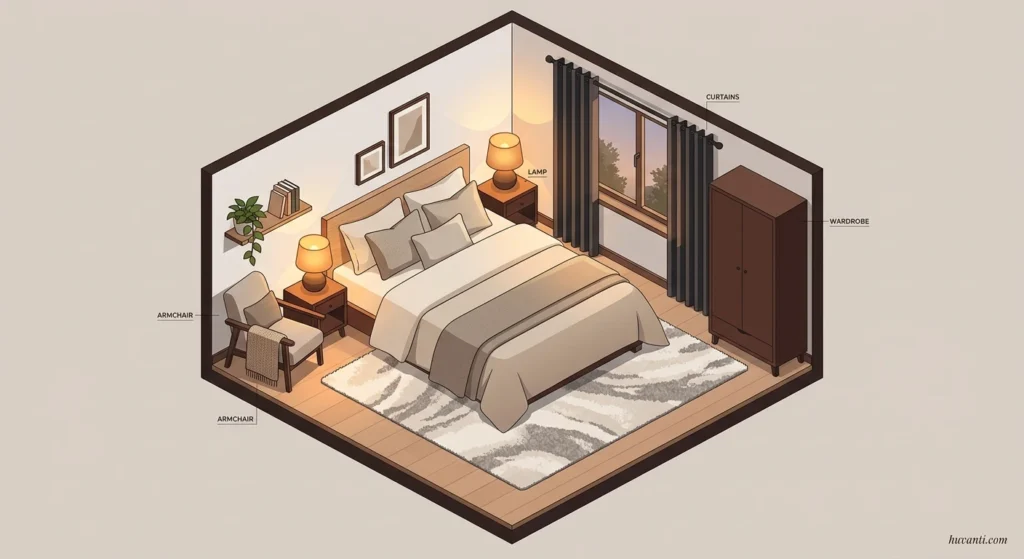
You want a quiet corner for inner calm without turning your whole room upside down. Smart move. A bedroom is often the easiest place to build a consistent practice because the space is already tied to rest.
If you’ve been searching how to make meditation space in bedroom, this guide tell you a simple, practical setup you can build in an afternoon and keep for years. You’ll learn exactly where to place your seat, how to control light and noise, what to do with clutter, and how to design a ritual that sticks. I’ll give you 17 real, simple ideas that work in small rooms, rentals, shared spaces, and busy homes.
By the end, you’ll have a calm nook that invites you to sit every day. No expensive gear needed. No aesthetic rules you must follow. Just a clear plan with options for every kind of bedroom.
Table of Contents
Start Here: A Quick 20-Minute Blueprint
Short on time? Do this first so you can sit today.
- Pick a corner or the side of your bed where your feet land in the morning. That’ll be your zone.
- Lay down a small rug or folded blanket to mark the boundary.
- Place a cushion or a folded pillow as your seat. If your knees are cranky, use a chair.
- Add one small object that centers you. A rock, a photo, a plant, a candle alternative.
- Dim the lights or switch on a warm table lamp.
- Put your phone on airplane mode and set a silent timer for 7 minutes.
- Sit. The perfect space can grow later. The habit starts now.
Now let’s build the full setup that makes your practice feel easy and repeatable.
The 17 Simple Ideas That Make a Bedroom Meditation Space Work
1. Choose the Spot and Make a Boundary
A boundary tells your brain this area has a single purpose. You don’t need a whole room. You need a footprint the size of a bath mat.
What to do:
- Corners feel safe and naturally reduce visual noise. Aim there first.
- If your room is narrow, try the side of the bed near the wall.
- Mark the area with a rug, yoga mat, or a folded quilt.
- Use a lightweight screen, curtain panel, or even a tall plant to soften sight lines if you share the room.
Why it works: Repetition in the same spot turns your routine into a cue. You sit down, and your nervous system knows what comes next.
Keep it renter-friendly: Command hooks and tension rods create soft dividers without holes.
2. Anchor the Floor with a Dedicated Layer
A dedicated layer signals sacred use and adds comfort.
Good options:
- Flat woven rug that doesn’t shed. Cotton or jute are easy to shake out.
- Tatami-style mat for a firmer, grounded feel.
- A folded wool blanket if you prefer cushy under knees.
Care: Shake or vacuum weekly. Sun it monthly to freshen.
3. Pick Your Seat for Your Body, Not the Photo
Comfort beats looks. If your hips or knees hurt, your mind will chase pain instead of breath.
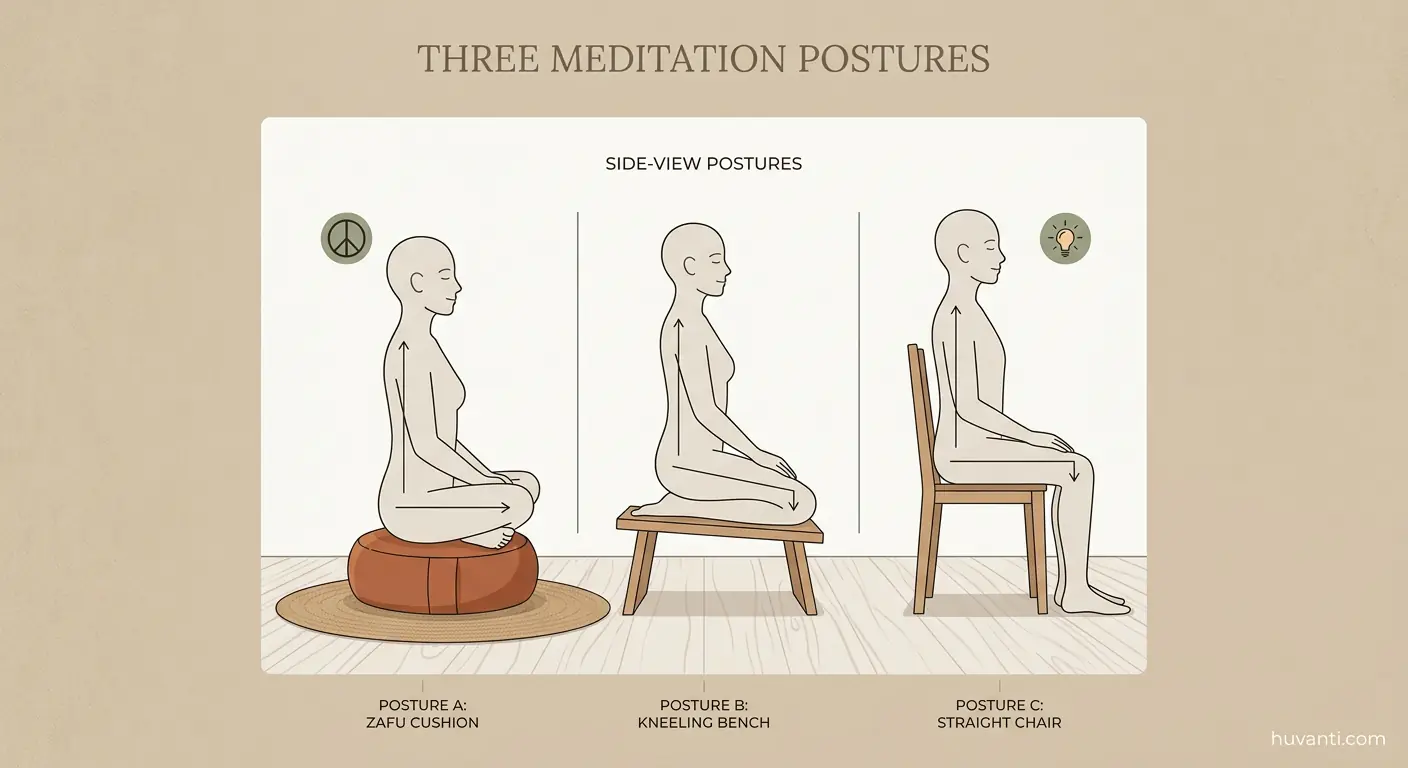
Seats that work:
- Zafu cushion for cross-legged sitting. Buckwheat fill keeps shape and lets your pelvis tilt forward.
- Crescent cushion if you need space for ankles.
- Zabuton floor pad under your seat to cushion knees.
- Kneeling bench for a neutral spine without hip strain.
- A simple chair with feet flat on the floor and a firm cushion behind your lower back.
Fit check: Sit and notice if your knees fall slightly below your hips. That tilt protects your lower back. If your legs tingle, raise your seat a bit or switch to a chair.
4. Dial in Light You Actually Like
Harsh white light agitates. Bedroom meditation thrives with warm layers.
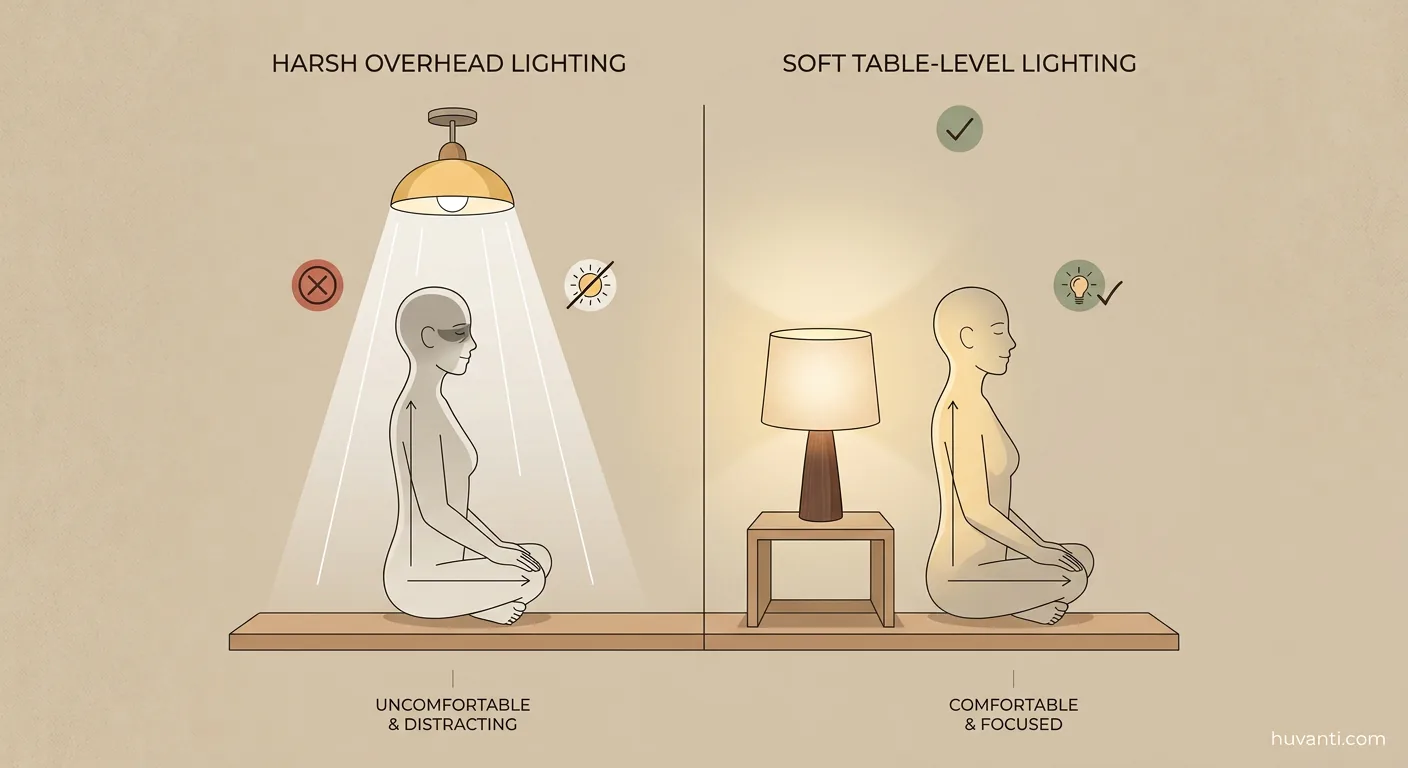
Do this:
- Use warm bulbs between 2200K and 3000K for evening. Cooler bulbs are better for daytime reading, not for winding down.
- Add a small lamp or paper lantern at eye level or lower. Overhead light can feel too alert.
- Install a plug-in dimmer for lamps without a built-in dimmer.
- If your windows blast morning sun, add sheer curtains to soften. Keep blackout curtains handy for midday naps, but open them fully during a morning sit to sync circadian rhythm.
Eye comfort: Facing a blank wall reduces visual input. If that feels dull, face a window with sheers so the view is soft, not busy.
5. Tame Noise and Soften the Room
Silence is great. Real life isn’t silent. So you reduce sharp sounds and fill the rest with gentle consistency.
Options:
- Add soft things: a rug, fabric headboard, curtains, even a throw over a hard dresser. Fabric absorbs echo.
- Door sweep or rolled towel at the door base to cut hallway noise.
- White noise at low volume near the door if you share a home.
- If you use headphones, pick open-back for comfortable longer sits.
Respect your ears: Keep background sound low enough that you can still hear your breath.
6. Create a Simple Focal Point: An Altar Without the Fuss
A focal point gives your eyes a place to rest and your practice a tiny ritual.
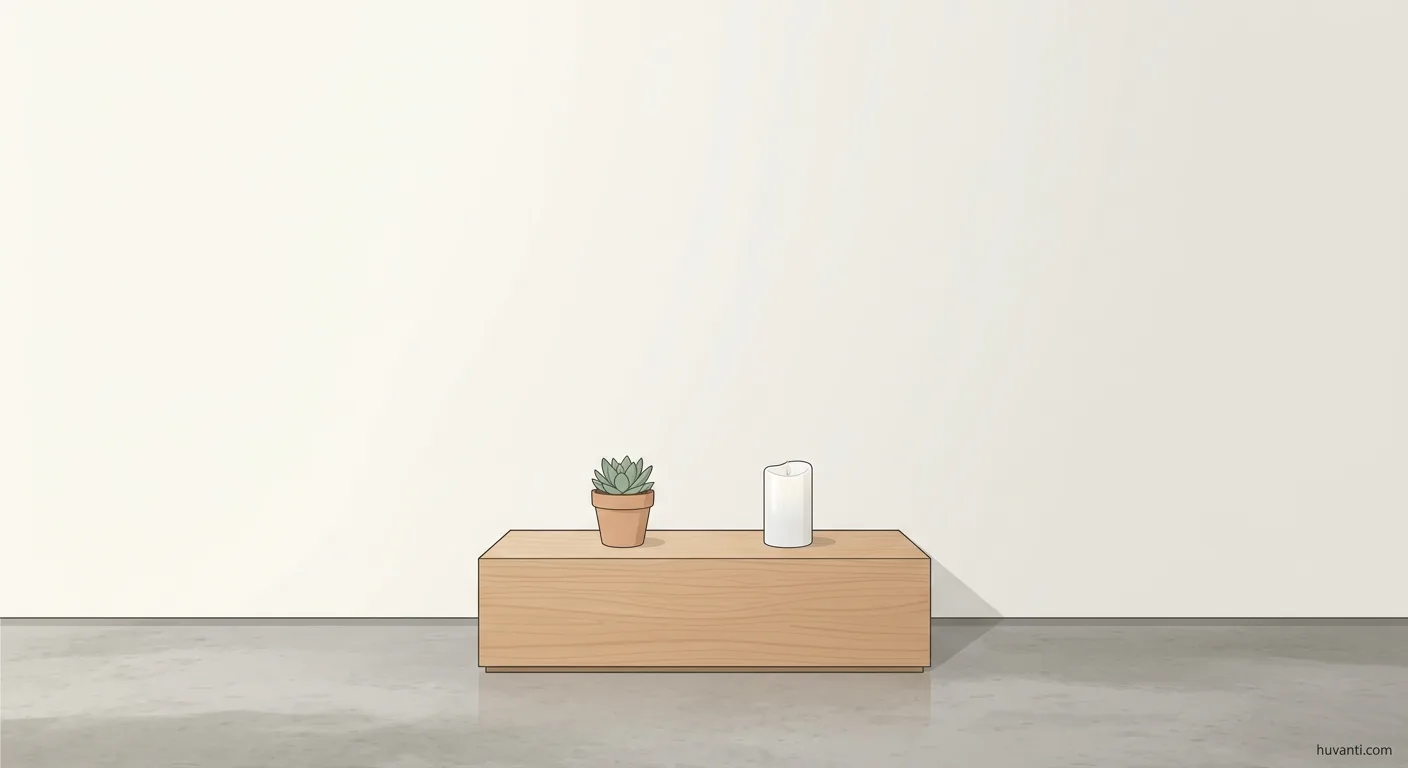
Keep it simple:
- A small tray or wood block with one to three meaningful items: a candle alternative, a stone, a small plant, a photo, a quote card.
- A wall shelf mounted at chest height if floor space is tight.
- Rotate items seasonally to keep it fresh.
Boundaries: Avoid clutter. If it doesn’t support calm, remove it.
7. Keep Air Clean and Scent Gentle
Fresh air beats scent. If you do use scent, stay subtle.
Air first:
- Crack a window for a few minutes before you sit if weather allows.
- Clean the rug and cushion regularly to reduce dust.
If you love scent:
- Essential oils need dilution. One or two drops in a larger diffuser chamber is enough for a small bedroom.
- Try lavender or cedar for evening, citrus or mint for morning. Switch if any note feels heavy.
- If you share a space or have pets, consider scent-free sessions. Good air quality is the real goal.
Fire safety: Open flame in bedrooms is risky. If you love candlelight, use high-quality LED candles with a gentle flicker.
8. Make Storage Disappear
Visual clutter steals focus. Give everything a home you don’t see.
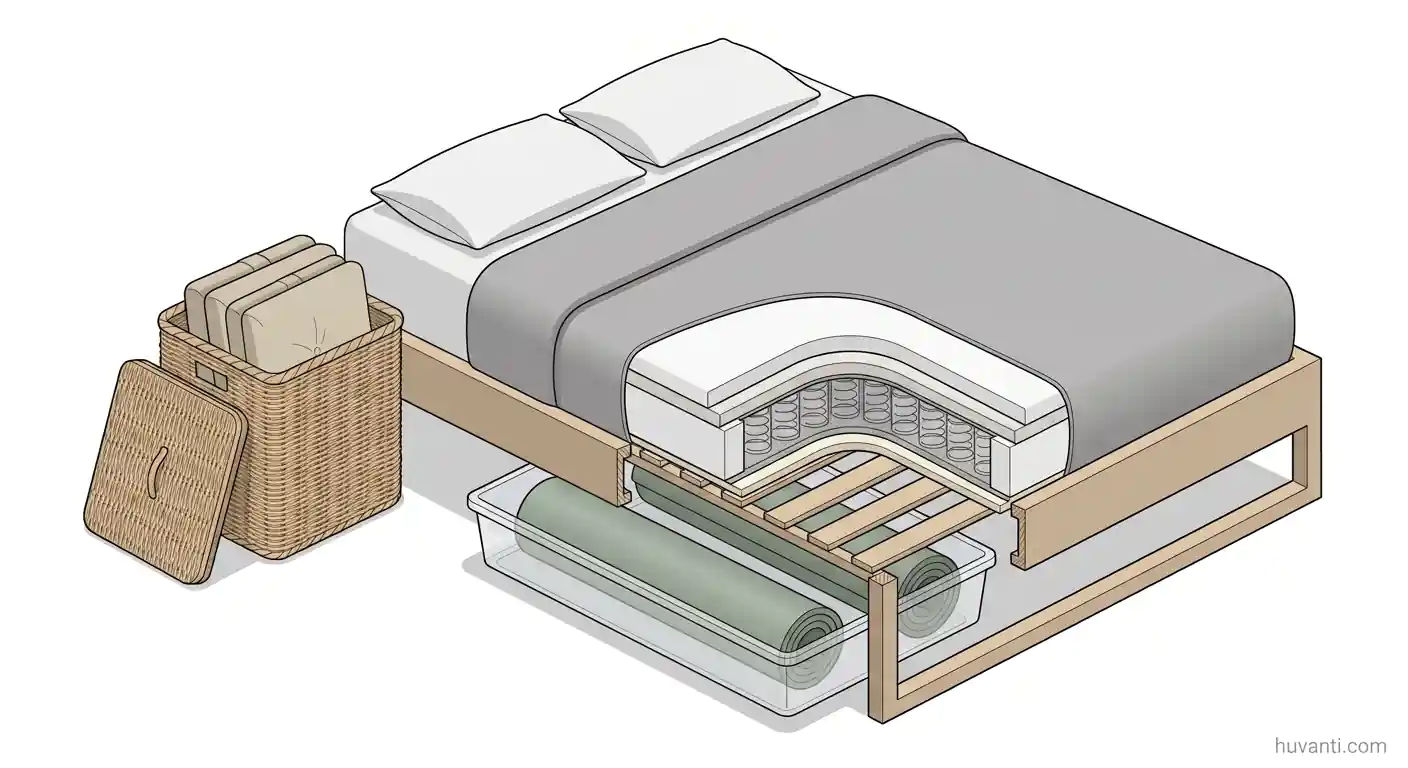
Smart homes for gear:
- A lidded basket for cushions and blankets. Done sitting, everything goes inside.
- Under-bed bins for mats or benches.
- A narrow shelf or drawer for timer, eye pillow, journal, pen.
- A small wall hook behind the door for headphones or eye mask.
Reset in 60 seconds: When you stand, take three breaths while you put things away. That’s your closing ritual.
9. Choose a Calm Color and Texture Palette
A unified palette reads as quiet. You don’t need to repaint.
Practical picks:
- Neutrals with a single accent works well. Think linen and sand with a moss cushion, or cloud gray with a clay-colored throw.
- Natural textures like cotton, linen, wool, bamboo, unfinished wood.
- Avoid busy patterns right in your line of sight. Keep them on bedding if you love them, not in the nook.
Easy test: Snap a quick photo of the nook. If your eye jumps around, remove one item until the photo looks calm.
10. Add a Plant That Thrives in Bedrooms
Plants soften edges and can lift your mood. Choose low-maintenance and bedroom-safe options.
Good choices: Snake plant, ZZ plant, pothos, peace lily, philodendron. These tolerate lower light and indoor air. If your room is very bright, a rubber plant or monstera can be lovely.
Care basics: Don’t overwater. Let soil dry slightly between waterings. Use a saucer to protect flooring. If you have pets, check plant safety. Many aren’t pet-safe, so keep them out of reach or choose pet-friendly varieties like spider plant.
No plant option: A branch in a vase or dried grasses give a natural touch with zero care.
11. Keep Your Body Warm and Supported
Cold feet ruin focus. So does a tense back.
Have at hand:
- A soft throw for shoulders or lap.
- Thick socks.
- A small lumbar cushion if you sit in a chair.
- A light eye pillow for evening sits to reduce visual stimulation.
Safety notes: Electric blankets and heated pads are fine, but set a timer and avoid sleeping with them on.
12. Set Tech Boundaries That Actually Stick
You want the benefits of guidance without the ping storm.
Try this:
- Create a charging station outside the bedroom for your main phone. Use a basic alarm clock on the nightstand.
- If you must use your phone, switch to airplane mode and set a built-in timer.
- Avoid reading notifications before your morning sit. If your brain catches a to-do, the sit is gone.
Low-tech win: A simple analog kitchen timer with a soft tick can be soothing and removes screen light.
13. Curate Sound on Purpose
Sound can anchor attention. It can also wake the house. A light touch works best.
Options:
- Nature loops at low volume. Ocean, rain, wind, or a single singing bowl strike.
- Binaural beats are personal taste. Keep volume low and test if they help or distract.
- If you chant or recite, place your seat so sound reflects gently. A corner adds warmth.
Timer tone: Choose a soft bell or wooden chime. Siren tones undo the calm you just built.
14. Tidy Your Walls and Windows
Your eyes notice edges and clutter. A few tiny tweaks change the whole feel.
Do this:
- Keep the wall you face simple. One small piece of art or nothing at all.
- Hide cords with clips along baseboards.
- Use sheers to soften harsh views while keeping daylight.
- If mirrors energize you, keep them out of your line of sight when you sit. If they distract you, cover them with a scarf during practice.
15. Keep It Renter-Friendly and Reversible
You can build a beautiful nook without tools or landlord drama.
Ideas:
- Tension rods with a linen panel to create separation.
- Removable wallpaper or wall decals behind your focal point for a defined zone.
- Command shelves that hold small candles, incense alternatives, or a tiny plant.
- Foldable screens that store flat under a bed.
16. Build a 2-Minute Reset Ritual
A small ritual keeps the space useful even on chaotic days.
Example reset: Open curtains. Straighten the cushion and blanket. Wipe dust from the tray or shelf. Three deep breaths standing. Done.
These tiny actions prime your brain for a short sit or prepare the nook for later.
17. Craft Micro Routines for Morning and Night
Your bedroom already bookends your day. Use that.
Morning: Sit before you touch your messages. Sip water, set a 7-minute timer, sit. If you need a cue, put your cushion where your feet land when you get out of bed.
Night: Two-minute wind down: sit on the cushion, eyes soft, count 10 breaths. Add a journal sentence if you like. Keep light warm and low. Avoid strong scents at night.
On long days: Two mindful minutes beat a skipped session. Consistency wins.
Layout Recipes You Can Copy Today
Use these to speed up your decisions. Adjust to fit your room size.
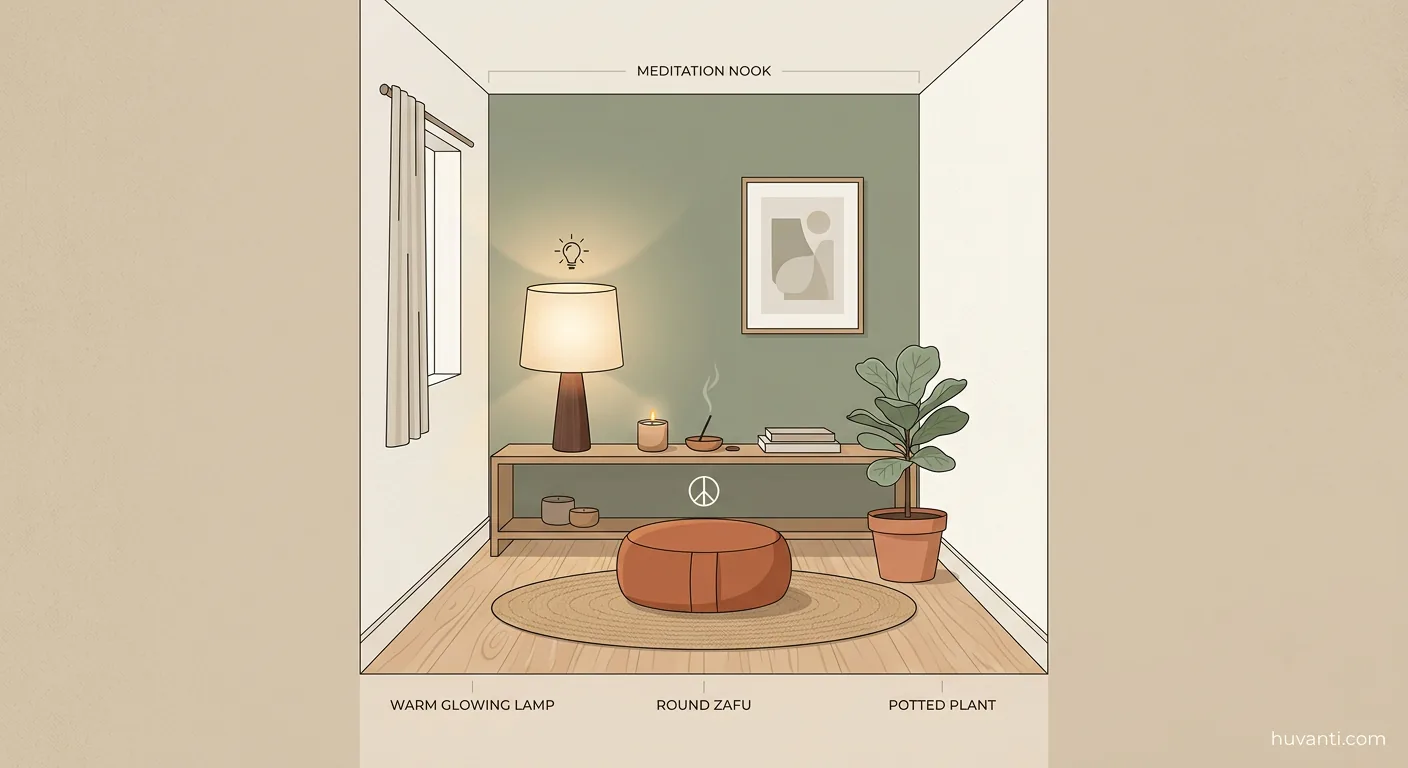
Corner Calm Layout
- Place a 2-by-3-foot rug in the quietest corner.
- Cushion on the back half of the rug so your knees rest on the front.
- Small lamp on the adjacent nightstand or a floor lantern just outside the rug.
- Narrow tray or wood block against the wall for a focal point.
- Sheer curtain nearby to diffuse morning light.
When this shines: Most bedrooms. Fast to set up and easy to keep tidy.
Bedside Micro Nook
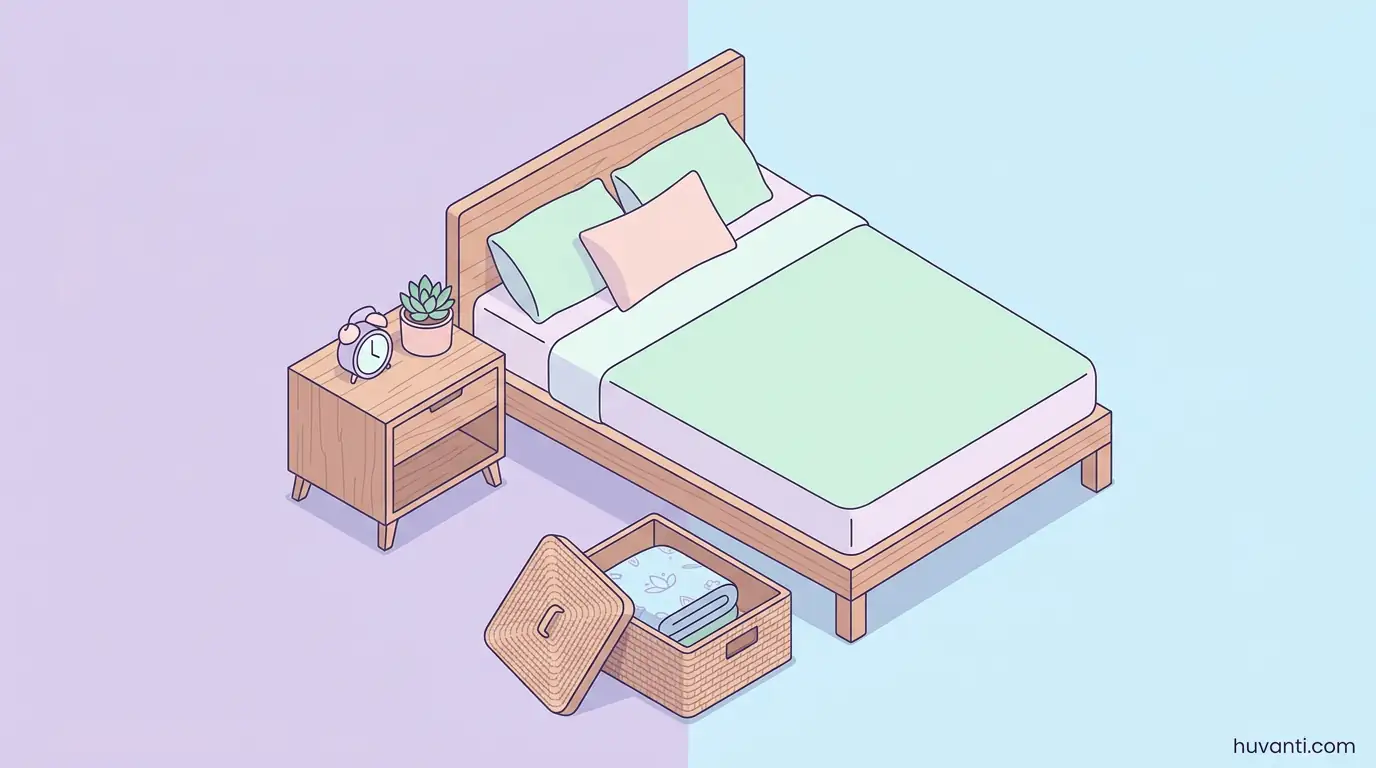
- Use the space where you step out of bed.
- Keep a foldable cushion and blanket in a lidded basket beside the nightstand.
- In the morning, pull the basket out, sit on the unfolded cushion, and lean your back on the bed frame.
- Timer on the nightstand. No other changes needed.
When this shines: Tiny rooms and busy mornings. Zero setup friction.
Window Bench Retreat
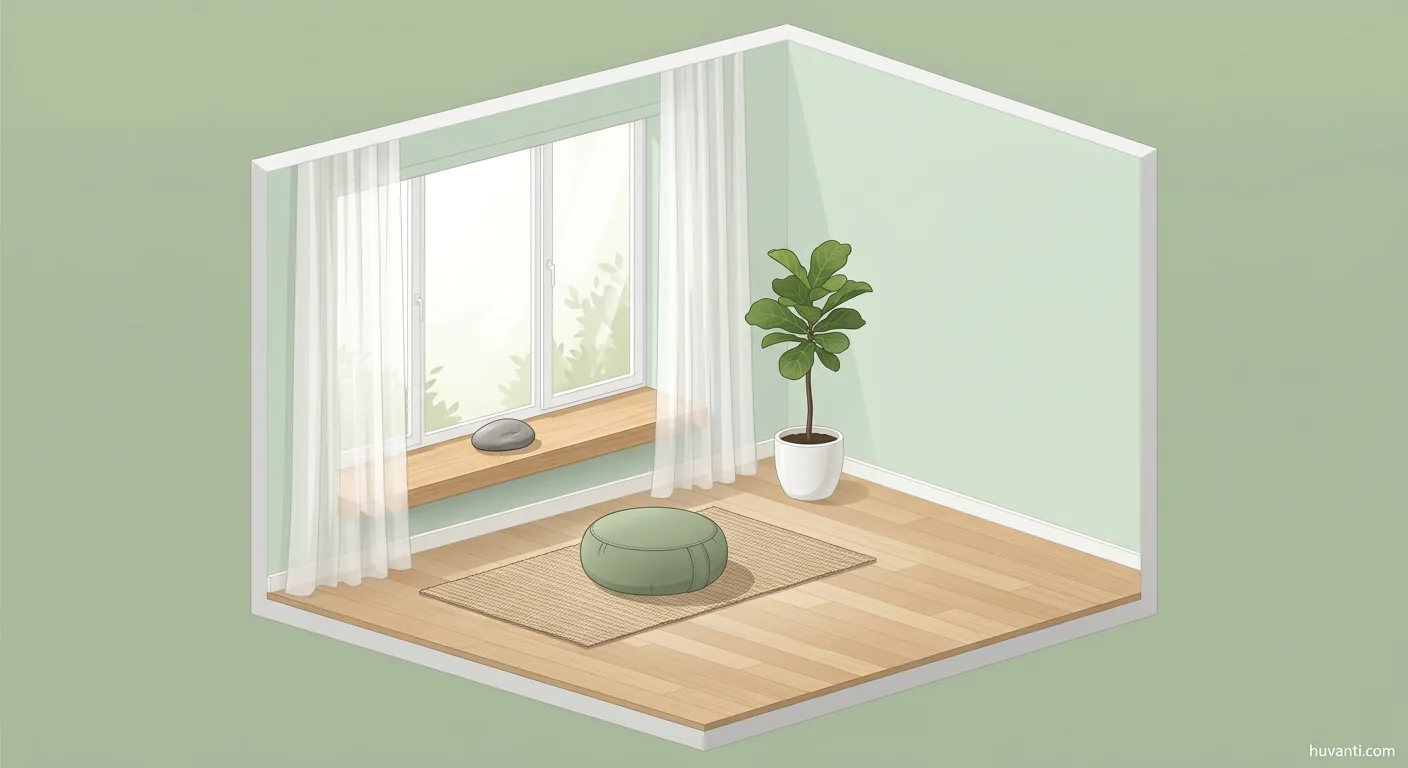
- If you have a window ledge or bench, use the floor in front of it as the zone.
- Sheer curtain for soft light. Keep the ledge clear so it acts as your altar.
- Cushion or bench seat on the floor. Avoid direct drafts in winter.
When this shines: Morning sits with daylight. Helps wakefulness gently.
Closet Cove
- Clear the bottom section of a reach-in closet.
- Lay a small rug and keep the door ajar for airflow.
- Install a battery lamp on a low shelf.
- Store your cushion inside and pull it out to sit in front of the closet opening.
When this shines: Studio apartments or shared bedrooms where you need visual separation fast.
Gear That Helps Without Taking Over
You don’t need much. Choose what actually solves a problem.
Seating
- Zafu with buckwheat hulls: Molds to you, breathable.
- Crescent cushion: Space for ankles, great if you cross legs.
- Zabuton: Large floor pad under knees to reduce pressure.
- Kneeling bench: Neutral spine, ideal if hips are tight.
- Chair: Stable, flat seat. Add a wedge cushion for pelvic tilt if needed.
Tip: If a seat hurts after 3 minutes, raise the height. Comfort is form.
Rugs and Floor Layers
- Flat woven cotton or wool rug: Stable, easy to clean.
- Tatami-style mat: Firm, durable, earthy look.
- Yoga mat under a blanket: Extra grip on smooth floors.
Care: Vacuum or shake weekly. Spot clean spills right away.
Lighting
- Warm LED bulbs labeled 2200K to 3000K for evenings.
- A plug-in dimmer to dial brightness as needed.
- Paper lantern or frosted shade for diffuse glow.
- Sunrise light for early risers who need a gentle wake.
Check flicker: Sensitive eyes do better with quality bulbs that don’t visibly flicker at low brightness.
Sound
- Small speaker at low volume placed away from corners to reduce boom.
- Open-back headphones if you need privacy without full isolation.
- A soft bell timer to end sits gently.
Scent
- Diffuser with minimal drops and a timer.
- LED candle if you love candlelight without open flame.
- Unscented is always valid. Breath is enough.
Storage
- Lidded basket or ottoman for fast clean-up.
- Under-bed boxes for larger gear.
- Narrow wall shelf for small focal items.
Small Comforts
- Light throw or shawl.
- Eye pillow with removable, washable cover.
- Journal and pen stored out of sight for post-sit notes if you like to reflect.
Decor Do’s and Don’ts
Do:
- Keep the focal wall minimal.
- Limit visible items to a few intentional pieces.
- Use natural textures and warm light.
- Hide cords and chargers.
Don’t:
- Stack trinkets on every surface.
- Place strong, complex patterns right in your sightline.
- Fill the air with heavy perfume or thick incense.
- Leave the cushion buried under laundry. If it’s hard to reach, you won’t sit.
Safety and Accessibility Basics
- Open flame in bedrooms is risky. Use LED candles or keep true candles attended, stable, and well away from bedding.
- Ventilate gently if you use scent. Avoid strong oils around kids, pets, or sensitive noses.
- If you have knee, hip, or back issues, choose a seat that keeps your spine neutral without pain. A chair is perfect.
- Check for tripping hazards. Coil cords and slide baskets fully under the bed after use.
- Keep plants and small objects out of reach if you have pets or toddlers.
- If you feel drowsy at night, sit away from the edge of the bed so you don’t slump or fall asleep sitting.
A Simple Care Schedule So the Nook Stays Fresh
Daily in 2 minutes:
- Straighten cushion and blanket.
- Open a window for a short air refresh if weather allows.
- Put timer and journal back in their home.
Weekly in 10 to 15 minutes:
- Vacuum or shake the rug.
- Dust the focal shelf or tray.
- Wipe lamp and window sill.
- Water plants if needed.
Monthly in 20 to 30 minutes:
- Launder covers and throw.
- Sun the cushion and rug for an hour if possible.
- Review what’s on display and remove one item you no longer need.
Build the Habit: A 7-Day Plan
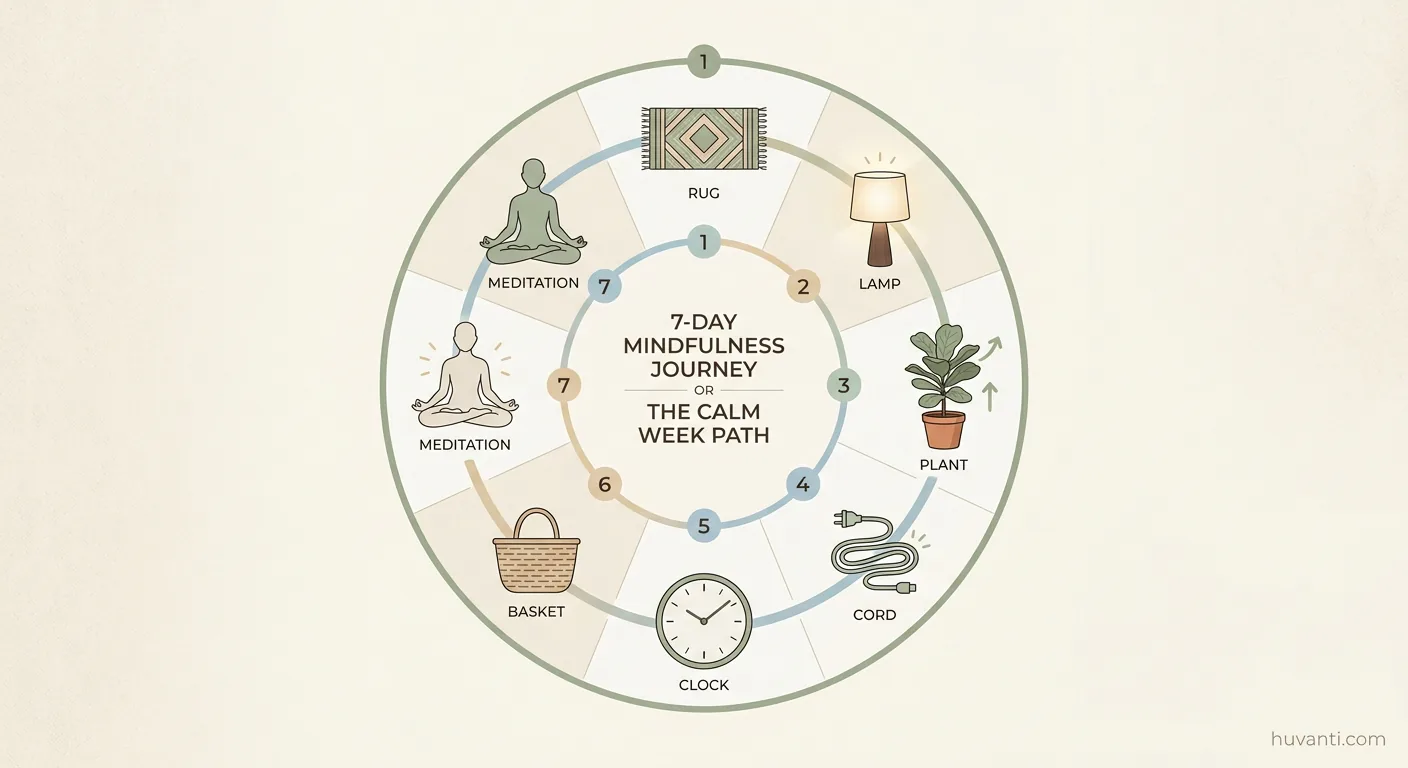
Day 1: Pick the spot, lay a rug, choose your seat. Sit for 5 minutes.
Day 2: Add a lamp or adjust light. Sit for 7 minutes.
Day 3: Create a small focal point. Sit for 7 to 10 minutes.
Day 4: Tidy cords and clear the wall. Sit for 10 minutes.
Day 5: Test morning and night. Decide which time feels easiest. Sit for 7 minutes at that time.
Day 6: Add your 2-minute reset ritual after the sit. Keep it small and repeatable.
Day 7: Personalize one element: a plant, a quote card, a sound choice. Then sit for 10 minutes.
Lock it in: Write a one-line commitment and place it where you see it when you enter the room. For example: “When I wake, I drink water, sit on the cushion, and breathe for 7 minutes.”
Troubleshooting: Real Problems, Simple Fixes
It’s too noisy: Use sheers and heavy curtains to soften echo. Add white noise outside the door. Switch to open-back headphones at very low volume.
My legs go numb: Raise the seat height. Place a zabuton under your knees. Try kneeling or sit in a chair with feet flat.
The room is tiny: Use a foldable cushion and a small basket. Bedside micro nook wins here. Sit with your back to the bed frame for support.
I share a room: Use a tension rod and panel to create a visual boundary. Set a consistent time and ask for a quiet 10 minutes. Offer to return the favor.
I can’t keep it tidy: Reduce visible items. Give each thing a home in a closed basket. Practice the 2-minute reset ritual right after each sit.
I get sleepy at night: Dim lights but keep them bright enough to stay awake. Try morning sits for focus and keep evening sits very short.
I hate incense or scent: Skip it. Clean air and natural light are enough.
My cat loves the cushion: Give the cat a decoy cushion elsewhere. Store your seat in a lidded basket when not in use.
Examples: Two Bedroom Setups with Common Constraints
Small rental studio: Corner near window with a 2-by-3-foot rug. Crescent cushion and folded blanket stored in a lidded basket under a chair. Paper lantern plugged into a smart plug so you tap on, sit, tap off. Sheers soften street view, low white noise masks hallway sounds.
Shared bedroom with irregular schedule: Bedside micro nook with foldable cushion. LED candle and soft bell timer on the nightstand. Two-minute nightly reset clears the space in under a minute. Morning sits near the window, night sits with eye pillow and warm throw.
Your Sustainable Routine
What makes a meditation space in a bedroom truly work isn’t perfection. It’s low friction. A clear boundary on the floor, a seat that fits your body, light you like, and a tiny ritual that you actually do. If the room feels calmer after you set it up, you nailed it.
If you need a single next action, do this now: place a rug, set your seat, pick a time, set a 7-minute timer, and sit tomorrow. Then refine one detail each week until the space feels like a soft invitation you never have to think about.
Final Thoughts
You asked how to make a meditation space in your bedroom that feels calm, doable, and personal. You now have a complete plan you can set up today and refine over time. You learned how to pick a spot, create a clear boundary, choose a seat that supports your body, dial in light and sound, and design simple rituals that make daily practice feel natural. You also have 17 ideas to troubleshoot real-life constraints like noise, small rooms, or shared spaces.
Keep it simple. Start small. Sit daily. As your practice deepens, your nook will quietly evolve with you. And every time you see that rug and that cushion, your body will remember to breathe.
Frequent Asked Questions
Is it okay to meditate in the bedroom if I also work there?
Yes, create a visual boundary so your brain doesn’t mix work and practice. Tidy the desk or cover it with a light cloth during your sit.
Do I need special meditation cushions?
No, a folded blanket or pillow can work. If you plan to sit daily, a buckwheat zafu or a kneeling bench is a comfortable upgrade.
What color temperature is best for bedroom meditation lights?
Warm light between 2200K and 3000K for evenings. Daytime sits can handle natural light or slightly cooler bulbs as long as it feels comfortable.
Can I play music while meditating?
Yes, if it helps you settle. Keep the volume low and pick simple, repetitive soundscapes that don’t hook your attention.
Are candles safe in a bedroom meditation space?
Open flame around bedding is a risk. If you use candles, keep them in stable holders, far from fabric, and never leave them unattended. LED candles are safer.
How do I keep my back from hurting?
Raise your seat so your pelvis tilts forward, rest knees on a cushioned surface, or use a chair with lumbar support. Comfort is key to focus.
What if my room is very small?
Use the bedside micro nook. Store your cushion in a lidded basket and pull it out only when you sit. You only need a footprint the size of a bath mat.
Are plants helpful in a bedroom meditation nook?
Yes, they can be. Choose low-maintenance plants that suit your light and are safe for your home. If plants are tricky, use a branch or dried grass instead.
How long should I meditate in the bedroom?
Start with 5 to 7 minutes daily. When that feels easy, increase to 10 or 15. Consistency matters more than length.
How do I keep the space from feeling cluttered?
Limit visible items, hide cords, and give your gear one closed storage spot. Do a 2-minute reset after each sit.