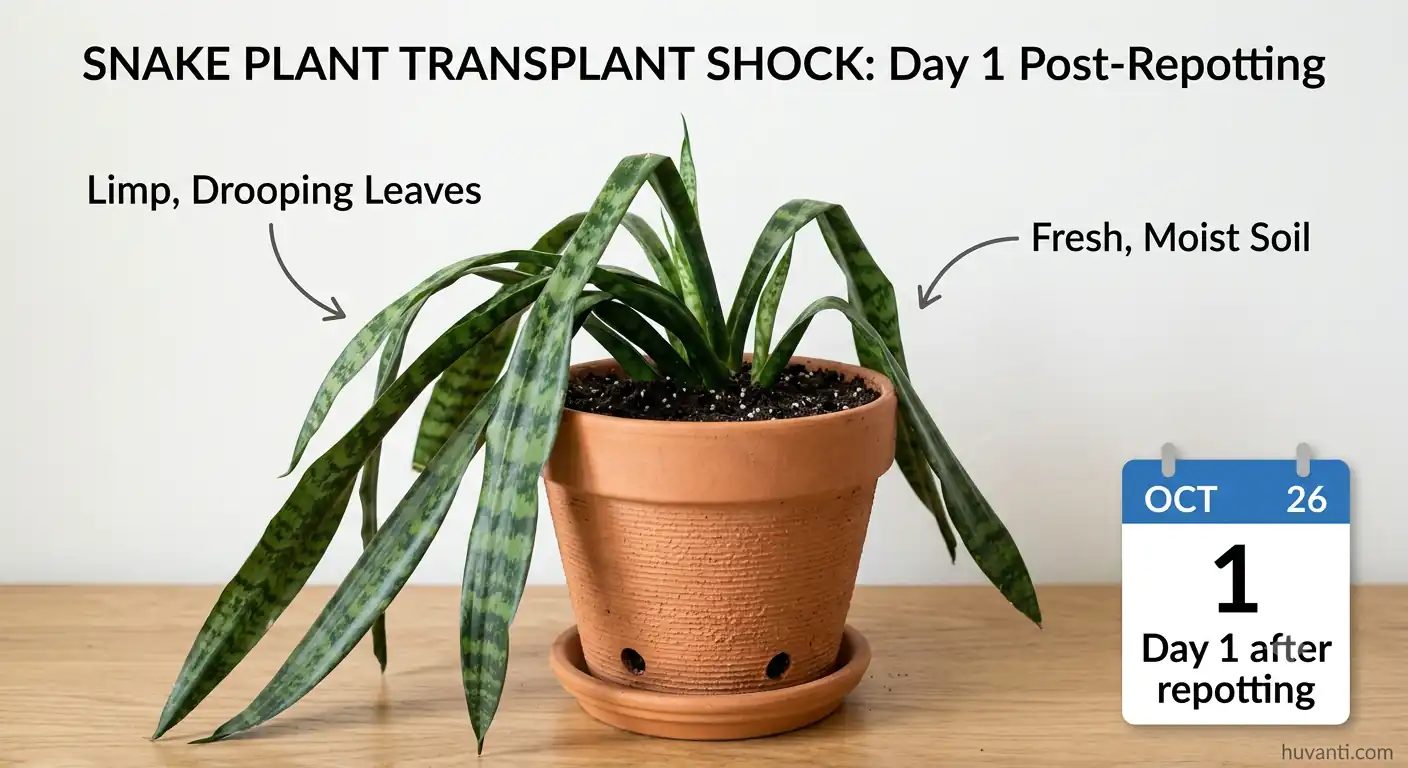
Your snake plant was upright and proud yesterday. Today, the leaves are flopping after a fresh repot. Take a breath. This is one of the most common post-repot issues with Sansevieria (now classified as Dracaena trifasciata), and in most cases, you can reverse it with a few quick checks and tweaks.
In this guide, you’ll learn exactly why snake plant drooping after repotting, how to diagnose the root cause in minutes, and how to fix it with clear, step-by-step actions. You’ll also get soil recipes that actually drain, a simple recovery timeline, when to prune or stake, and a checklist to avoid droop next time. By the end, you’ll know how to steady your plant and get new upright growth again.
Table of Contents
Quick Diagnosis Checklist
Start here. These fast checks point you to the right fix.
- Press a finger or a wooden skewer 2 inches into the mix. Is it wet, evenly damp, or bone dry?
- Lift the pot. Is it heavy for its size? That often means waterlogged. Very light means too dry.
- Smell the drainage holes. Fresh and earthy is fine. Sour or rotten means anaerobic conditions and possible rot.
- Look at the crown where leaves meet the soil. Is it buried under the mix? It should sit slightly above the soil line.
- Tug the plant gently. Does it feel wobbly? Root damage or poor anchoring after repotting is likely.
- Check the light. Did the plant move from low light to a sunny window or outdoors without acclimation?
- Note the room. Are there any cold drafts, heater blasts, or AC vents nearby?
Match what you see to the 9 causes below, then jump to the fix.
Why Snake Plants Droop After Repotting
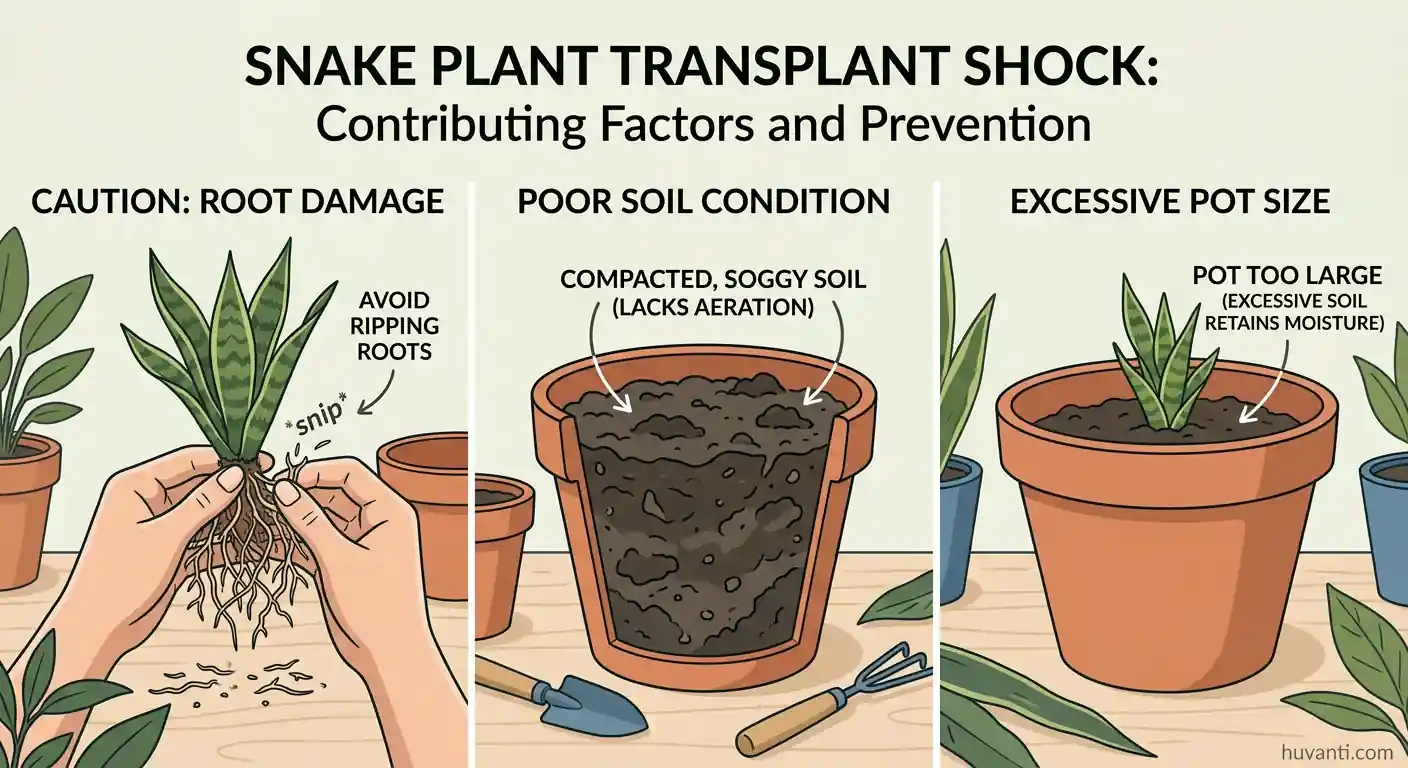
Snake plants are succulents. They store water in thick leaves and rhizomes. After repotting, three things often collide: roots get disturbed or damaged, the new mix holds more water than before, and the pot is larger than needed. The plant can’t move water efficiently, pressure inside leaves drops, and they fold or lean.
The good news: leaves that droop from temporary shock can perk up within 1 to 3 weeks. Leaves that creased sharply often won’t stand again, but new leaves emerge upright once roots re-establish.
The 9 Common Causes and the Easy Fixes
1. You watered too soon or too much after repotting
What it looks like: Leaves go limp within 24 to 72 hours. Soil feels evenly damp or wet at 2 inches and at the drainage holes. The pot feels heavy.
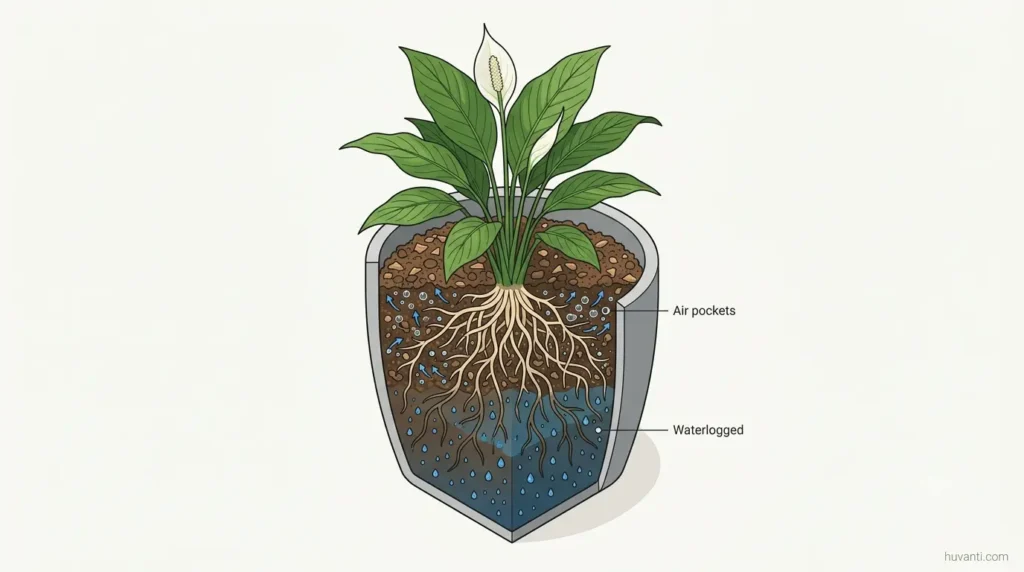
Why it happens: Fresh mix often holds more moisture than old, compacted mix. After root disturbance, the plant needs air as much as water. Saturated media suffocates roots and reduces uptake.
Fix it now:
- Stop watering. Let the top 2 to 3 inches dry before the next drink.
- Increase airflow for a faster dry-down. A small fan on low across the room helps.
- Wick excess water. Twist paper towels, thread them into the drainage holes, and draw water out for a few hours.
- Once the mix is dry at 2 inches, water lightly. Moisten only the outer ring of soil first to encourage roots to spread.
- Then follow a dry-down cycle. Water deeply only when the mix is dry all the way to the bottom. Use a skewer to test.
Prevention next time: Moisten fresh mix before potting so you can skip immediate watering. Then wait 7 to 10 days before the first full drink, unless leaves wrinkle and the mix is already very dry.
2. The potting mix is too heavy or moisture-retentive
What it looks like: Soil stays wet for a week or longer. The pot feels soggy. You may see algae or fungus gnat activity. Leaves feel mushy at the base if rot has started.
Why it happens: Standard indoor potting soil with lots of peat or compost holds water and collapses around the roots. Snake plants need large air pockets and very fast drainage.
Fix it now:
- If the mix stays wet for more than 5 to 7 days, repot into a gritty blend. It’s worth the second repot.
- Use a cactus or succulent base plus extra aggregate. Try 2 parts cactus mix, 1 part pumice or perlite, and 1 part orchid bark.
- If you can’t repot today, top-dress with 1 inch of pumice or coarse perlite and gently poke air tunnels with a skewer to increase aeration. Water sparingly until you can repot.
Prevention next time: Aim for a mix that dries within 3 to 5 days in normal indoor light. If you live in a humid climate, increase pumice. In an arid climate, add a small amount of coco coir for moisture balance.
3. The pot is too large
What it looks like: Soil far from the roots stays wet for a long time. The plant looks lost in the container. Leaves lean outward.
Why it happens: Excess mix around a small root system holds water the plant can’t use. That invites rot and collapse.
Fix it now:
- Choose a pot that’s only 1 to 2 inches wider than the current root mass.
- For terracotta, 1 to 2 inches is safe. For glazed ceramic or plastic, stay closer to 1 inch because they dry slower.
- If you up-potted much larger, move the plant to a smaller pot now. It’s better to fix pot size than fight moisture issues for months.
Prevention next time: Snake plants like to be slightly snug. Divide clumps if needed rather than jumping several sizes.
4. Roots were damaged or rot started during the repot
What it looks like: The plant wobbles in the pot. Leaves fold from the base and may feel soft. Roots appear brown, slimy, or smell foul if you inspect.
Why it happens: Tearing roots while removing old soil, leaving bound roots tightly circling, or trapping roots in soggy mix blocks water transport.
Fix it now:
- Unpot gently. Tap away the mix and rinse roots under a slow stream to see damage.
- Prune brown or mushy roots back to firm, white tissue with sterile scissors. Wipe blades with alcohol between cuts.
- Dust cuts with powdered sulfur if you have it. Skip household remedies that can irritate roots.
- Replant in a clean pot with a fast-draining mix. Set the crown just above the soil line.
- Don’t water immediately. Let cuts callus for 24 hours, then water lightly.
Prevention next time: Loosen circling roots before planting. If you divide a clump, use a clean knife to slice between rhizomes rather than pulling.
5. The crown was planted too deep
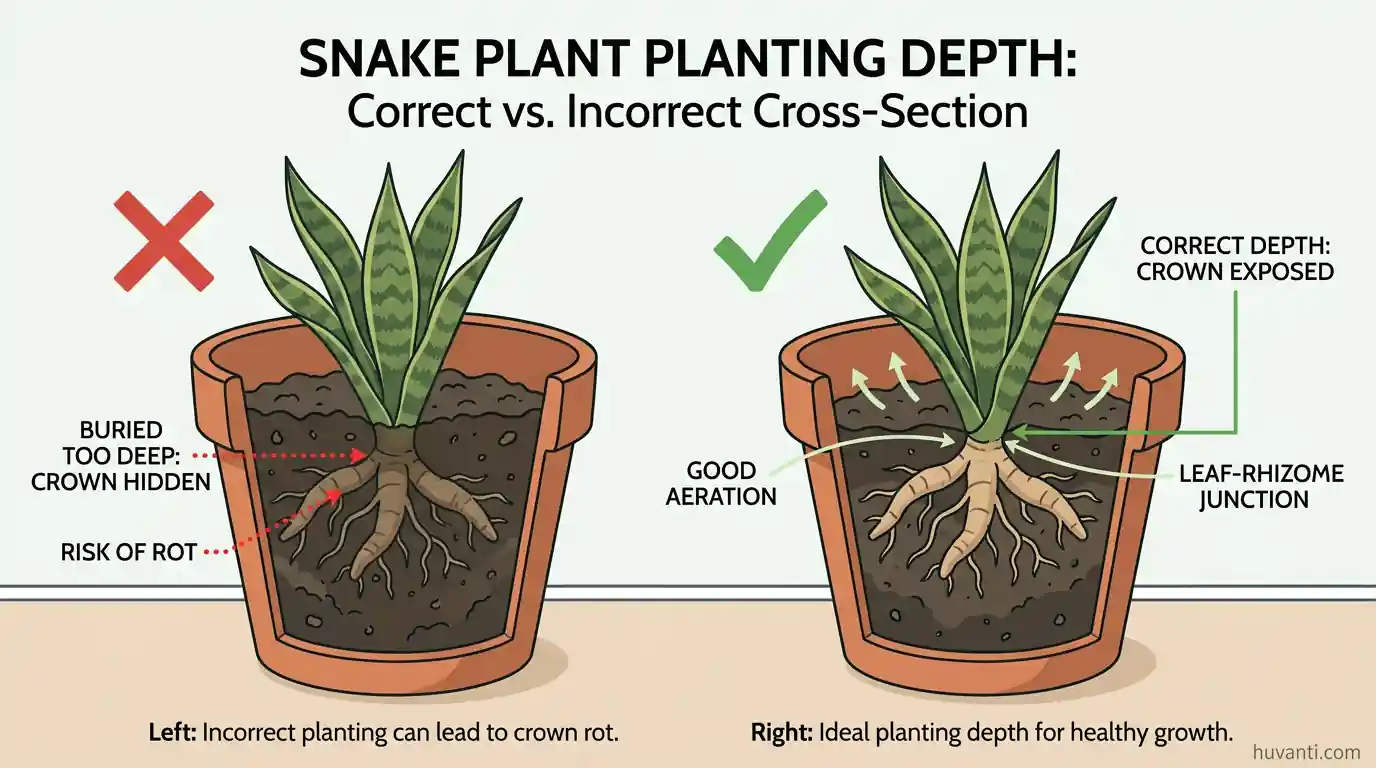
What it looks like: The base of the leaves sits below the soil surface. The bottom inch of leaves stays damp and may turn yellow, then brown.
Why it happens: Burying the crown traps moisture at the most sensitive part of the plant. That encourages bacterial soft rot.
Fix it now:
- Gently remove the top inch of mix until the crown is slightly exposed.
- If the whole plant is too deep, unpot and reset it at the right height. Don’t wait if the base is soft.
- Water only when the exposed crown is fully dry to the touch.
Prevention next time: Set the plant so the point where leaves meet the rhizome sits just above the finished soil surface. Gravity and watering will settle the mix a little.
6. Light shock after a move
What it looks like: Leaves lose turgor and may bleach or develop crisp patches on the sun side. This often happens when moving from medium light to a south window or outdoors.
Why it happens: After repotting, leaves are already stressed. Extra light or sudden direct sun pushes transpiration faster than damaged roots can support.
Fix it now:
- Move the plant to bright, indirect light. An east window or back from a south window works.
- Increase light gradually over 2 to 3 weeks. Add 30 minutes of direct sun at a time if you want it to handle more.
- Rotate the pot a quarter turn weekly for even exposure once it stabilizes.
Prevention next time: Repot in the same lighting conditions the plant already tolerates. Acclimate to stronger light later.
7. Temperature swings or drafts
What it looks like: Sudden droop after a chilly night, AC blast, or being placed near a heater or door. Leaves may pucker or get translucent patches if chilled.
Why it happens: Cold slows root function and damages water-conducting tissue. Hot, dry air dehydrates leaves faster than roots can keep up.
Fix it now:
- Keep the plant in a stable 65 to 85°F room.
- Avoid temperatures below 50°F. Protect from night chills at windows in winter.
- Keep it away from direct AC or heater streams.
Prevention next time: Repot during stable weather inside your home, not right before a seasonal shift.
8. Fertilizer burn or mineral salts
What it looks like: Leaf tips brown, margins yellow, and overall droop after you fertilized or after moving to a fresh, heavily charged mix. White crust may appear on the soil.
Why it happens: Fresh potting mixes often include starter nutrients. More fertilizer on top increases salts that draw water out of roots.
Fix it now:
- Flush the pot. Slowly run room-temperature water through the mix for several minutes until lots of water drains.
- Switch to distilled, rain, or filtered water if your tap water is very hard.
- Hold all fertilizer for 6 to 8 weeks after repotting. Then feed at 25 to 50 percent strength only during spring and summer.
Prevention next time: Use a balanced, low-salt fertilizer. Less is more for snake plants.
9. Pests took advantage of the stress
What it looks like: Sticky residue, cottony tufts in leaf crevices, fine webbing, tiny flies near the soil, or stippled leaves. Leaves weaken and droop.
Likely culprits: Mealybugs, spider mites, scale, and fungus gnats.
Fix it now:
- Isolate the plant.
- Wipe visible mealybugs or scale with cotton swabs dipped in 70 percent isopropyl alcohol.
- Treat mites and soft scale with insecticidal soap or a light horticultural oil. Follow label directions.
- For fungus gnats, let the top half of the mix dry between waterings, add yellow sticky traps, and consider a BTI drench.
- Repeat treatments weekly until no new pests appear.
Prevention next time: Quarantine new plants and always check leaf bases after repotting when pests like to hide.
A Simple Recovery Plan and Timeline
Here’s what I do when a snake plant slumps after a repot.
Day 1
- Diagnose with the quick checklist. Don’t guess.
- If the mix is wet, begin drying strategies. If the crown is buried, fix the height. If the pot is too big or the mix is wrong, repot into a gritty blend and the right pot.
- Move to bright, indirect light. Stabilize the temperature.
Days 2 to 7
- Don’t keep poking and moving the plant. Let roots settle.
- Keep the top few inches dry. When the mix is dry to the bottom, water once thoroughly, then drain fully.
- Stake any badly leaning leaves to relieve pressure on the crown. Use soft ties and a narrow stake set outside the rhizome.
Weeks 2 to 4
- Watch for signs of recovery. New leaf tips pushing up from the center are a good sign.
- Remove stakes if leaves can stand on their own. If a leaf is creased, it often won’t straighten. Consider pruning at the base if it bothers you.
- Resume a normal water schedule based on full dry-downs. No fertilizer yet.
Month 2 and Beyond
- Feed lightly in active growth seasons if you want faster new leaves.
- Repot again only when roots circle the pot or lift the plant, usually every 2 to 3 years with a gritty mix.
How to Repot a Snake Plant Without Droop Next Time
Follow this flow, and you’ll avoid almost all post-repot slumps.
- Choose the right pot: One size up only. Terracotta helps with airflow and drying.
- Mix a gritty medium: Use 2 parts cactus mix, 1 part pumice or perlite, and 1 part orchid bark. Pre-moisten until barely damp and fluffy.
- Unpot gently: Tease away old soil, especially peat clumps. Loosen circling roots.
- Inspect roots: Trim any brown or mushy tissue. Leave clean, firm roots and rhizomes.
- Set height: Place the plant so the crown sits slightly above the final soil line.
- Backfill loosely: Tap the pot to settle particles. Don’t pack hard.
- Anchor: Add a narrow stake if the plant is top-heavy so it stays upright as roots re-anchor.
- Don’t drench: If the mix was pre-moistened, wait 7 to 10 days before the first full watering. If it was dry, water lightly once, then wait for a full dry-down.
When to Cut, Stake, or Save Drooping Leaves
Not every bent leaf needs the bin. Here’s how to decide.
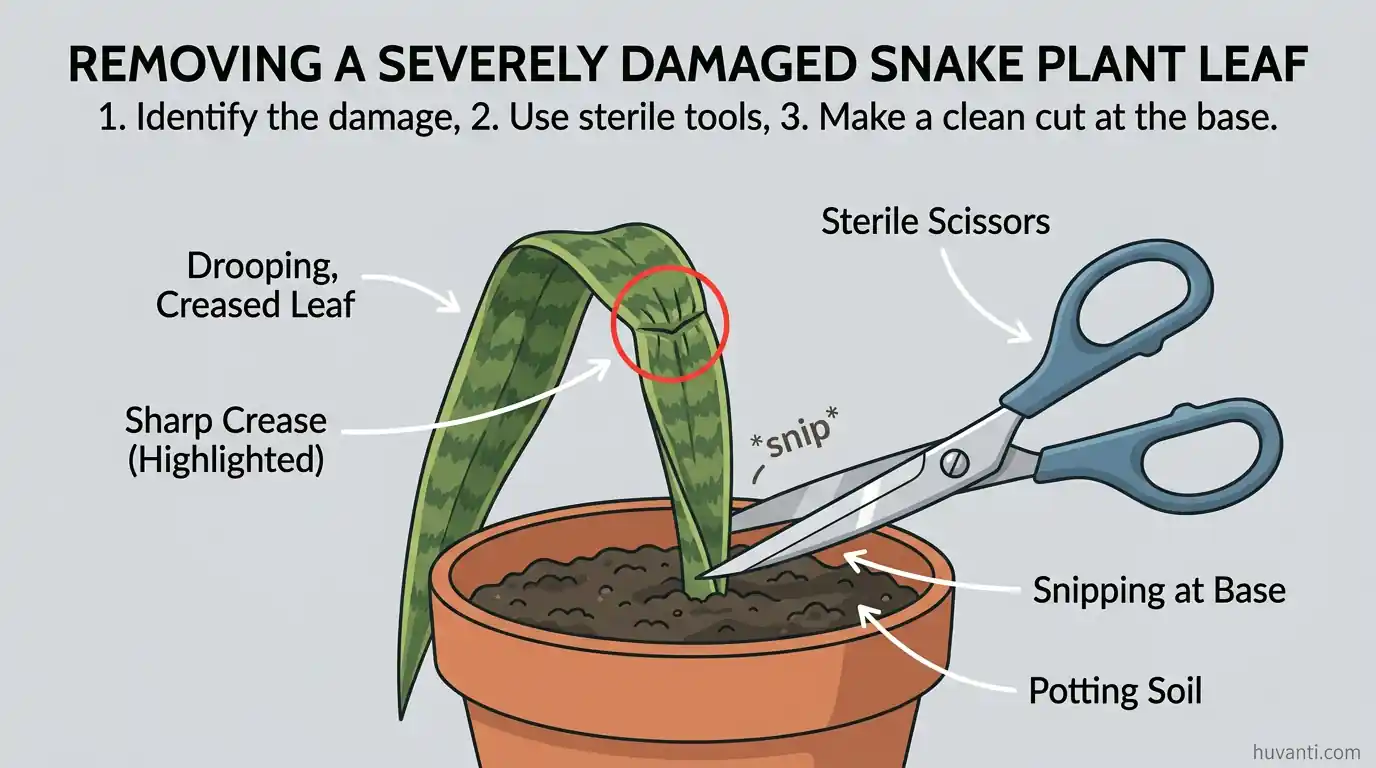
- If a leaf is simply leaning but uncreased, stake it for 2 to 3 weeks. It may stand again as roots anchor.
- If a leaf has a sharp crease or a fold mark, it won’t straighten. Prune it at the base with a sterile blade. Hold the leaf to avoid tugging the crown.
- You can propagate healthy green leaf sections in water or soil. Note for variegated cultivars like Laurentii, leaf cuttings usually revert to solid green. To preserve variegation, divide rhizomes instead.
- If the base of a leaf is mushy, cut back to healthy tissue. Check roots for rot.
Soil Recipes That Keep Snake Plants Upright
Pick a blend that fits your home’s humidity, pot type, and watering style.
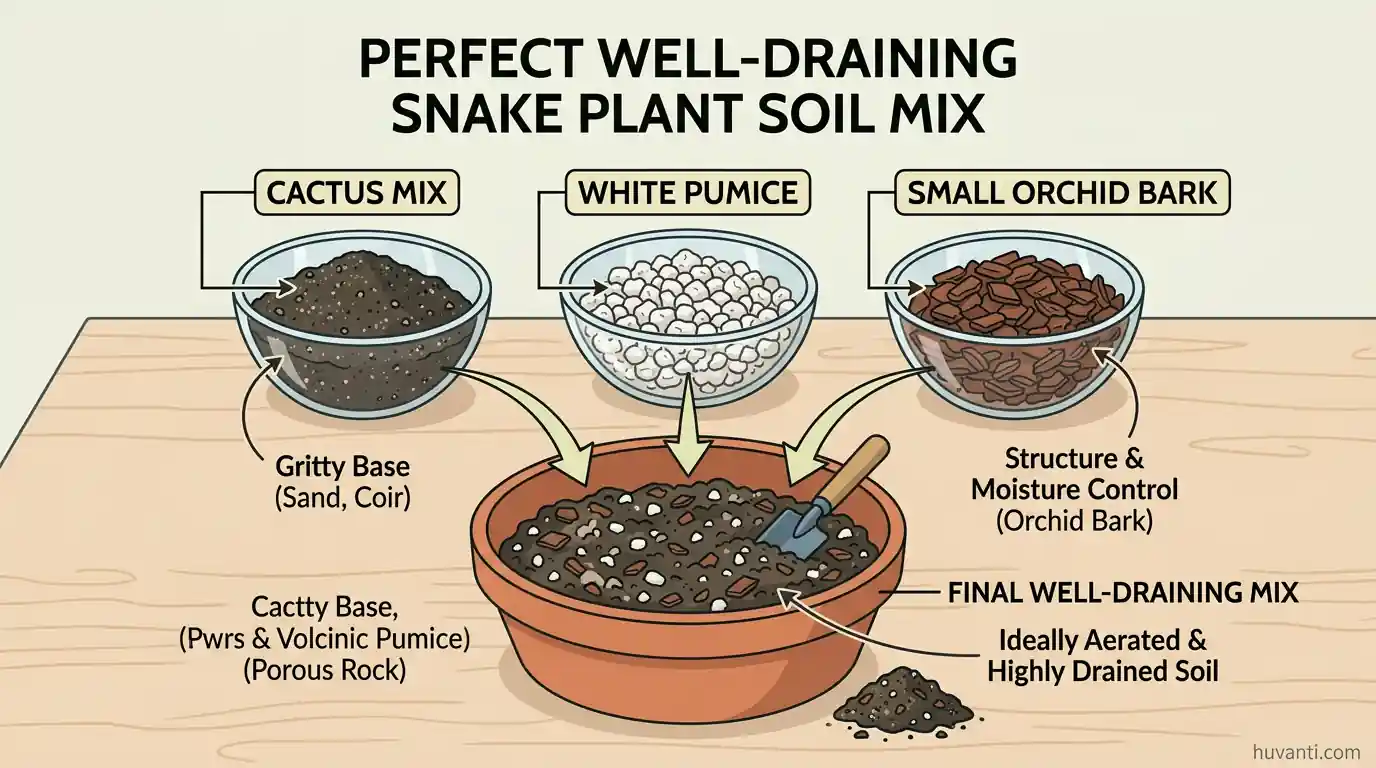
Option 1: Fast and reliable
- 2 parts cactus or succulent mix
- 1 part pumice or perlite
- 1 part small orchid bark
Option 2: For humid homes or plastic pots
- 1 part cactus mix
- 1 part pumice
- 1 part bark
- 1 part coarse sand
Option 3: For very dry homes or terracotta
- 2 parts cactus mix
- 1 part pumice
- 0.5 part bark
- 0.5 part coco coir
Tips That Matter
- Part size refers to volume. Use the same scoop for all.
- Pumice outperforms perlite for longevity and weight, which helps anchor tall plants.
- Rinse dusty perlite or sand before use to avoid compacting fines.
- Always ensure large drainage holes and add a mesh screen, not rocks, to keep mix from escaping without trapping water.
Watering After Repotting Without Guessing
Snake plants want cycles: wet, then fully dry, then wet again.
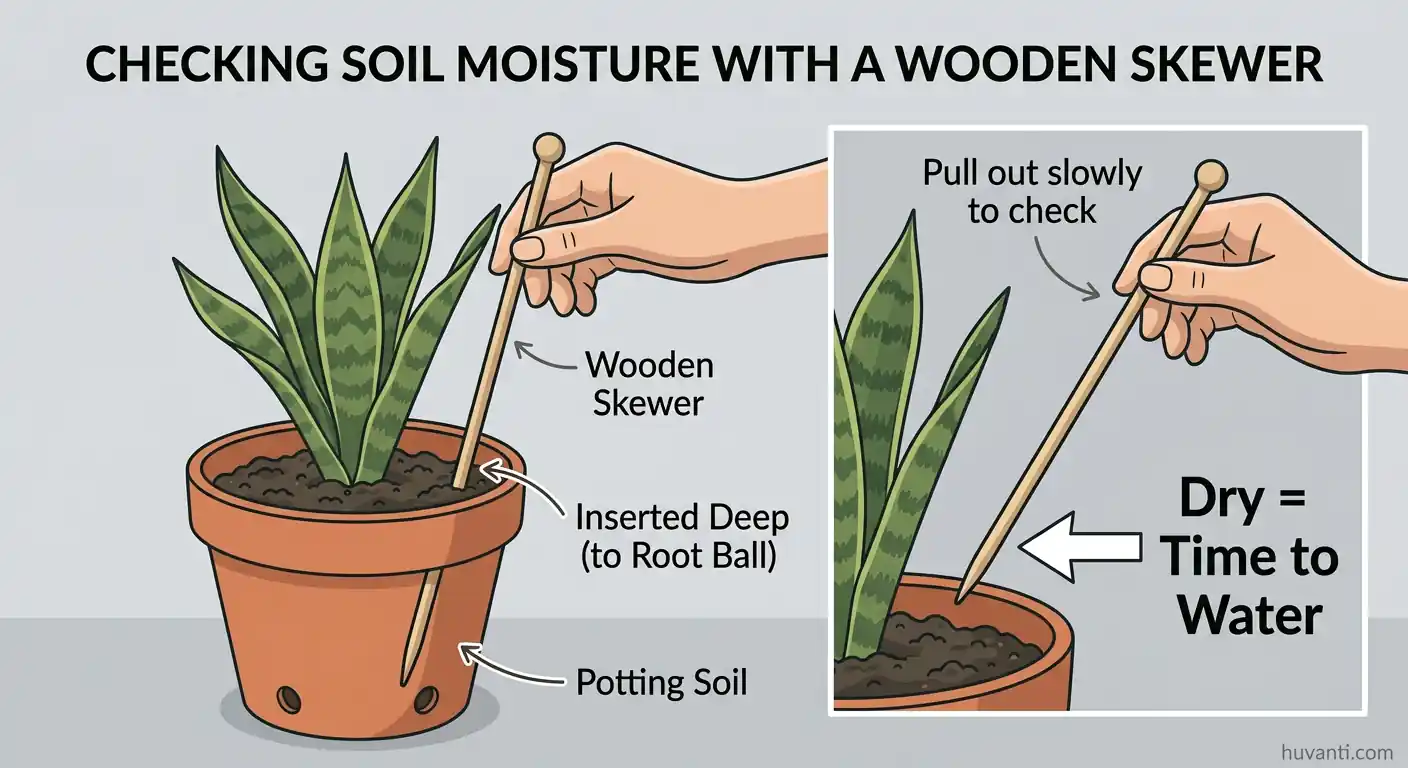
- Test, don’t time: Use a wooden skewer pushed to the bottom. If it comes out clean and dry, water. If it’s damp or has soil stuck, wait.
- Water volume: Pour until water runs freely from the drainage holes. Then let it drain completely. Never leave the pot sitting in runoff.
- Seasonal shift: In bright, warm months, you may water every 10 to 21 days depending on pot size and mix. In low-light winter, it can stretch to 4 to 6 weeks or more.
Signs You Waited Too Long
Leaf tips wrinkle, and the pot feels feather-light. Water thoroughly. If a leaf already creased, it won’t stand back up, but new growth will be fine.
Common Myths to Skip
- Weekly watering works for everyone: It doesn’t. The right interval depends on light, pot, and mix.
- Rocks at the bottom improve drainage: They create a perched water table and make things worse.
- Hydrogen peroxide cures root rot: It can damage delicate roots. Focus on pruning, airflow, and a clean, gritty mix.
- Recovery means full sun: Stress plus more sun equals more stress. Use bright, indirect light during recovery.
Helpful Signs and What They Mean
- Soft leaves and wet soil: Likely overwatering. Dry down and increase aeration.
- Soft leaves and dry soil: Underwatering after repot. Water thoroughly once. Then follow a dry-down.
- Leaf bases soft and smelly: Crown burial or rot. Unpot, prune, and reset above the soil line in fresh, gritty mix.
- Leaves leaning on one side: Light from one direction or a wobbly root ball. Rotate weekly and stake if needed.
Final Thoughts
Snake plant drooping after repotting is frustrating, but it’s also fixable once you match symptoms to cause. You now know how to check moisture the right way, set the crown at the right height, choose a pot that doesn’t trap water, and mix a medium that drains fast but still supports growth. Use the recovery plan to steady the plant in days and rebuild roots in weeks. If a few leaves refuse to stand, prune them cleanly and focus on new upright growth. With a gritty mix, smart watering, and steady light, your snake plant will go back to its tidy, architectural self and keep pushing fresh spears for years.
Frequent Asked Questions
Will drooping leaves stand up again?
If a leaf isn’t creased and the base is healthy, it can recover with better anchoring and roots that re-establish. Deep creases rarely reverse.
Should I repot again if my mix is wrong?
Yes, if the mix stays wet for a week or more or smells sour, repot into a gritty blend. Fixing the medium is better than fighting moisture for months.
How soon should I water after repotting?
If you pre-moistened the mix, wait 7 to 10 days. If the mix was dry, give a light watering once, then wait for a full dry-down before the next drink.
What pot is best for snake plants?
Terracotta is forgiving because it breathes and dries faster. Choose a pot only 1 to 2 inches wider than the root ball and always with large drainage holes.
Can low light cause drooping after repotting?
Yes, low light slows recovery and root growth. Use bright, indirect light during the recovery period to rebuild roots.
Do I need to stake a drooping snake plant?
Stake temporarily if leaves lean and stress the crown. Remove stakes once the plant anchors, usually in 2 to 4 weeks.
Is it normal for a snake plant to droop after division?
A little slump is normal after division because roots are cut. Keep light bright and indirect, hold fertilizer, and water by dry-down. It should perk up within a few weeks.
How do I know if it’s root rot?
Unpot and look. Healthy roots are firm and white to tan. Rotting roots are brown, soft, and may smell sour. Trim to healthy tissue and replant in fresh, gritty mix.
Can I propagate the drooping leaves I cut?
Yes, if they’re healthy. Cut into sections at least 3 inches long and root in water or a gritty mix. Variegated types usually lose variegation in leaf cuttings.
What is the correct botanical name?
Snake plant is widely called Sansevieria, but current taxonomy places it in Dracaena. The common houseplant is Dracaena trifasciata.