You want a routine that reduces stress, lifts your mood, and fits your real life at home. That’s exactly what you’ll build here. If you’ve been wondering how to make self care routine at home, this step-by-step guide walks you through a simple plan you can start today and keep for the long run.
You’ll learn how to design a routine around your energy, time, and space. You’ll grab practical checklists, smart habit tricks, and sample routines for mornings, evenings, and busy days. And you’ll get ways to adjust your plan for different seasons of life without starting from scratch.
Let’s build something that actually sticks.
Table of Contents
What Self-Care Really Means Today
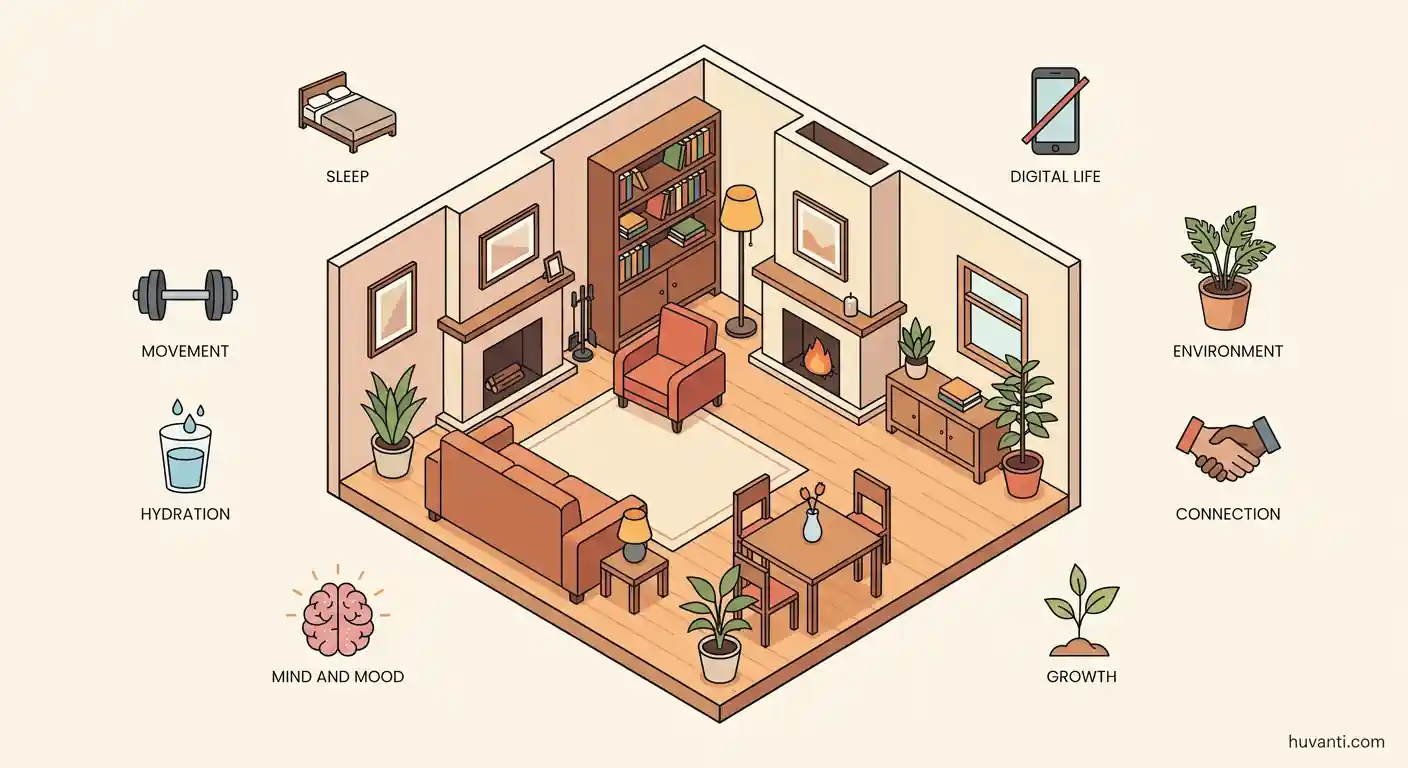
Self-care isn’t a treat you earn when life slows down. It’s a daily practice that helps you stay steady while life speeds up. A useful routine covers a few basics most days: Sleep, Movement, Nourishing food, Stress relief, and Connection. A bit of order in your space and on your screen.
At home, small actions done consistently beat big plans that never happen. Think 10 to 30 minutes, sprinkled through the day, not a full afternoon that disappears from your calendar the moment work gets busy.
The 3-Part Playbook for a Routine That Lasts
Here’s the blueprint I use when building a routine that doesn’t fall apart by week two.
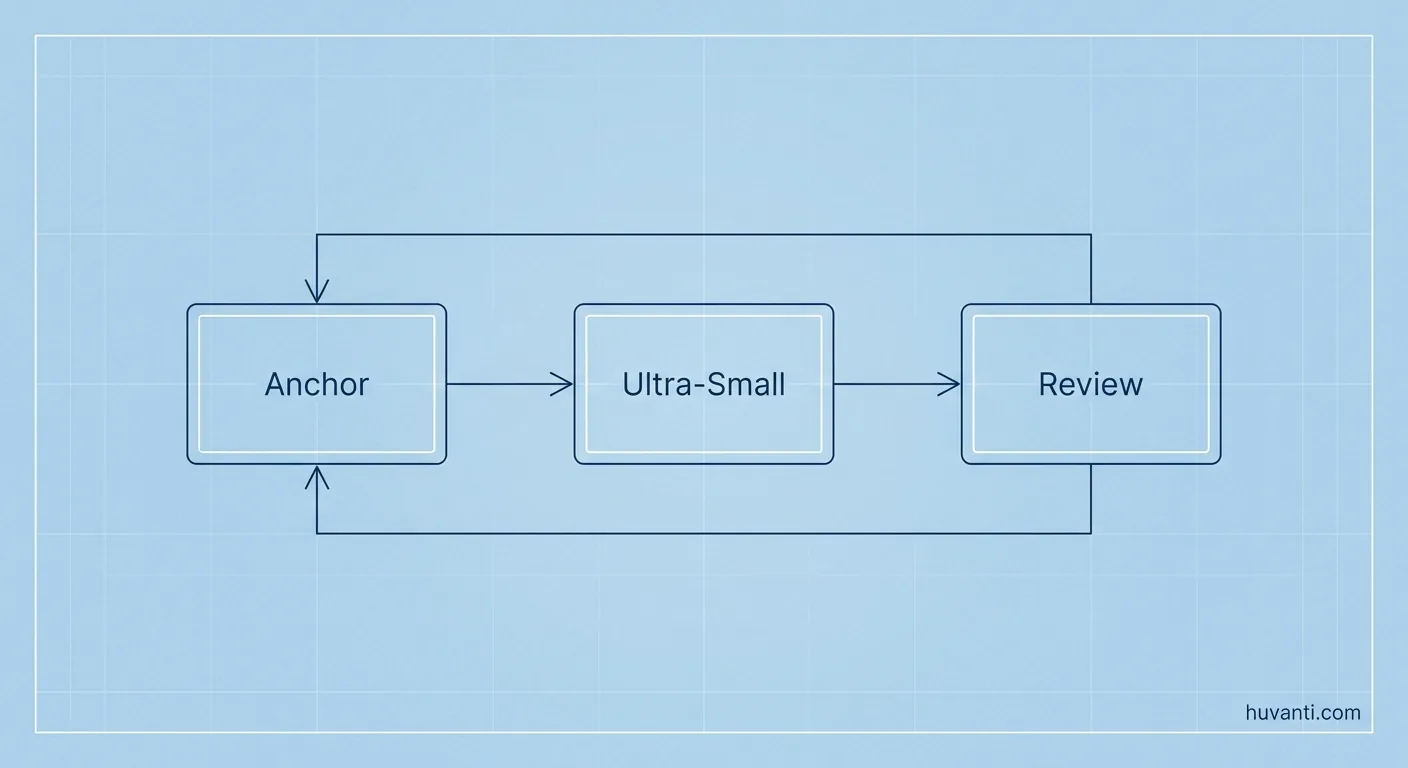
- Anchor it to your day: morning, midday, and evening touchpoints
- Keep it ultra-small: one non-negotiable action per anchor
- Review and adjust weekly: fix friction, not yourself
You’ll apply that playbook as we go.
Start with a 5-Minute Self-Check
Before you add more to your plate, get clear on what your body and brain are asking for right now. Grab a sheet of paper or a notes app and rate each item from 1 to 5, where 1 needs help and 5 feels solid.
- Sleep quality and consistency
- Stress level and mood stability
- Daily movement or steps
- Nutrition basics and hydration
- Social connection and boundaries
- Digital load and screen habits
- Home environment and clutter
- Meaning and growth time
Circle two low scores. Those are your first priorities. You’ll keep everything else simple until these two feel steadier.
Build Your Core Routine in 7 Steps
1. Choose Your 3 Daily Anchors
Pick one moment for each anchor. Don’t overthink it.
- Morning anchor: right after you wake, after coffee, or after a shower
- Midday anchor: start of lunch, end of lunch, or after a short walk
- Evening anchor: after dinner, before you brush your teeth, or right before bed
2. Set One Micro Action Per Anchor
Make each action so small it’s boring. Consistency first, then add time later.
- Morning: one glass of water, two minutes of sunlight at a window or outside, 60 seconds of box breathing
- Midday: 5-minute walk, 3 stretches, 5 slow breaths before you open messages
- Evening: place your phone in another room, prep a glass of water for morning, 3 lines of a journal entry
3. Pre-Commit the When and the Where
Write it down with location. For example: At the kitchen table at 7 am, I drink a full glass of water. This removes decision fatigue and trains your brain to expect the action.
4. Reduce Friction
Anything that adds effort will break the chain. Set things up ahead of time.
- Place a filled water bottle on your nightstand
- Set a short timer for 5 minutes after lunch to prompt a walk
- Put a simple yoga mat or towel where you can see it
- Keep a pen and journal open to the next page on your pillow
5. Define a Minimum Viable Day
Life will explode some days. Decide a tiny floor you’ll always meet.
- One sip of water counts as the morning action
- One stretch counts as the midday action
- Placing the phone outside the bedroom counts as the evening action
Minimums keep the habit alive and protect your identity as someone who follows through.
6. Track It Simply
Use a calendar, a sticky note, or a habit app. Checkboxes are motivating. Aim for streaks by weekday, not perfection forever. For example, hit Monday to Friday for 4 weeks.
7. Review Every 7 Days
Ask two questions.
- What felt hard?
- What helped?
Then change the setup, not the goal. Move the mat. Shorten the walk. Shift the timing by 15 minutes. Small edits keep progress moving.
Pick Your Pillars and Plug in Habits
You now have anchors. Next, choose habits from the pillars that match your priorities. Start with one per pillar, then add as you gain capacity.
Pillar 1: Sleep That Restores You
Sleep is foundation. Most adults feel best with 7 to 9 hours. The exact number varies. Aim for a steady window.
Wind-down routine ideas:
- Dim lights 60 minutes before bed
- No heavy meals 2 to 3 hours before sleep when possible
- Light stretch or a warm shower
- Write tomorrow’s top 3 on a sticky note
- Bedroom cool, dark, and quiet, or use a simple eye mask and earplugs
If nights feel restless:
- Get out of bed if you’re awake for 20 minutes and do a calm activity
- Limit caffeine after midday if it affects you
- Keep wake time consistent, even after a short night
Pillar 2: Daily Movement Without a Gym
Movement isn’t only workouts. It’s also steps, mobility, and short strength bursts.
Easy at-home ideas:
- 10-minute brisk walk inside your home or outdoors
- Stairs or step-ups during a call
- 3 sets of 8 air squats, counter pushups, and dead bug holds
- 3-minute mobility flow for hips and shoulders
- Dance to one song while making coffee
If you like structured plans, the common benchmark is 150 minutes of moderate movement weekly plus 2 strength sessions. You can reach it with short sessions stacked across the week.
Pillar 3: Stress Care and Calm
Your nervous system loves brief, regular resets.
Fast calm tools:
- Box breathing: in 4, hold 4, out 4, hold 4 for 2 minutes
- 5-5-5 senses check: name 5 things you see, 5 you hear, 5 you feel
- Hands in warm water for 60 to 90 seconds
- Progressive muscle release: tense, then relax major muscle groups
- Short mindfulness practice or a body scan
Pillar 4: Food That Fuels
You don’t need a perfect plan. Aim for steady energy and simple structure.
Simple home moves:
- Build plates around a protein source, color from plants, and a fiber-rich carb
- Prep two grab-and-go options on Sundays or your low day
- Keep a fruit bowl and a bowl of ready snacks like nuts in view
- Drink water during each anchor time
If you track anything, track consistency of meals and hydration, not calories unless advised by your clinician.
Pillar 5: Connection and Boundaries
Humans are social. Even one steady touchpoint helps.
Practice:
- Send one message to a friend each morning
- Schedule a short weekly call
- Share a meal without screens once per day
- Set one boundary: phones parked during dinner, reply windows for messages
Pillar 6: Digital Hygiene
Your phone is a tool. Shape it to support your routine.
Quick wins:
- Move social apps off your home screen
- Use Focus or Do Not Disturb during your anchors
- Turn off non-essential notifications
- Set app limits for your highest time sink
- Charge your phone outside the bedroom
Pillar 7: Home Environment
Small changes to your space make actions easier.
Fast resets:
- One-song tidy at night for common areas
- Clear one flat surface each day
- A basket by the door for keys and wallet
- Place a yoga mat where you stumble on it
- Keep water and a fruit bowl where you see them
Pillar 8: Growth and Meaning
Even 10 minutes weekly lifts well-being.
Ideas:
- Read 10 pages
- Learn a tiny skill step
- Reflect on two wins and one lesson
- Try a short gratitude note
Sample Routines for Any Schedule
Pick the one that fits today. Rotate as needed.
If You Have 10 Minutes Total
Morning (3 minutes):
- Drink water and get light at a window
Midday (4 minutes):
- Walk or do 8 squats, 8 pushups at a counter, 20-second plank
Evening (3 minutes):
- Put phone in another room, write tomorrow’s top 3
If You Have 20 Minutes Total
Morning (7 minutes):
- Water, sunlight, and 3-minute mobility
Midday (7 minutes):
- Brisk walk and 2 minutes of box breathing
Evening (6 minutes):
- One-song tidy, journal 3 lines, lights low for 30 minutes
If You Have 30 Minutes Total
Morning (10 minutes):
- Water, sunlight, and short strength circuit
Midday (10 minutes):
- Lunch break without screens and a short outside walk
Evening (10 minutes):
- Light stretch, prep breakfast items, read 5 pages in bed
Five-Minute Reset Menus for Real Life
When stress spikes or your plan crumbles, pick one reset. Time yourself for 5 minutes.
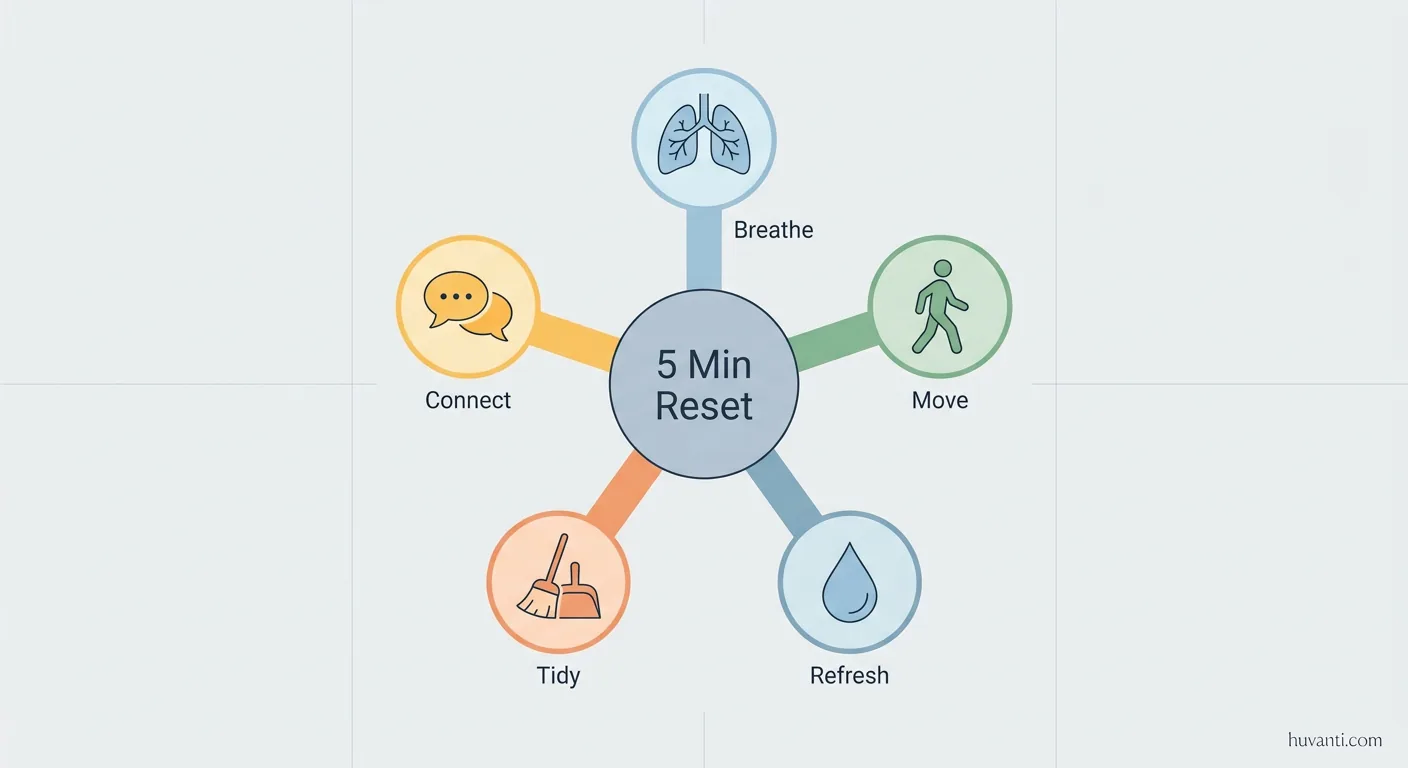
- Breathe: 4-7-8 breaths for 10 rounds
- Move: walk the stairs or march in place
- Refresh: wash your face, change into a soft shirt
- Tidy: clear the kitchen sink or your desk
- Connect: voice note a friend
- Nature: stand at an open window, look at the sky
- Gratitude: write three specifics from today
Make It Stick with Smart Habit Design
Use habit stacking Attach each action to something you already do.
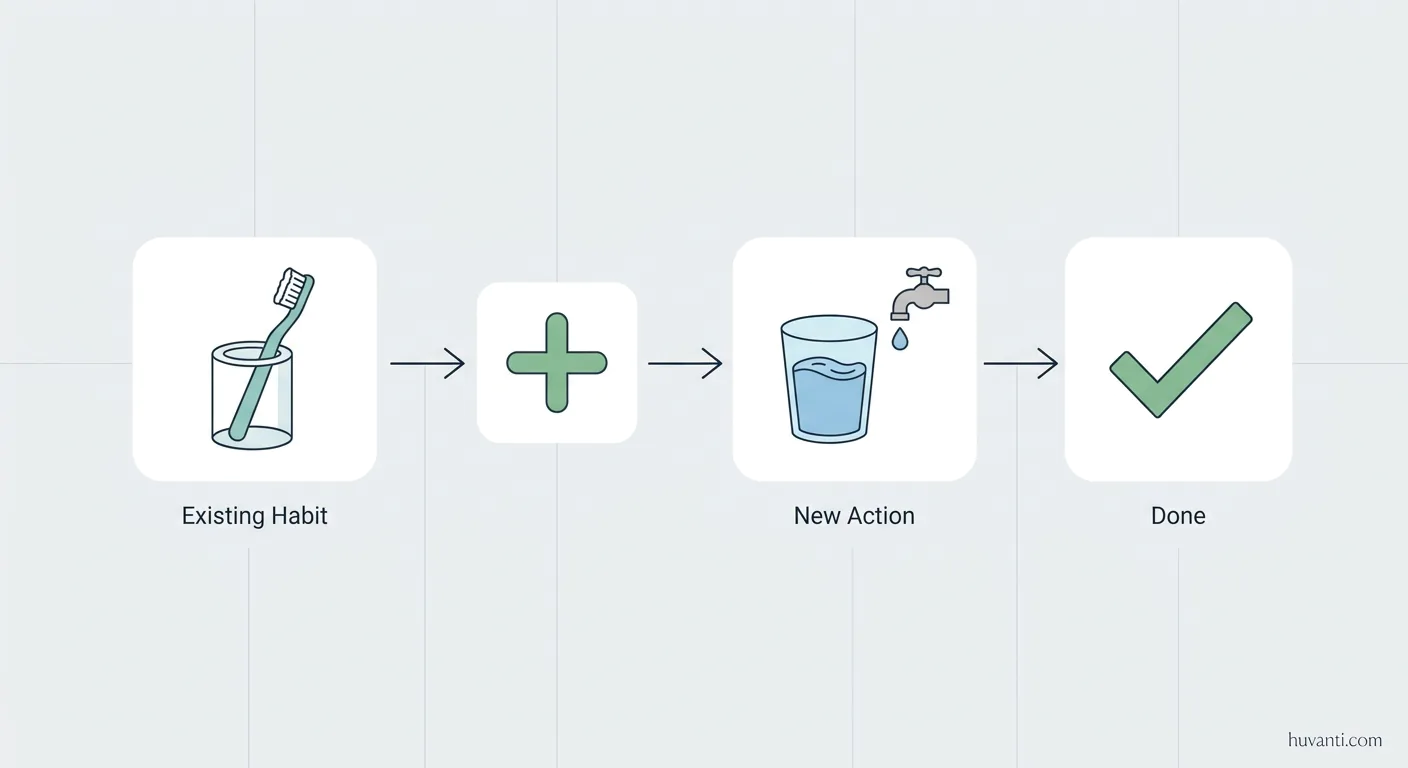
- After I brush my teeth, I drink a full glass of water
- After I set my lunch plate down, I start a 5-minute timer and walk
- After I place my dinner plate in the sink, I put my phone to charge outside the bedroom
Design your environment Make the good choice the easy choice.
- Keep a foam roller next to the sofa
- Store cookies out of sight and fruit in sight
- Put your book on your pillow every morning
Track identity, not only outcomes Say the sentence out loud: I am a person who cares for my body and mind daily. This centers your identity over streaks.
Build flexible redundancy Have a Plan A and a Plan B for each anchor.
- Morning Plan A: 10-minute stretch
- Morning Plan B: 60-second breath and water
Reward immediately Pair the habit with a small reward.
- Make your favorite tea after the evening tidy
- Play a song you love after the midday walk
Troubleshooting Common Bumps
I skip days and lose steam
Use your minimum viable day and mark it as a win. Restart with the next anchor. Don’t wait for Monday.
I feel bored
Rotate your movements, try a new short recipe, or change your reading list. Keep the anchor and swap the action.
My schedule is chaotic
Shrink everything to 1 minute for a week. Protect the identity. Expand later.
I live in a small space
Choose standing movements, chair yoga, and bodyweight strength. Store a mat under the bed or sofa. Walk halls or stairwells safely.
I am low on energy
Pick calm actions. Gentle mobility, breathwork, sunlight, and hydration still help on hard days.
Routines for Different Life Situations
Parents with young kids:
- Morning: water together and sunlight at a window while kids eat
- Midday: 5-minute floor play as movement
- Evening: reset the sink and counter, phone parked in a drawer
Remote workers:
- Morning: get fully ready and step outside for 3 minutes
- Midday: calendar-blocked lunch and a short walk
- Evening: close the laptop, place it in a bag, and leave the room
Shift workers:
- Anchor around wake time instead of clock time
- Use blackout curtains and white noise for daytime sleep
- Keep meals light near bedtime and hydrate steadily during shifts
Students:
- Morning: water and 10 pages of reading
- Midday: campus walk between classes
- Evening: pack your bag, set clothes out, one screen-free hour before sleep
Caregivers:
- Use micro habits: 60-second breath, 2-minute stretch, brief check-in
- Accept imperfect windows and celebrate small wins daily
- Ask for one pocket of protected time weekly
Simple Home Toolkit That Helps
You don’t need fancy gear. Start with what you have.
- Timer or phone alarms set to silent vibrate
- A water bottle you like to see and use
- Yoga mat or towel
- Earplugs and a sleep mask if your room is bright or noisy
- A cheap notebook and a working pen
- Comfortable shoes ready by the door
Optional nice-to-haves:
- Light weights or resistance bands
- A foam roller or massage ball
- A basic air purifier if your air quality is poor
A Weekly Review Template to Keep Progress Rolling
Do this on the same day each week. Ten minutes is enough.
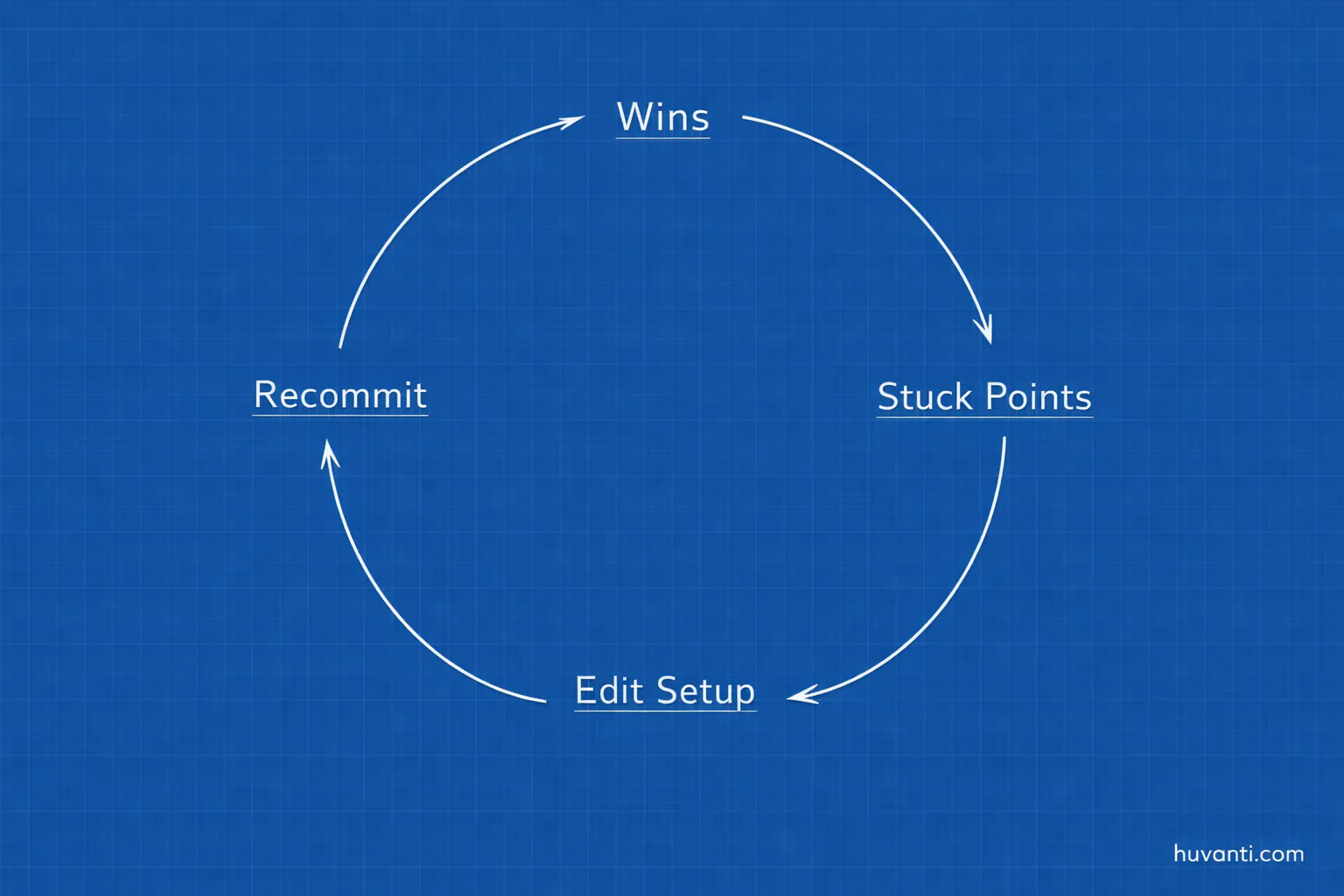
- Wins: list three things that went right
- Stuck points: note exactly where friction happened
- Edit the setup: move items, shorten steps, change timing
- Add one small upgrade if you feel stable
- Recommit to your minimum viable day
Questions that help:
- Where did I feel most alive this week?
- What drained me that I can limit?
- What is one kind thing I can do for myself tomorrow?
Health and Safety Notes
Self-care isn’t a replacement for medical care or therapy. If you’re experiencing persistent low mood, sleep that doesn’t refresh, pain, or thoughts of self-harm, reach out to a qualified professional or local services. Pair this routine with the support you need.
What Progress Looks Like
Expect messy. You’ll miss days and adjust often. That isn’t failure. Progress is noticing you bounce back faster, your days feel steadier, and your baseline rises. A home routine is a living system. Keep it light, keep it kind, keep it going.
Final Thoughts
You now have a repeatable way to build a self-care routine at home that matches your energy, space, and schedule. You learned how to anchor tiny actions to daily moments, reduce friction, and track what matters. You grabbed sample routines for 10-, 20-, and 30-minute days, a five-minute reset menu, and templates to review and adjust without scrapping your progress.
Start with one anchor and one micro action today. Pour the water. Step into light. Breathe for 60 seconds. Then let tomorrow be a little bigger. Small moves add up when you protect them.
Frequent Asked Questions
What is the simplest self-care routine I can start today?
Drink water after you brush your teeth, get two minutes of daylight, take five slow breaths before lunch, and park your phone outside the bedroom. That’s under 10 minutes total.
How do I make a routine if my schedule changes every day?
Anchor habits to actions you always do rather than clock time. For example, after I make coffee or after I finish lunch. Keep a Plan B that takes one minute.
How long until a habit sticks?
Most people need several weeks of consistent reps. Track by weekday. Aim for four weeks of Monday to Friday wins with tiny steps.
What if I live with roommates or family who don’t support my routine?
Claim small windows and quiet corners. Use headphones. Share your plan briefly and ask for one protected block. Keep your minimum viable day independent of others.
How do I build a routine without spending money?
Use bodyweight strength, free walks, tap water, library books, and free breathing or mindfulness guides. Your environment setup and consistency matter more than gear.
I have very low energy. What should I prioritize?
Hydration, sunlight exposure, gentle mobility, and consistent sleep and wake times. Keep movement slow and short. If low energy persists, talk with a healthcare professional.
How can I reduce phone use at night?
Charge your phone outside the bedroom, set a nightly Focus mode, use a simple alarm clock, and create a 20-minute wind-down with low light and light reading.
How do I fit movement into a tiny apartment?
Use chair or wall exercises, yoga flows, and stairwells if safe. Keep a mat visible. Try 3 sets of 8 squats, counter pushups, and a 20-second plank.
How do I measure progress without a scale?
Track energy, mood, sleep quality, consistency streaks, and how often you’re able to return to your plan after disruptions. Note small wins weekly.
What should I do when I miss a day?
Use your minimum viable action on the next anchor. Don’t wait for a fresh week. One small step today beats a perfect plan tomorrow.